Roundup
Inkbird ITC-308 Alternatives
The ITC-308 is the controller most homebrewers start with, and for good reason. These are the three that make sense when you want more relay, more build quality, or a control you can wire into a panel.
The short answer
The Elitech STC-1000Pro is the closest alternative to an Inkbird ITC-308: two pre-wired outlets, heating and cooling from one box, a -40 to 230 F range and the same plug-in simplicity. Step up to a Johnson Controls A421 if you need an industrial SPDT relay and a published 1 HP rating, accepting that it controls one stage rather than two.
DisclosureWe earn a commission on qualifying purchases made through links on this page, at no extra cost to you. It does not change what we recommend or how we rank it -- here is how we pick and here is the full disclosure.
At a glance
Quick picks
| # | Product | Best for | Price |
|---|---|---|---|
| 1 | 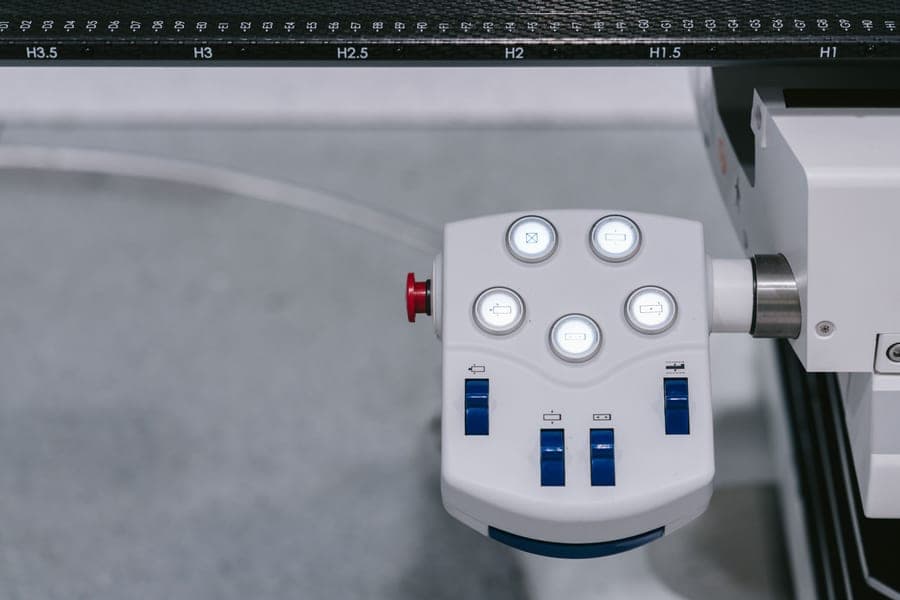 Closest overall alternative Elitech STC-1000Pro Temperature Controller Two pre-wired outlets, one labeled heating and one labeled cooling, a published control range of -40 to 230 F, 0.1 F resolution and a 110-240V AC supply with a 2 m sensor cable. That is the ITC-308's job description, and the Elitech does it with the same no-wiring setup: plug the freezer into one outlet, the heat belt into the other, drop the probe where it belongs and set the setpoint. The wider supply range is the quiet advantage if your brewery is ever on 240V. | Replacing an ITC-308 without changing anything else about the chamber | |
| 2 | Best built, if one stage is enough Johnson Controls A421 Temperature Control This is the commercial refrigeration control that homebrewers have been buying for twenty years, and the reason is the hardware. Johnson Controls publishes a -40 to 212 F setpoint range, a differential adjustable from 1 to 30 F, an SPDT output relay with a built-in anti-short-cycle delay, and on the A421ABC-02C a 1 HP relay rating -- which means the compressor leads land on the controller instead of on a contactor you had to buy. Cord-fitted models (A421ABG, A421AEJ, A421ABJ) exist specifically so you do not have to wire anything. | A freezer or a glycol loop that needs a real relay and a control that lasts a decade | |
| 3 | Best for a chest freezer conversion Ranco ETC-111000 Temperature Control The other long-serving refrigeration control, and the one most chest-freezer builds were done with before cheap dual-stage boxes existed. Robertshaw publishes a -30 to 220 F setpoint range, a 1 to 30 F adjustable differential, a 120/208/240V AC supply, a NEMA 1 enclosure and an 8 ft sensor lead -- that long lead is more useful than it sounds when the controller hangs on the outside of a keezer and the probe sits in the beer. Homebrew and beekeeping suppliers sell it pre-wired with a plug and an outlet, which is the version to buy unless you want to make up a cord. | Converting a freezer or kegerator where the compressor is the load | |
| 4 | Best budget alternative BN-LINK Dual Outlet Thermostat Controller If the only thing you want is a different brand at the same money, this is the one that is easiest to find: a plug-in strip with separate labeled heating and cooling outlets, a published -40 to 176 F control range, a probe rated to 230 F, a claimed 15A / 1875W at 120V and an ETL listing. It needs no wiring at all, it is sold through the manufacturer's own store and mainstream retail, and for a fermentation chamber that only ever runs a fridge and a heat belt it does the whole job. | A second chamber, or the cheapest dual-outlet swap |
Prices are checked on Amazon when you click. We never print a number we cannot verify.
The ITC-308 against the two controls most often bought to replace it
| Spec | Inkbird ITC-308 | Elitech STC-1000Pro | Johnson Controls A421 |
|---|---|---|---|
| Stages | Dual -- heat and cool | Dual -- heat and cool | Single -- one mode at a time |
| Setpoint range | Spans fermentation through cold crash | -40 to 230 F published | -40 to 212 F published |
| Load rating | ~1100W per outlet | 10A, 1100-1200W quoted | SPDT, 1 HP on the ABC-02C |
| Differential | Configurable | Configurable | 1 to 30 F, published |
| Anti-short-cycle | Configurable compressor delay | Not published | Built in |
| Wiring needed | None -- plug in | None -- pre-wired outlets | None on cord models, otherwise yes |
| Calibration offset | Yes | Yes | Yes, via setpoint and differential |
| Price bracket | Lowest here | Similar to the Inkbird | Several times the Inkbird |
An orange rule marks the better of the two on that row.
The original
What the ITC-308 gets right
Be clear about why this controller is on nearly every homebrew fermentation chamber in the country, including the one we recommend in best temperature controllers. The ITC-308 does the complete job for the price of a sack of malt: two switched outlets so one box runs both a cooling appliance and a heater, roughly 1100W per outlet, an NTC probe on a 2 m lead, a user calibration offset so you can trust the reading, and a configurable compressor delay so a fridge is not short-cycled to death. It needs no wiring and no learning.
That combination is genuinely hard to beat on value, and most brewers never need to. Our assessment of it is in the ITC-308 review, and the in-family step up to programmable rests is covered in ITC-308 vs ITC-310T.
So this page is not an argument that the Inkbird is a bad buy. It is for the brewer who has specific reasons to look elsewhere -- a load the outlets cannot carry, a control that needs to live in a panel, or simply a unit that failed and a reluctance to buy the same thing again. Those are three different problems with three different answers.
Criteria
The four honest reasons to look past it
- Relay headroom. The single most common reason. Roughly 1100W per outlet is comfortable for a small chest freezer and a heat belt. It is tight for a large refrigerator, a big ceramic heater, or a glycol pump and chiller on the same circuit. Refrigeration controls are rated differently: the A421ABC-02C publishes a 1 HP relay, which is a motor rating rather than a watt number, and that is the specification you want when the load is a compressor.
- Build and service life. Commercial controls are built to be mounted, wired and left for a decade in a walk-in. A plug-in consumer controller is built to a price. Neither is wrong; they are answers to different questions. If your chamber is permanent and you would rather not think about the controller again, the industrial route is the cheaper one over ten years.
- Wiring into something. If you are building a panel, hard-wiring a converted freezer, or putting the control in an enclosure on a wall, a unit with screw terminals and a NEMA enclosure is what you want. A plug-in strip is actively awkward in that application. The Ranco and the Johnson both exist in that form -- and both also exist pre-wired, which is the version for everyone else.
- A dead unit and a reluctance to repeat. Any controller can fail. The relevant question is what failed: if a relay welded shut under an inductive load, the replacement should have a bigger relay, not the same one. If the probe failed, every controller here uses a replaceable sensor and the cheapest fix is a new probe.
The closest match
Why the Elitech is the straight swap
If you want to change the brand and nothing else, the STC-1000Pro is the one. Pre-wired heating and cooling outlets, a published -40 to 230 F control range, 0.1 F resolution, a 2 m probe and a supply that accepts 110-240V AC. Everything about your existing chamber stays as it is -- the same fridge in the same outlet, the same heat belt in the other, the same probe placement. Setup is a setpoint and a differential.
What it does not do is give you headroom. At 10A and a quoted 1100W to 1200W output it is the same class of switch as the Inkbird, so if the reason you are shopping is a relay that failed under a big compressor, this is not the answer -- the A421 or the Ranco is. Two further cautions: published figures differ between retailers for what is sold as the same model, so read the listing you are buying, and the STC-1000Pro TH is a different product whose second relay controls humidity rather than heat.
The step up
One stage, properly: the Johnson A421
The A421 is the answer to a different question: not “what else does this?” but “what would a refrigeration technician install?” An SPDT relay with a published 1 HP rating on the ABC-02C, a -40 to 212 F setpoint range, a differential you set from 1 to 30 F, and a built-in anti-short-cycle delay so a compressor is never asked to restart against head pressure. Johnson also publishes cord-fitted models, so the pre-wired convenience of a plug-in controller is available without giving up the relay.
The cost is the second stage. One A421 either cools or heats; it does not do both. For a lot of homebrewers that is fine -- a chamber in a heated basement rarely needs the heat side, and a keezer never does. If you genuinely need both, the options are two single-stage controls (one set to cool, one set to heat, with a dead band between them so they never fight) or staying with a dual-stage unit. Running two controls is what commercial installations do, and it is more robust than one box doing both, but it is also two boxes and two probes.
One practical warning: the A421 catalog is a suffix maze. Supply voltage, enclosure rating, switch action and whether a power cord is fitted all vary with the model code, some older codes are obsolete, and the earlier A419 series it replaced has been discontinued since 2016. Read the exact model number against the installation sheet before ordering, rather than buying “an A421.”
The freezer build
Where the Ranco still wins
Before dual-stage plug-in controllers were cheap, nearly every chest freezer conversion in homebrewing ran a Ranco ETC-111000. It is still a good answer for exactly that job. Robertshaw publishes a -30 to 220 F setpoint range, a 1 to 30 F differential, 120/208/240V AC supply and a NEMA 1 enclosure, and the sensor comes on an 8 ft lead -- long enough to mount the control outside a keezer collar and still reach a thermowell in the beer.
Buy the pre-wired version. The bare control is a terminal block in a box, and while wiring a cord and an outlet to it is a thirty minute job for someone comfortable with 120V, it is not a job to learn on. Homebrew and beekeeping suppliers sell it ready to plug in for noticeably more than the bare unit, and that premium is the correct purchase for most people.
The contact rating is the one specification to confirm rather than trust: one distributor lists 8A full load and another lists 16A for the same part number. Size your load conservatively, and if the freezer is large, read the sheet in the box before you rely on the web listing. The build itself is covered step by step in the DIY fermentation chamber guide and the keezer build guide.
Also considered
Options that did not make the picks
The Inkbird ITC-310T. If the reason you are looking around is that you want programmable steps -- a ramped diacetyl rest, a timed cold crash -- the answer is probably in the same family rather than outside it. That is a time-programmable dual-stage control, and the comparison is in ITC-308 vs ITC-310T. Leaving a brand for a feature the brand already sells is an expensive way to shop.
Wifi and logging. Both Inkbird and Elitech sell wifi variants of their plug-in controllers. If remote monitoring is the whole requirement, the cheaper and more reliable route is usually a controller doing the switching and a separate wireless hydrometer doing the watching, because a hydrometer in the beer reports the thing you actually care about -- the digital hydrometers compared.
A glycol chiller’s own controller. If you are considering this class of upgrade because the chamber itself is the limitation, the honest comparison is not between controllers at all: it is glycol chiller vs fermentation fridge. A chiller with a jacketed fermenter replaces the chamber, the controller and the probe-placement problem in one purchase.
Where this sits
Spend on the chamber before the controller
One ordering point. A better controller on a poorly insulated chamber is worse value than a cheap controller on a good one. Insulation, sealing and air circulation determine how stable the temperature is; the controller only decides when the compressor runs. If your chamber swings several degrees between cycles, the fix is in the box, not on it.
With a decent chamber, the controller choice comes down to the relay and the number of stages, which is the whole argument above. The wider context for both is fermentation temperature control, the chambers themselves are in best fermentation chambers, and the heat half of a dual-stage setup is in best fermentation heaters.
And if the vessel inside the chamber is the part you are actually unhappy with, the controller is the wrong purchase this month -- FermZilla alternatives covers the vessels that replace a plastic pressure fermenter.
How we picked
The basis for these
Setpoint ranges, differentials, relay ratings and supply voltages are the manufacturers’ published figures: Johnson Controls’ A421 installation documentation and distributor specification listings, Robertshaw’s ETC series data sheet, Elitech’s own product listing, and BN-LINK’s product page. US availability was checked against live listings on 14 November 2026 -- the A421 at Jackson Systems and PartsSource, the Ranco ETC-111000 at SupplyHouse and a pre-wired homebrew-market seller, the Elitech at Elitech’s US store, and the BN-LINK at BN-LINK’s own store. Where distributor listings disagree on a rating, we say so on the page rather than picking the flattering number. The discontinued A419 is deliberately not among the picks. We have not bench-tested these four controls against a calibrated reference and do not claim to -- see how we pick.
The picks, in order
Every pick in detail
#1
Closest overall alternative
Entry tier
Elitech STC-1000Pro Temperature Controller
Elitech
Two pre-wired outlets, one labeled heating and one labeled cooling, a published control range of -40 to 230 F, 0.1 F resolution and a 110-240V AC supply with a 2 m sensor cable. That is the ITC-308's job description, and the Elitech does it with the same no-wiring setup: plug the freezer into one outlet, the heat belt into the other, drop the probe where it belongs and set the setpoint. The wider supply range is the quiet advantage if your brewery is ever on 240V.
Spec sheet
- Stages
- Dual relay -- pre-wired heating and cooling outlets
- Control range
- -40 to 230 F
- Resolution
- 0.1 F
- Supply
- 110-240V AC, 50/60 Hz
- Load rating
- 10A; listings quote 1100W to 1200W
- Sensor cable
- 2 m
- Note
- The STC-1000Pro TH variant uses the second relay for humidity, not heat
What it is not good at
It is the same class of device, not a step up: the relay rating is 10A and listings quote the output as 1100W to 1200W, so it will not switch anything an ITC-308 could not. Published figures also vary between retailers for what is sold as the same unit, and the 0.1 F resolution is how finely it reports rather than how accurately it reads -- accuracy is quoted around 1 C. Be careful which model you order: the STC-1000Pro TH looks identical but spends its second relay on humidity rather than heat.
Who it is for
Replacing an ITC-308 without changing anything else about the chamber
#2
Best built, if one stage is enough
Mid tier
Johnson Controls A421 Temperature Control
Johnson Controls
This is the commercial refrigeration control that homebrewers have been buying for twenty years, and the reason is the hardware. Johnson Controls publishes a -40 to 212 F setpoint range, a differential adjustable from 1 to 30 F, an SPDT output relay with a built-in anti-short-cycle delay, and on the A421ABC-02C a 1 HP relay rating -- which means the compressor leads land on the controller instead of on a contactor you had to buy. Cord-fitted models (A421ABG, A421AEJ, A421ABJ) exist specifically so you do not have to wire anything.
Spec sheet
- Stages
- Single stage, heating or cooling mode
- Setpoint range
- -40 to 212 F
- Differential
- Adjustable 1 to 30 F
- Relay
- SPDT; 16A at 120V AC / 8A at 240V AC on the AEC-02C
- Supply
- 24V AC or 120/240V AC depending on model
- Anti-short-cycle
- Built-in compressor delay
- Cord models
- A421ABG, A421AEJ, A421ABJ ship pre-wired
What it is not good at
It is a single-stage control. You choose heating mode or cooling mode, not both, so a chamber that needs to cool in summer and heat in winter needs either two of these or a seasonal mode change -- that is the real trade against a dual-stage Inkbird. It costs several times an ITC-308, the model-suffix catalog is genuinely confusing (voltage, enclosure, cord and switch action all vary by suffix, and some suffixes are obsolete), and there is no app, no logging and no wifi. Match the suffix to your load and your plug before ordering.
Who it is for
A freezer or a glycol loop that needs a real relay and a control that lasts a decade
#3
Best for a chest freezer conversion
Mid tier
Ranco ETC-111000 Temperature Control
Ranco / Robertshaw
The other long-serving refrigeration control, and the one most chest-freezer builds were done with before cheap dual-stage boxes existed. Robertshaw publishes a -30 to 220 F setpoint range, a 1 to 30 F adjustable differential, a 120/208/240V AC supply, a NEMA 1 enclosure and an 8 ft sensor lead -- that long lead is more useful than it sounds when the controller hangs on the outside of a keezer and the probe sits in the beer. Homebrew and beekeeping suppliers sell it pre-wired with a plug and an outlet, which is the version to buy unless you want to make up a cord.
Spec sheet
- Stages
- Single stage, selectable heating or cooling
- Setpoint range
- -30 to 220 F (-34 to 104 C)
- Differential
- Adjustable 1 to 30 F
- Supply
- 120/208/240V AC
- Enclosure
- NEMA 1
- Sensor
- 8 ft lead
- Load rating
- Distributor listings disagree (8A full load / 16A) -- check the sheet in the box
What it is not good at
Single stage again, and the bare unit is a control with screw terminals rather than an appliance -- buying the unwired version means doing 120V wiring yourself, which is the honest reason most brewers should pay more for the pre-wired one. Distributor listings also disagree about the contact rating, with 8A full load quoted by one supplier and 16A by another, so size the load conservatively and check the sheet packed in the box rather than the web listing.
Who it is for
Converting a freezer or kegerator where the compressor is the load
#4
Best budget alternative
Entry tier
BN-LINK Dual Outlet Thermostat Controller
BN-LINK
If the only thing you want is a different brand at the same money, this is the one that is easiest to find: a plug-in strip with separate labeled heating and cooling outlets, a published -40 to 176 F control range, a probe rated to 230 F, a claimed 15A / 1875W at 120V and an ETL listing. It needs no wiring at all, it is sold through the manufacturer's own store and mainstream retail, and for a fermentation chamber that only ever runs a fridge and a heat belt it does the whole job.
Spec sheet
- Stages
- Dual -- separate labeled heating and cooling outlets
- Control range
- -40 to 176 F; probe rated to 230 F
- Supply
- 120V AC 60 Hz
- Published load
- 15A / 1875W, 1/2 HP, ETL listed
- Inductive load
- Owners report a much lower motor rating -- verify before running a compressor near the limit
- Build
- Plug-in strip, no wiring required
What it is not good at
Treat the headline amperage with care. The published 15A figure is a resistive rating, and owners report a far lower inductive limit for motor loads on the sheet that ships with the unit -- which is exactly what a fridge compressor is. The 176 F ceiling is also lower than the alternatives here, irrelevant for fermentation but limiting if you ever want to control a mash or a kettle. It is a consumer product with a consumer warranty, not a refrigeration control.
Who it is for
A second chamber, or the cheapest dual-outlet swap
FAQ
Questions brewers actually ask
What is the best alternative to an Inkbird ITC-308?
The Elitech STC-1000Pro if you want the same thing from a different brand: two pre-wired outlets, heating and cooling from one box, a published -40 to 230 F range and no wiring. The Johnson Controls A421 if the reason you are looking is relay capacity -- it publishes an SPDT relay with a 1 HP rating on the A421ABC-02C, but it controls one stage at a time rather than two.
Is a Johnson Controls A421 better than an Inkbird ITC-308?
Better built and better rated, but not strictly better. The A421 is a commercial refrigeration control with a published 1 HP SPDT relay, a 1 to 30 F adjustable differential and a built-in anti-short-cycle delay. It is single stage, so it heats or cools but not both, and it costs several times an ITC-308. If you need two stages from one box, the Inkbird does something the A421 does not.
Can I use two single-stage controllers instead of one dual-stage?
Yes, and it is what commercial installations do. Set one control to cooling and one to heating, with a dead band of a few degrees between their setpoints so they can never fight each other. It costs more and uses two probes, but each stage has its own relay and a failure in one does not take out the other.
Will an Inkbird ITC-308 run a full-size refrigerator?
Often, but it is close to the limit. The outlets are rated around 1100W each, and a full-size fridge compressor's starting current is what stresses a relay rather than its running watts. If the load is larger than a small chest freezer, a control with a published motor rating -- such as the 1 HP relay on the A421ABC-02C -- is the safer purchase.
Should I buy a Ranco ETC-111000 pre-wired or bare?
Pre-wired, unless you are comfortable making up a 120V cord and outlet yourself. The bare control is a terminal block in a NEMA 1 enclosure with no plug and no socket. Homebrew and beekeeping suppliers sell a version with a power cord and an outlet already fitted for a premium over the bare unit, and that premium is the right purchase for most brewers.
Is the Johnson Controls A419 still available?
No -- it was discontinued by the manufacturer in 2016, with the A421 series as its replacement. Units still appear on surplus and auction sites, sometimes refurbished. If you want this class of control, buy the current A421 so that documentation, parts and warranty still exist, and check the model suffix for the voltage, enclosure and cord you need.
Sources
- Johnson Controls A421 series with power cords: technical specifications and model codes (Johnson Controls documentation)
- Johnson Controls A421ABC-02C: 120/240V AC, SPDT, single stage, current US price and availability (Jackson Systems)
- Johnson Controls A421AEC-02C: control range -40 to 212 F, full load amps at 120V and 240V (PartsSource)
- Ranco / Robertshaw ETC series data sheet: -30 to 220 F setpoint, 1 to 30 F differential, 120/208/240V AC, NEMA 1
- Ranco ETC-111000-000 single stage control with 8 ft sensor, current US listing (SupplyHouse)
- Elitech STC-1000Pro: dual pre-wired heating and cooling outlets, -40 to 230 F, 110-240V AC (Elitech US)
- BN-LINK digital heating and cooling thermostat controller: -40 to 176 F, 15A / 1875W, ETL listed (BN-LINK)
Read next
More on temperature control
Roundup
The Best Fermentation Temperature Controllers
Dual-stage controllers compared, with the probe-placement rule that matters most.
Comparison
Inkbird ITC-308 vs ITC-310T
Dual-stage against time-programmable, and which fermentations actually need the schedule.
Guide
DIY Fermentation Chamber Build
The build, the settings, and the condensation and airflow details.

Guide
Fermentation Temperature Control
Target temperatures, probe placement and the first 48 hours that decide flavor.

Roundup
The Best Glycol Chillers for Homebrewing
Glycol chillers sized for homebrewing, and when a freezer is the better buy.