Roundup
The Best Dual Tap Kegerators
Two taps is the point at which a secondary regulator stops being optional, and nobody mentions that when they sell you the cabinet.
The short answer
The KOMOS kegerator is the best dual-tap option for homebrewers thanks to its wide temperature range and stainless forward-sealing faucets. Whatever cabinet you choose, budget for a secondary regulator manifold: two taps running off one regulator means both beers must share a pressure, which no two styles want.

DisclosureWe earn a commission on qualifying purchases made through links on this page, at no extra cost to you. It does not change what we recommend or how we rank it -- here is how we pick and here is the full disclosure.
At a glance
Quick picks
| # | Product | Best for | Price |
|---|---|---|---|
| 1 | Best overall dual tap KOMOS Kegerator Stainless Intertap faucets on most SKUs, four corny capacity, and a 26-82 F range that lets the cabinet double as a fermentation chamber between kegs. | Brewers who want two taps and a cabinet that can also ferment | |
| 2 | 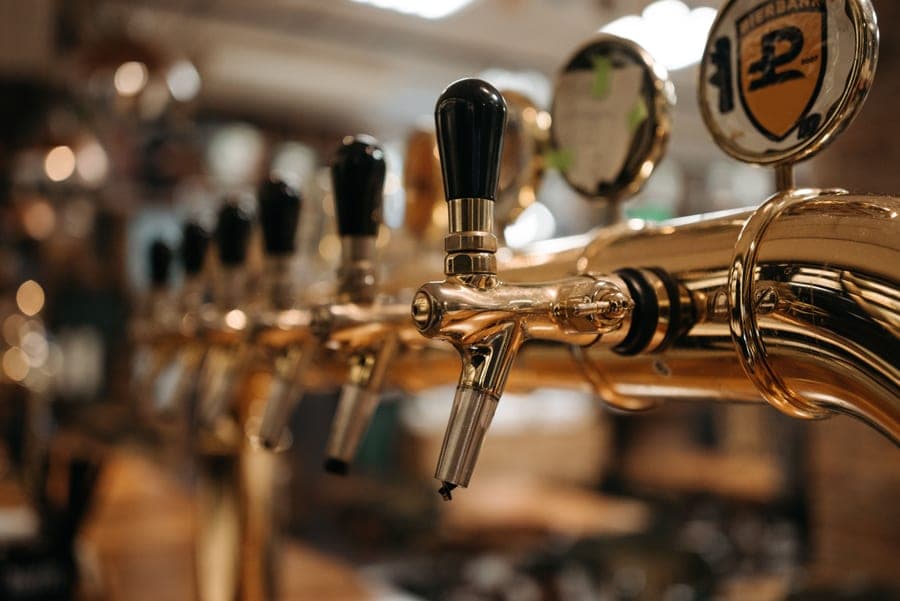 Best value dual tap Kegco Full-Size Digital Kegerator Available in dual and triple tap configurations with a digital thermostat and a regulator included on most SKUs. A finished appliance that does the serving job. | Brewers who want two taps at the lowest sensible price | |
| 3 | 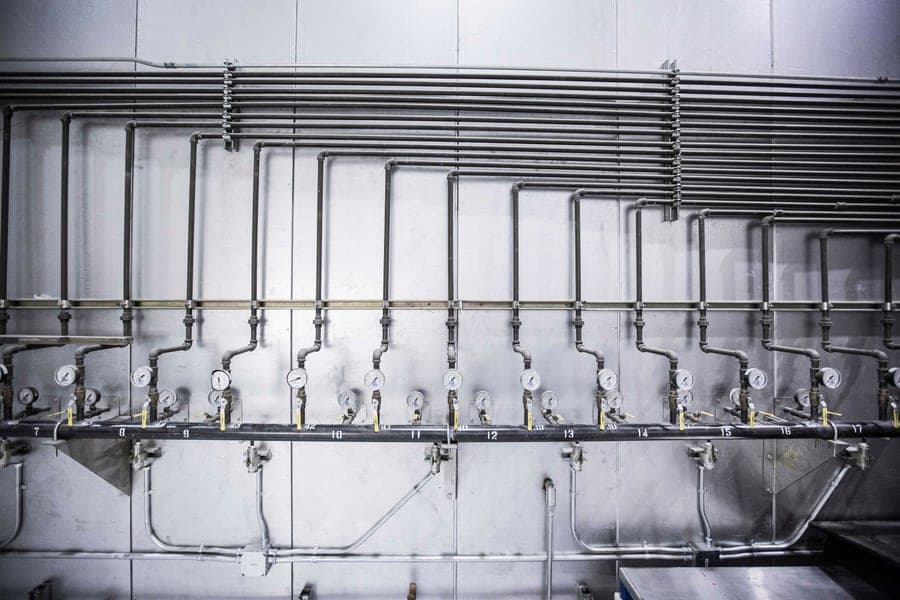 The purchase that makes two taps work Secondary CO2 Regulator Manifold Independently settable bodies mean you can serve a stout at 8 psi beside a saison at 14. Without this, both beers share one pressure and one of them is wrong. | Anyone running two or more kegs | |
| 4 | 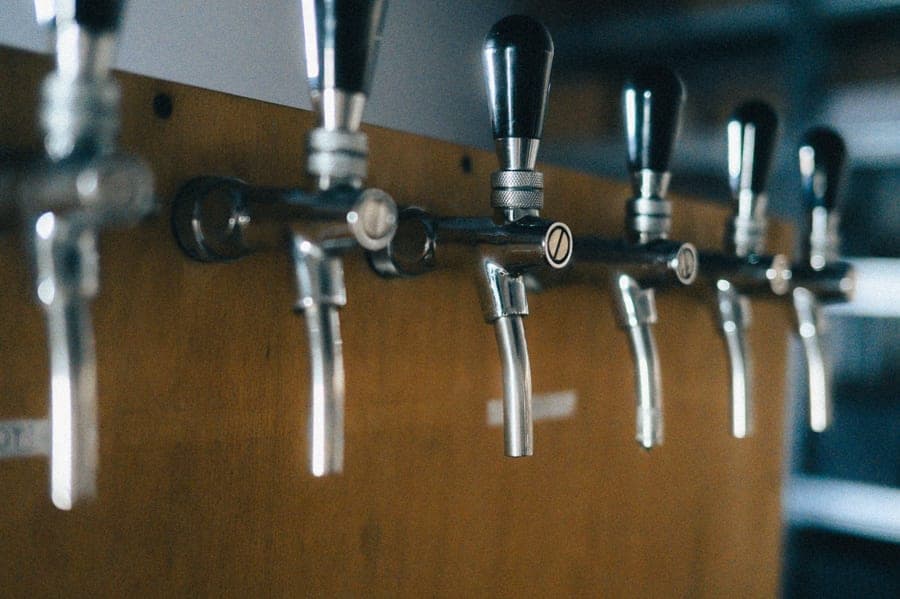 Best faucet to fit Intertap Stainless Forward-Sealing Faucet Forward-sealing stainless with interchangeable spouts. No beer sits in the faucet body between pours, which is where stickiness and off-flavors start. | Replacing stock rear-sealing faucets on a budget cabinet | |
| 5 |  Twice the taps, twice the lines Beer Line Cleaning Kit Two taps means two lines growing biofilm. The cleaning cycle takes about twenty minutes for a two-tap system and prevents the most common cause of sour draft beer. | Every two weeks of service on both lines |
Prices are checked on Amazon when you click. We never print a number we cannot verify.
One regulator against a secondary manifold
| Single regulator, two taps | Secondary manifold | |
|---|---|---|
| Pressure per keg | Shared -- both the same | Independent per keg |
| Serving a stout and an IPA together | One will be wrong | Both correct |
| Force carbonating one keg while serving another | Not possible | Yes |
| Per-keg shutoff | No | On most models |
| Cost | Included in most kits | Additional purchase |
| Interior space used | Minimal | Mounts on a wall inside |
An orange rule marks the better of the two on that row.
The thing nobody tells you
Two taps need two pressures
Here is the practical problem with a dual-tap cabinet sold as a complete package. It comes with one regulator. One regulator sets one pressure. Both kegs therefore sit at the same pressure, and over days they will both carbonate to whatever that pressure delivers at your serving temperature.
That is fine if both kegs are the same style. It is not fine in the normal case, because different styles want different carbonation levels: an English stout wants roughly 1.8 to 2.0 volumes of CO2, a standard American ale around 2.4, and a saison or a wheat beer 2.8 or higher. At 38°F those targets need meaningfully different pressures, and a single regulator cannot deliver both.
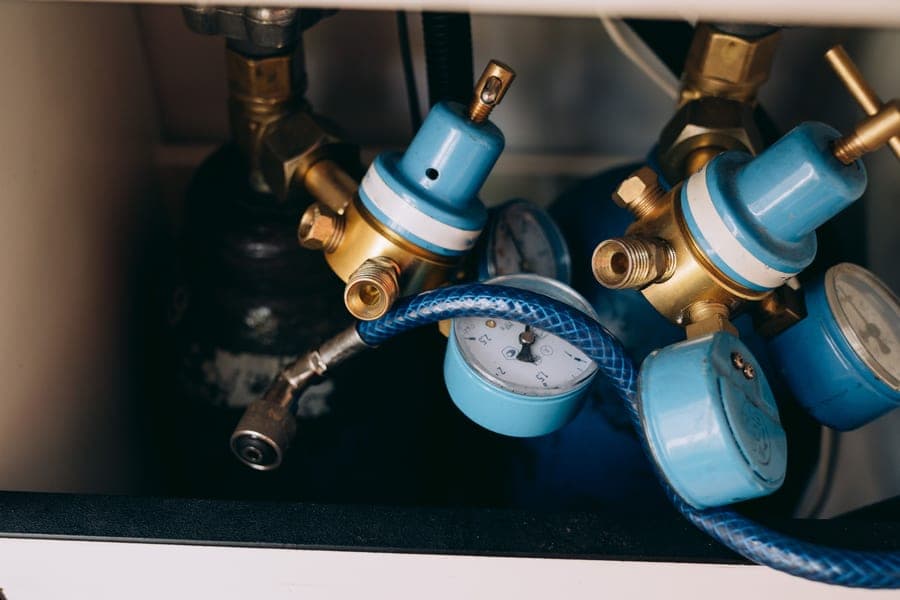
The result is one beer that pours flat and gassy-tasting or one that pours as foam, and a brewer who blames the kegerator. The fix is a secondary regulator manifold: a block of two to four independently adjustable bodies fed from the primary regulator, each feeding one keg at its own pressure.
The other benefit
Force carbonate one keg while serving another
A secondary manifold also solves a scheduling problem. Force carbonating a fresh keg means running it at a higher pressure for a day or two. On a single regulator that means over-carbonating the keg you are currently serving from.
With independent bodies you set the new keg to its carbonating pressure and leave the serving keg alone. Combined with per-body shutoff valves -- which most manifolds have -- it also means you can isolate a keg you suspect of leaking without disconnecting your whole gas system. See how to force carbonate.
Cabinet checks
Four things to verify for a two-tap build
- Internal height for a corny with a disconnect. Roughly 27 inches, not the 25 inches a keg measures bare. The single most common kegerator mistake.
- Whether four cornies actually fit alongside the gas. A cabinet rated for four kegs plus a CO2 cylinder inside is tighter than the same cabinet with the cylinder outside.
- Faucet type. Rear-sealing stock faucets hold beer in the body between pours, which goes sticky and then sour. Forward sealing is the upgrade worth making immediately.
- Tower or through-door. A tower holds warm beer in the last few inches of line, so the first pour of the evening foams. Through-door shanks avoid it.
The picks, in order
Every pick in detail
#1
Best overall dual tap
Prosumer tier
KOMOS Kegerator
KOMOS
Stainless Intertap faucets on most SKUs, four corny capacity, and a 26-82 F range that lets the cabinet double as a fermentation chamber between kegs.
Spec sheet
- Keg capacity
- 1 half barrel or 4 ball-lock corny kegs
- Temperature range
- 26-82 F -- unusually wide
- Secondary use
- Doubles as a fermentation chamber
- Control
- Extended-range digital controller
- Taps
- Stainless Intertap faucets on most SKUs
- Mobility
- Casters, regulator included
What it is not good at
Priced above a basic two-tap cabinet. Two taps still share one regulator unless you add a manifold.
Who it is for
Brewers who want two taps and a cabinet that can also ferment
#2
Best value dual tap
Mid tier
Kegco Full-Size Digital Kegerator
Kegco
Available in dual and triple tap configurations with a digital thermostat and a regulator included on most SKUs. A finished appliance that does the serving job.
Spec sheet
- Keg capacity
- 1 half barrel, or 4 ball-lock corny kegs
- Control
- Digital thermostat
- Temperature range
- Draft serving range
- Taps
- Single, dual and triple configurations sold
- Gas
- CO2 regulator included on most SKUs
- Mobility
- Casters
What it is not good at
Serving temperature range only. Check internal height against a corny with a disconnect fitted.
Who it is for
Brewers who want two taps at the lowest sensible price
#3
The purchase that makes two taps work
Prosumer tier
Secondary CO2 Regulator Manifold
Taprite / Duotight
Independently settable bodies mean you can serve a stout at 8 psi beside a saison at 14. Without this, both beers share one pressure and one of them is wrong.
Spec sheet
- Outputs
- 2, 3 or 4 bodies
- Adjustment
- Each body set independently
- Feed
- Runs off the primary regulator
- Gauges
- One per body on gauged versions
- Shutoff
- Per-body shutoff on most models
- Why
- Serve a stout at 8 psi beside a saison at 14
What it is not good at
Mounting inside a cabinet eats interior space. Gauged versions cost more than ungauged.
Who it is for
Anyone running two or more kegs
#4
Best faucet to fit
Mid tier
Intertap Stainless Forward-Sealing Faucet
Intertap
Forward-sealing stainless with interchangeable spouts. No beer sits in the faucet body between pours, which is where stickiness and off-flavors start.
Spec sheet
- Seal type
- Forward sealing
- Material
- 304 stainless
- Spout
- Interchangeable (stout, growler)
What it is not good at
Shank thread must match. Spouts for stout or growler filling are separate purchases.
Who it is for
Replacing stock rear-sealing faucets on a budget cabinet
#5
Twice the taps, twice the lines
Entry tier
Beer Line Cleaning Kit
Mark's Keg Wash / Kegco
Two taps means two lines growing biofilm. The cleaning cycle takes about twenty minutes for a two-tap system and prevents the most common cause of sour draft beer.
Spec sheet
- Method
- Hand pump or CO2-pressurized bottle
- Cleaner
- Alkaline line cleaner concentrate
- Fittings
- Ball lock disconnect and faucet thread adapters
- Brushes
- Faucet and shank brushes included
- Cycle time
- 15-20 minutes for a two-tap system
- Frequency
- Every two weeks of active service
What it is not good at
You have to actually do it. This is the most-skipped task in home draft.
Who it is for
Every two weeks of service on both lines
FAQ
Questions brewers actually ask
Do I need a secondary regulator for a dual tap kegerator?
Effectively yes, unless both kegs are the same style. One regulator sets one pressure, and different styles want different carbonation levels: a stout around 1.8 to 2.0 volumes of CO2, an American ale around 2.4, a saison 2.8 or more. At a single serving temperature those need different pressures, so one regulator means one of your beers is wrong.
Can you force carbonate one keg while serving another?
Only with a secondary regulator manifold. Force carbonating means running a keg at elevated pressure for a day or two, and on a single regulator that over-carbonates whatever else is connected. Independent manifold bodies let you set the new keg high and leave the serving keg at its own pressure.
How many taps can a standard kegerator have?
Most full-size cabinets are sold in single, dual and triple tap configurations, limited by tower width rather than cooling capacity. Beyond three taps you are usually into keezer territory, because a chest freezer collar can take as many shanks as you care to drill and the insulation handles the extra load better.
What is the difference between forward and rear sealing faucets?
A rear-sealing faucet shuts off behind the spout, so beer remains sitting in the faucet body between pours where it goes sticky and eventually sour. A forward-sealing faucet shuts off at the front, leaving the body empty and dry. It is the most noticeable quality-of-life upgrade in a home draft system and worth doing on any stock cabinet.
Sources
Read next
More on kegging
Roundup
The Best Kegerators for Homebrew
Kegerators compared on corny capacity, internal height and temperature range.
Roundup
The Best CO2 Regulators for Homebrew
Primary regulators and secondary manifolds, and what to check before buying.
Comparison
Kegerator vs Keezer: Which Should You Build?
Kegs per dollar, insulation and build effort, compared properly.

Guide
How to Force Carbonate a Keg
Set-and-forget, shake and burst methods with real pressures and timings.
Roundup
The Best Homebrew Keg Systems
What a kegging kit includes, what it omits, and the complete cost.