Roundup
The Best CO2 Regulators for Homebrew
The regulator is the component whose failure mode is an empty cylinder you did not notice. Here is what to buy and why.
The short answer
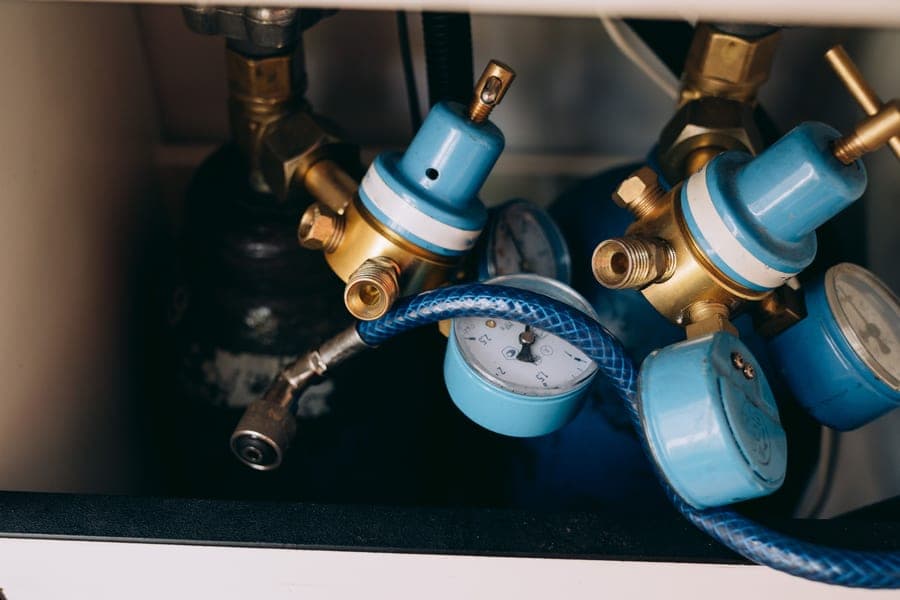
A Taprite dual-gauge forged brass regulator is the best primary CO2 regulator for homebrewing: accurate across the 0-60 psi range brewers use, serviceable with widely available rebuild kits, and it shows both output pressure and tank contents. Add a secondary manifold once you run more than one keg.
DisclosureWe earn a commission on qualifying purchases made through links on this page, at no extra cost to you. It does not change what we recommend or how we rank it -- here is how we pick and here is the full disclosure.
At a glance
Quick picks
| # | Product | Best for | Price |
|---|---|---|---|
| 1 | Best primary regulator Taprite Dual-Gauge CO2 Regulator Forged brass, dual gauges showing output pressure and tank contents, a 0-60 psi range, and rebuild kits available for years rather than a sealed disposable unit. | Any homebrew draft system, one keg or six | |
| 2 | 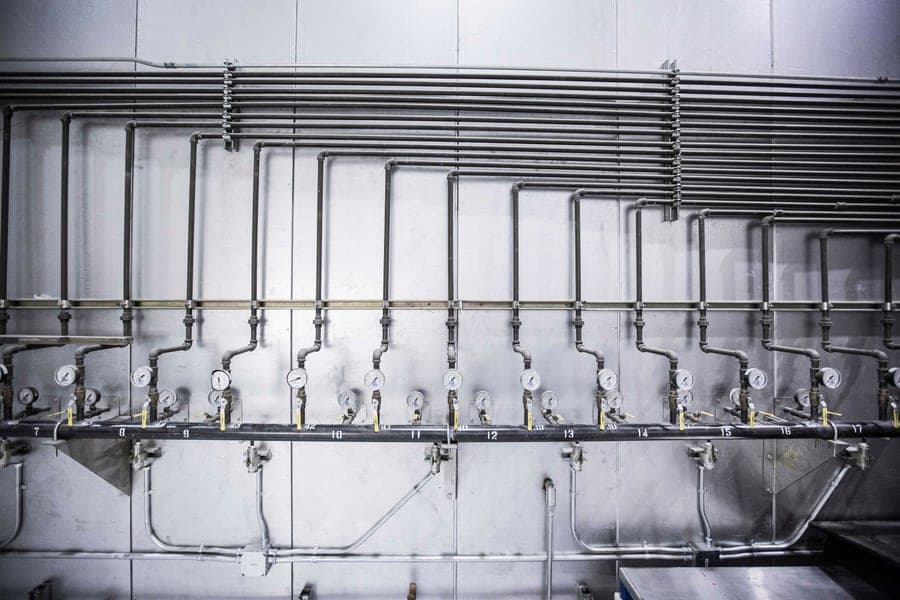 Best for multiple kegs Secondary CO2 Regulator Manifold Two to four independently adjustable bodies fed from the primary. Serve a stout at 8 psi beside a saison at 14, and carbonate a new keg without touching the one you are serving. | Two or more kegs at different carbonation levels | |
| 3 |  If you need everything Complete Homebrew Kegging Starter Kit Buying the gas and liquid side as a kit avoids thread and disconnect mismatches, which are the main way a piecemeal first build goes wrong. | Brewers starting from nothing |
Prices are checked on Amazon when you click. We never print a number we cannot verify.
What to check on a regulator
| Spec | What to look for | Why |
|---|---|---|
| Gauges | Dual: output and tank | Tank gauge warns you before you run dry |
| Output range | 0-60 psi | Covers serving and force carbonating |
| Body | Forged brass | Serviceable, does not crack |
| Inlet thread | CGA-320 | The US CO2 cylinder standard |
| Outlet | 1/4 in MFL or barb | Match your gas line fittings |
| Rebuild kit available | Yes | Diaphragms perish; this decides lifespan |
| Shutoff valve | Useful | Isolate a keg without venting the system |
Why this component matters
Its failure mode is silent
Most draft hardware fails loudly. A leaking disconnect hisses, a bad gasket drips, a blocked line pours nothing. A regulator fails quietly -- a perished diaphragm or a creeping seat lets pressure drift upward, and you find out when a keg over-carbonates or when a 5 pound cylinder empties in a week.
That is why this is the one component in a kegging setup worth buying properly. A forged brass body with available rebuild kits means a perished diaphragm is a five dollar part and twenty minutes; a sealed budget unit means a new regulator.
Reading the gauges
The tank gauge is more subtle than it looks
A dual-gauge regulator shows output pressure on one dial and tank contents on the other. The output gauge is straightforward. The tank gauge behaves in a way that surprises people, and it is worth understanding:
CO2 in a cylinder is liquid with gas above it. The pressure above a liquid is its vapor pressure, which depends only on temperature -- not on how much liquid is left. So the tank gauge reads roughly the same (around 800 psi at room temperature) from full until the last of the liquid boils off, and only then does it fall.
The practical consequence: the tank gauge does not tell you how much CO2 you have. It tells you when you are nearly out, suddenly. Weighing the cylinder is the only accurate method -- the tare weight is stamped on the collar, so the gas remaining is the current weight minus tare.
Primary and secondary
When to add a manifold
A primary regulator mounts on the cylinder and steps 800 psi down to something usable. With one keg, that is the whole system.
With two or more kegs you hit the problem that a single regulator sets a single pressure, and different styles want different carbonation. A stout at 1.8 to 2.0 volumes of CO2 and a saison at 2.8 need meaningfully different pressures at the same serving temperature, so one of them will always be wrong.
A secondary manifold fixes it: two to four independently adjustable bodies fed from the primary, each with its own gauge and usually its own shutoff. That last feature is underrated -- being able to isolate one keg lets you find a leak without taking the whole system down.
What pressure to actually set: CO2 regulator settings.
The picks, in order
Every pick in detail
#1
Best primary regulator
Mid tier
Taprite Dual-Gauge CO2 Regulator
Taprite
Forged brass, dual gauges showing output pressure and tank contents, a 0-60 psi range, and rebuild kits available for years rather than a sealed disposable unit.
Spec sheet
- Gauges
- Dual -- output pressure and tank contents
- Output range
- 0-60 psi
- Inlet
- CGA-320 CO2 tank thread
- Outlet
- 1/4 in MFL or barb
- Body
- Forged brass
- Serviceable
- Rebuild kits widely available
What it is not good at
A single body means every keg downstream shares one pressure. The tank-contents gauge reads full until the liquid CO2 is gone, which is a property of CO2 rather than a fault.
Who it is for
Any homebrew draft system, one keg or six
#2
Best for multiple kegs
Prosumer tier
Secondary CO2 Regulator Manifold
Taprite / Duotight
Two to four independently adjustable bodies fed from the primary. Serve a stout at 8 psi beside a saison at 14, and carbonate a new keg without touching the one you are serving.
Spec sheet
- Outputs
- 2, 3 or 4 bodies
- Adjustment
- Each body set independently
- Feed
- Runs off the primary regulator
- Gauges
- One per body on gauged versions
- Shutoff
- Per-body shutoff on most models
- Why
- Serve a stout at 8 psi beside a saison at 14
What it is not good at
Mounting inside a cabinet costs interior space. Ungauged versions are cheaper but make setting a body guesswork.
Who it is for
Two or more kegs at different carbonation levels
#3
If you need everything
Mid tier
Complete Homebrew Kegging Starter Kit
Kegco / KOMOS / MoreBeer
Buying the gas and liquid side as a kit avoids thread and disconnect mismatches, which are the main way a piecemeal first build goes wrong.
Spec sheet
- Keg
- One 5 gal ball-lock corny (new or reconditioned)
- Gas
- 5 lb CO2 cylinder (usually empty on arrival)
- Regulator
- Single-body dual-gauge
- Lines
- Gas line, beverage line, disconnects
- Dispense
- Picnic (party) tap on most kits
- Not included
- Cooling -- that is the kegerator decision
What it is not good at
Kit regulators are usually adequate rather than excellent, and the cylinder generally arrives empty.
Who it is for
Brewers starting from nothing
FAQ
Questions brewers actually ask
What CO2 regulator do I need for homebrewing?
A dual-gauge primary regulator with a 0-60 psi output range, a CGA-320 inlet for US CO2 cylinders, and a forged brass body with rebuild kits available. That range covers both serving pressures and the higher pressures used for force carbonating, and the rebuild kit availability is what determines whether it lasts a decade or gets thrown away.
Why does my CO2 tank gauge read full when the tank is nearly empty?
Because CO2 in a cylinder is liquid with gas above it, and the pressure of that gas is the liquid's vapor pressure, which depends only on temperature rather than on how much liquid remains. The gauge therefore reads around 800 psi from full until the last liquid boils off, then drops suddenly. Weigh the cylinder instead: the tare weight is stamped on the collar.
Do I need a secondary regulator?
Once you run two or more kegs at different carbonation levels, yes. A single regulator sets one pressure for everything downstream, and a stout at 1.8 to 2.0 volumes of CO2 and a saison at 2.8 need different pressures at the same temperature. A secondary manifold gives each keg its own adjustable body, and usually its own shutoff valve.
Why is my CO2 running out so fast?
Almost always a leak rather than consumption. A 5 pound cylinder should serve many kegs. Spray every joint with soapy water or sanitizer and look for bubbles, and check the keg lid gasket and post O-rings first since those are the usual culprits, particularly on reconditioned kegs. Pressurize the system, close the cylinder valve overnight, and see whether the output gauge has dropped by morning.
Can I use a welding CO2 regulator for beer?
Not advisably. Welding regulators are built for much higher flow rates and often cannot be set accurately in the 8 to 15 psi range that beer dispensing needs, so fine adjustment is guesswork. Beverage regulators are designed around low-pressure precision, and the price difference is small relative to the cost of over-carbonating a keg.
Read next
More on kegging
Guide
CO2 Regulator Settings: PSI by Temperature and Style
PSI by temperature and style, with the line-balancing numbers.
Roundup
The Best Homebrew Keg Systems
What a kegging kit includes, what it omits, and the complete cost.

Guide
How to Force Carbonate a Keg
Set-and-forget, shake and burst methods with real pressures and timings.

Roundup
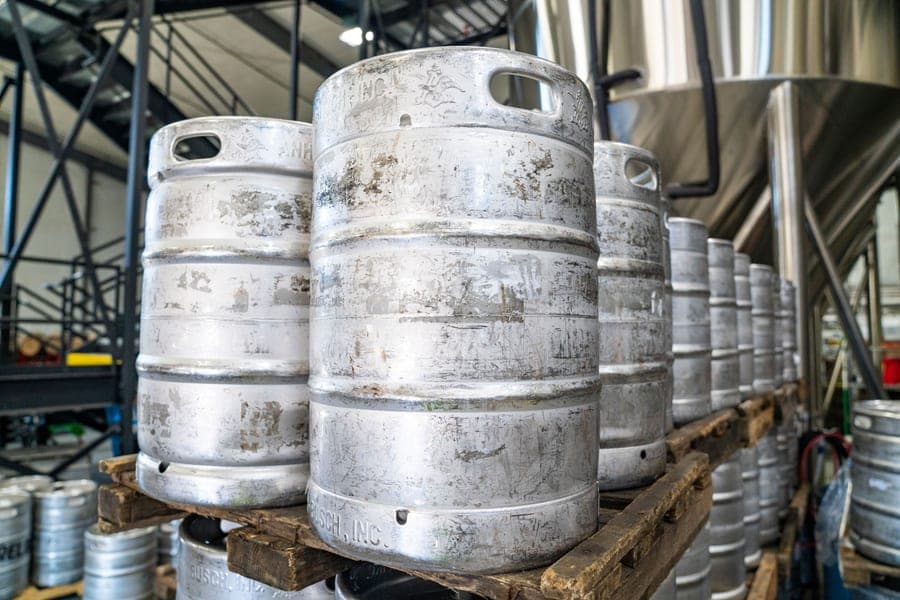
The Best Kegerators for Homebrew
Kegerators compared on corny capacity, internal height and temperature range.