Guide
How Glycol Chillers Work
A refrigerated reservoir, a pump and a loop through your fermenter. Simple in principle, and three installation details decide whether it performs.
The short answer
A glycol chiller refrigerates a reservoir of propylene glycol and water, and a pump circulates that cold fluid through a jacket in the fermenter wall or a stainless coil inside the beer. Heat leaves the beer through metal rather than across an air gap, which is why response is fast and vessel height stops mattering.
DisclosureWe earn a commission on qualifying purchases made through links on this page, at no extra cost to you. It does not change what we recommend or how we rank it -- here is how we pick and here is the full disclosure.
The loop
Four components, in a circle
- A refrigerated reservoir. A tank of propylene glycol and water with a refrigeration circuit chilling it, typically held somewhere around 28 to 30°F -- below freezing for water, which is the whole reason for the glycol.
- A pump. Usually submersible, sitting in the reservoir, pushing cold fluid out to the vessel.
- A jacket or a coil. Either a channel built into the fermenter wall, or a stainless coil suspended in the beer. This is where heat transfers from the beer into the glycol.
- A return line carrying the now-warmer glycol back to the reservoir to be re-chilled.
Temperature control is applied by a solenoid valve or by switching the pump: a controller reading the beer temperature opens the loop when the beer is above setpoint and closes it when it is at target. The chiller itself just keeps the reservoir cold.
Why glycol
Because water freezes
The reservoir has to run below the temperature you want to achieve, and for a cold crash to 34°F that means the reservoir sits close to or below 32°F. Plain water would freeze, which stops the pump and can damage the chiller.
Propylene glycol depresses the freezing point. Mixed at the manufacturer’s stated concentration -- commonly around 25 to 35 percent -- the fluid stays liquid well below freezing while remaining pumpable.
- Propylene glycol only. Automotive antifreeze is ethylene glycol and is toxic. Propylene glycol is the food-safe alternative and is what brewing suppliers sell.
- Get the concentration right. Too dilute and it can freeze in the chiller; too concentrated and it becomes viscous, pumps poorly and actually transfers heat less effectively.
- Check it annually. Glycol degrades over time and the mix drifts as water is topped up.
Jacket or coil
Two ways to get the cold into the beer
Jacket
A channel built into the vessel wall, so glycol flows around the outside of the tank and nothing enters the beer. Cooling is even across the whole wetted surface, there is nothing extra to sanitize, and this is what makes a vessel a unitank. The downside is that jacketed vessels are expensive and start at capacities larger than most homebrewers need.
Coil
A stainless coil suspended inside the beer, with glycol flowing through it. Cheaper by a wide margin, available as a factory option on several conicals, and it achieves the same direct cooling. The trade is that it is another surface inside the fermenter to clean and sanitize, and cooling is slightly less even -- the beer nearest the coil is coldest.
For a homebrewer the coil is almost always the right answer: conical vs unitank walks through the cost difference.
Sizing
Horsepower against vessels
Rough sizing guide
| Capacity | Vessels | Suits |
|---|---|---|
| 1/4 HP | 1-2 homebrew fermenters | Most homebrew setups |
| 1/3 - 1/2 HP | 2-4 fermenters | Multiple batches, different setpoints |
| 3/4 HP and up | Several, or a unitank | Nano and small commercial |
The load is bigger than it looks. Active fermentation releases real heat for two to three days, and a crash cool asks the chiller to remove the thermal mass of the entire batch. An undersized chiller runs continuously and never reaches setpoint, which is both expensive and ineffective. Err one size up -- the chiller is the component you keep when the vessels change.
Installation
The three mistakes that ruin performance
- No exhaust path. A chiller is a refrigeration unit: it moves heat out of the glycol and into the surrounding air. Put it in a sealed cupboard and it heats the air it is trying to reject heat into, and efficiency collapses. Clearance on all sides and a route for warm air to leave the space.
- Uninsulated lines. Every uninsulated foot of line loses cooling capacity to the room and sweats condensation onto the floor. Foam pipe insulation on every run, including the return.
- Probe in the air. The same rule as a chamber. The controller should read the beer -- ideally through a thermowell -- rather than the glycol temperature or the room. See fermentation temperature control.
What we recommend
The products on this page
A typical homebrew-scale unit
Prosumer tier
Penguin Chillers Glycol Chiller
Penguin Chillers
A refrigerated reservoir with a submersible pump and a digital setpoint. A 1/4 HP unit covers one or two homebrew vessels.
Spec sheet
- Capacity
- 1/4 HP and larger units sold
- Medium
- Propylene glycol / water mix
- Pump
- Submersible pump in the reservoir
- Control
- Digital setpoint on the chiller
- Vessels served
- Typically 1-2 jacketed or coiled fermenters
- Ambient
- Needs airflow and a warm-air escape path
What it is not good at
Needs clearance and an exhaust path for the heat it rejects. Insulate every line.
Who it is for
One or two fermenters
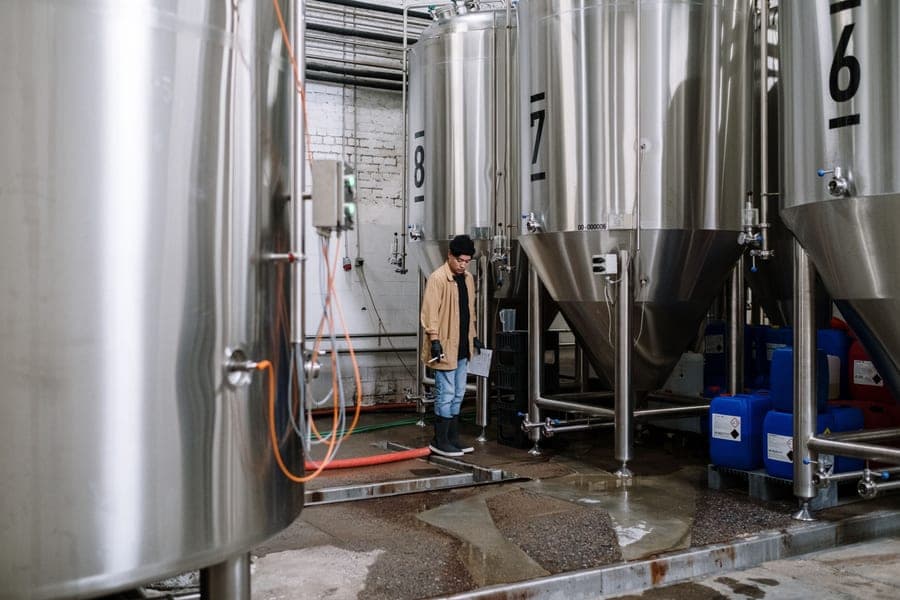
A vessel it connects to
Prosumer tier
Spike Brewing CF5 Conical Fermenter
Spike Brewing
A welded conical with an optional cooling coil is the cheaper route to glycol cooling than a jacketed unitank, and the pairing is why glycol is bought at all.
Spec sheet
- Capacity
- 8 gal / 30 L (5 gal batch)
- Material
- Welded 304 stainless, no crevices
- Pressure
- Rated for pressure transfer and spunding
- Ports
- Tri-clamp throughout
- Cone
- Full cone with a dump valve
- Options
- Cooling coil, thermowell, CIP arm
What it is not good at
The coil is an option specified at order time, not a retrofit.
Who it is for
Conicals too tall for any chamber
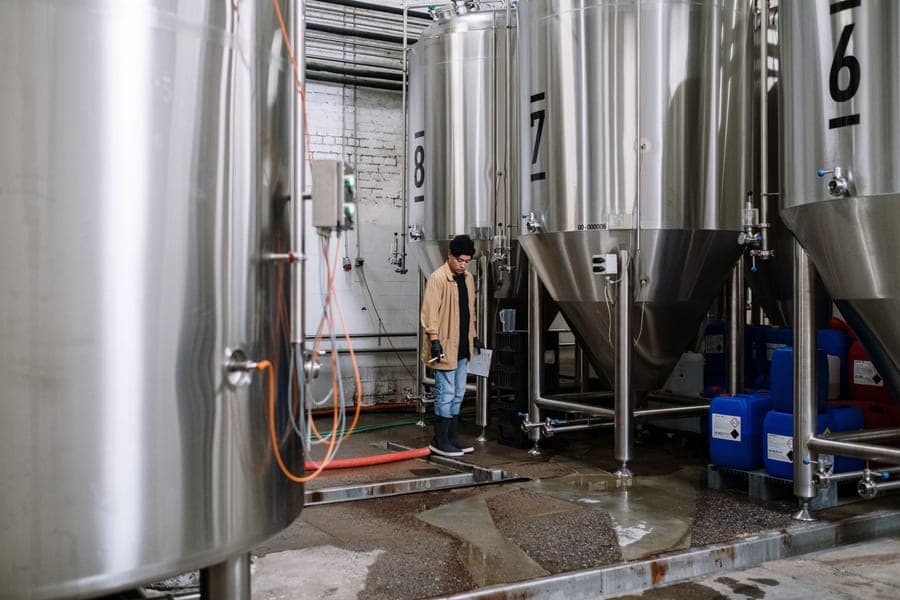
The jacketed version
Prosumer tier
Ss Brewtech Unitank
Ss Brewtech
The glycol channel is built into the wall, so there is nothing inside the beer and cooling is even across the whole vessel surface.
Spec sheet
- Capacity
- Half barrel (0.5 bbl) and larger
- Pressure
- Rated vessel with a pressure relief valve
- Cooling
- Glycol jacket, no chamber needed
- Ports
- Tri-clamp, thermowell, carb stone port
- Process
- Ferment, carbonate and serve from one vessel
- Footprint
- Needs floor space and a glycol loop
What it is not good at
Far more vessel than a 5 gallon brewer needs, and it only makes sense with a chiller.
Who it is for
Half-barrel batches, ferment-carbonate-serve from one vessel
FAQ
Questions brewers actually ask
How does a glycol chiller work?
It refrigerates a reservoir of propylene glycol and water to below freezing, and a pump circulates that cold fluid through either a jacket built into the fermenter wall or a stainless coil suspended in the beer. Heat passes from the beer into the glycol through metal rather than across an air gap, which is why response is fast and vessel height stops being a constraint.
Why use glycol instead of water in a chiller?
Because the reservoir has to run below the temperature you want to reach, and for a cold crash that means close to or below freezing. Plain water would freeze, stopping the pump and potentially damaging the chiller. Propylene glycol depresses the freezing point so the fluid stays liquid and pumpable well below 32 degrees Fahrenheit.
What concentration of glycol should I use?
Whatever the chiller manufacturer specifies, commonly in the region of 25 to 35 percent propylene glycol in water. Too dilute and the mix can freeze inside the chiller; too concentrated and it becomes viscous, pumps poorly and actually transfers heat less effectively. Check the concentration annually, since topping up with water dilutes it over time.
Is a cooling coil as good as a glycol jacket?
Nearly, and it costs far less. A jacket cools the whole wetted wall evenly and puts nothing inside the beer; a coil suspended in the beer cools slightly less evenly and is another surface to clean and sanitize. For homebrew volumes the coil is almost always the sensible choice, and several conicals offer one as a factory option.
Where should a glycol chiller be installed?
Somewhere with clearance on all sides and a path for warm air to leave. A chiller rejects the heat it removes from the glycol into the surrounding air, so a sealed cupboard means it ends up heating the air it is trying to dump heat into and efficiency collapses. Insulate every line between the chiller and the vessel as well.
Read next
More on temperature control
Roundup
The Best Glycol Chillers for Homebrewing
Glycol chillers sized for homebrewing, and when a freezer is the better buy.

Comparison
Glycol Chiller vs Fermentation Fridge
Air cooling against direct wall cooling, and when the upgrade is justified.
Comparison
Conical Fermenter vs Unitank
What the glycol jacket and pressure rating add, and whether you need them.
Review
Spike Brewing CF5 Conical Review
The buy-once welded conical, and the cooling problem it creates.
Guide
Fermentation Temperature Control
Target temperatures, probe placement and the first 48 hours that decide flavor.
Roundup
The Best Wort Chillers
Immersion, counterflow and plate chillers compared on the trades that matter.