Roundup
The Best Pressure Fermenters
Closed transfer is the biggest single quality gain available to a homebrewer. These are the vessels rated to do it.
The short answer
The FermZilla All Rounder with its pressure kit is the best pressure fermenter for most homebrewers: rated for pressure fermentation and closed transfer at the lowest working price. The KegLand KegMenter is the stainless option in a chamber-friendly shape, and the Spike CF5 is the welded vessel for life.
DisclosureWe earn a commission on qualifying purchases made through links on this page, at no extra cost to you. It does not change what we recommend or how we rank it -- here is how we pick and here is the full disclosure.
At a glance
Quick picks
| # | Product | Best for | Price |
|---|---|---|---|
| 1 | Best overall FermZilla All Rounder 30 L Rated for pressure fermentation with its kit, cylindrical so it fits chambers a cone will not, and clear so you can watch the ferment. The cheapest genuine route to closed transfer. | Brewers who keg and want closed transfer for the least money | |
| 2 |  Best stainless pressure vessel KegLand KegMenter Fermenter 30 L 304 stainless rated for pressure fermentation and transfer, in a keg form factor that fits chambers and racks designed for cornies. | Brewers who want stainless and pressure in a keg-shaped footprint | |
| 3 |  Best pressure plus yeast harvesting FermZilla Tri-Conical 27 L The collection butt gives you proper two-stage yeast harvesting, and the pressure kit gives closed transfer. The only budget vessel that does both. | Brewers who repitch and also want closed transfer | |
| 4 |  Best welded pressure vessel Spike Brewing CF5 Conical Fermenter Welded 304 stainless, tri-clamp throughout, rated for spunding and pressure transfer, with a full cone and dump valve. Nothing here is a consumable except gaskets. | Brewers buying once for a long time | |
| 5 | 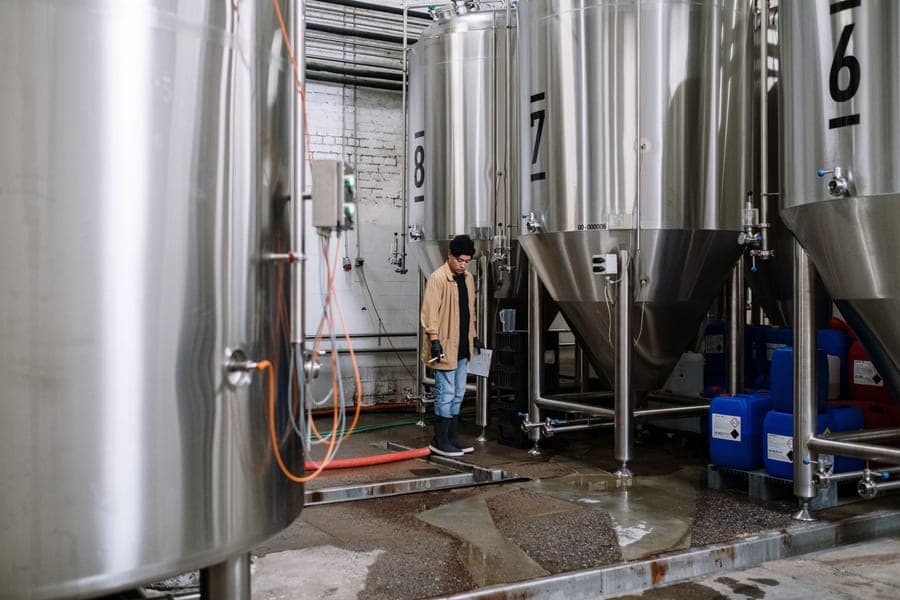 Best for serving from the fermenter Ss Brewtech Unitank Jacketed and rated, so one vessel ferments, carbonates and serves. No chamber needed because the glycol jacket does the cooling. | Half-barrel batches with a glycol loop in place |
Prices are checked on Amazon when you click. We never print a number we cannot verify.
Rated vessels compared
| All Rounder | KegMenter | Tri-Conical | Spike CF5 | |
|---|---|---|---|---|
| Material | Clear PET | 304 stainless | Clear PET | Welded stainless |
| Capacity | 30 L | 30 L | 27 L | 8 gal |
| Pressure rated | With kit | Yes | With kit | Yes |
| Closed transfer | Yes | Yes | Yes | Yes |
| Trub cone | No | No | Yes | Yes |
| Yeast harvesting | No | No | Collection butt | Dump valve |
| See the ferment | Yes | No | Yes | No |
| Fits a chamber | Yes | Yes | Check height | Rarely |
| Working price | Lowest | Mid | Low to mid | Highest |
An orange rule marks the better of the two on that row.
Why this matters most
Closed transfer, not pressure fermentation
Pressure fermentation gets the attention, and it is genuinely useful. But for most brewers the reason to buy a rated vessel is the other thing it enables: closed transfer.
A siphon moves beer through air. Every transfer picks up oxygen, and oxygen destroys hop aroma faster than any other variable in brewing -- a hazy IPA that tasted vivid in the fermenter can be noticeably duller in the keg three days later purely from transfer pickup. A rated vessel lets you purge the keg with CO2 and push the beer across under pressure, so the beer never meets air at all.
If you brew hoppy beer and you keg, this is the highest-value upgrade on this entire site. It outranks a cone, a brewing system and a glycol chiller.
What pressure fermentation adds
Faster, cleaner, warmer
Fermenting under 10 to 15 psi suppresses the yeast’s production of esters and fusel alcohols. The practical consequences:
- Ferment clean at warmer temperatures. A lager yeast under pressure can ferment in the low 60s rather than the high 40s without throwing the esters that temperature would normally produce. That removes the need for a dedicated cold chamber for lagers.
- Much faster. Warmer fermentation is faster fermentation, and pressure lets you have the speed without the flavor penalty. A pressure-fermented lager can be ready in a fraction of the usual time.
- Natural carbonation. The CO2 the yeast produces dissolves into the beer under pressure, so the beer arrives at the keg partly or fully carbonated.
- No oxygen ingress at all. A sealed, pressurized vessel does not draw air in when the temperature drops, which an airlocked vessel does during a cold crash.
The full mechanism, including what pressure does not fix, is in pressure fermentation explained, and the practical setup is how to pressure ferment.
Safety
Rated means rated. There is no workaround.
This is the one place in homebrewing where getting it wrong can hurt you rather than just ruin a batch. A vessel designed for atmospheric fermentation has a gasketed lid held by clips or a band, and it is not engineered to contain pressure. Under 15 psi a 7 gallon vessel is holding a substantial amount of stored energy, and a failure is violent.
- Only pressurize explicitly rated vessels. Not a Brew Bucket, not a Catalyst, not a bucket with a modified lid.
- Always fit a working pressure relief valve or spunding valve. Fermentation generates more CO2 than you expect, and a sealed vessel with no relief path will reach its limit.
- Check the gasket before every pressurized ferment. A perished or misseated gasket is the usual failure point.
- Do not exceed the stated rating to speed carbonation. The rating is the rating.
The picks, in order
Every pick in detail
#1
Best overall
Mid tier
FermZilla All Rounder 30 L
KegLand
Rated for pressure fermentation with its kit, cylindrical so it fits chambers a cone will not, and clear so you can watch the ferment. The cheapest genuine route to closed transfer.
Spec sheet
- Capacity
- 30 L / 7.9 gal
- Shape
- Cylindrical (no cone)
- Pressure rating
- Rated for pressure fermentation with the pressure kit
- Material
- Clear PET
- Ports
- Ball lock posts, 4 in tri-clover lid option
- Weight
- Light enough to lift full-handed
What it is not good at
The pressure lid, posts and spunding valve are separate purchases, so the working price is well above the vessel price. PET scratches.
Who it is for
Brewers who keg and want closed transfer for the least money
#2
Best stainless pressure vessel
Mid tier
KegLand KegMenter Fermenter 30 L
KegLand
304 stainless rated for pressure fermentation and transfer, in a keg form factor that fits chambers and racks designed for cornies.
Spec sheet
- Capacity
- 30 L / 7.9 gal (also 40 L and 58 L)
- Material
- 304 stainless, keg-style body
- Pressure
- Rated for pressure fermentation and transfer
- Shape
- Flat bottom -- no trub cone
- Ports
- Ball lock posts, floating dip tube option
- Opacity
- Opaque -- you cannot see the krausen
What it is not good at
Flat bottom, so no trub cone and no bottom yeast harvesting. Opaque, so fermentation progress is invisible.
Who it is for
Brewers who want stainless and pressure in a keg-shaped footprint
#3
Best pressure plus yeast harvesting
Mid tier
FermZilla Tri-Conical 27 L
KegLand
The collection butt gives you proper two-stage yeast harvesting, and the pressure kit gives closed transfer. The only budget vessel that does both.
Spec sheet
- Capacity
- 27 L / 7.1 gal (also 55 L)
- Cone
- Detachable collection butt for yeast harvest
- Fitting
- 3 in tri-clover ferrule molded into the tank
- Valve
- Redesigned tri-clover dump valve
- Material
- Clear PET body
- Pressure
- Yes, with the pressure kit
What it is not good at
Tall, PET, and the kit is extra. The collection butt is another joint to clean and another gasket to maintain.
Who it is for
Brewers who repitch and also want closed transfer
#4
Best welded pressure vessel
Prosumer tier
Spike Brewing CF5 Conical Fermenter
Spike Brewing
Welded 304 stainless, tri-clamp throughout, rated for spunding and pressure transfer, with a full cone and dump valve. Nothing here is a consumable except gaskets.
Spec sheet
- Capacity
- 8 gal / 30 L (5 gal batch)
- Material
- Welded 304 stainless, no crevices
- Pressure
- Rated for pressure transfer and spunding
- Ports
- Tri-clamp throughout
- Cone
- Full cone with a dump valve
- Options
- Cooling coil, thermowell, CIP arm
What it is not good at
The most expensive option by a wide margin, and too tall with a stand for most chest freezers.
Who it is for
Brewers buying once for a long time
#5
Best for serving from the fermenter
Prosumer tier
Ss Brewtech Unitank
Ss Brewtech
Jacketed and rated, so one vessel ferments, carbonates and serves. No chamber needed because the glycol jacket does the cooling.
Spec sheet
- Capacity
- Half barrel (0.5 bbl) and larger
- Pressure
- Rated vessel with a pressure relief valve
- Cooling
- Glycol jacket, no chamber needed
- Ports
- Tri-clamp, thermowell, carb stone port
- Process
- Ferment, carbonate and serve from one vessel
- Footprint
- Needs floor space and a glycol loop
What it is not good at
Requires a glycol chiller, requires floor space, and is more capacity than a 5 gallon brewer can use.
Who it is for
Half-barrel batches with a glycol loop in place
FAQ
Questions brewers actually ask
What is the best pressure fermenter for homebrewing?
The FermZilla All Rounder with its pressure kit, for most brewers. It is rated for pressure fermentation and closed transfer at the lowest working price, it is cylindrical so it fits chambers a coned vessel will not, and it is clear so you can see the fermentation. The KegMenter is the stainless alternative in a keg-shaped footprint, and the Spike CF5 is the welded buy-once option.
Why is closed transfer so important?
Because oxygen destroys hop aroma faster than any other variable in brewing. A siphon moves beer through air and picks up oxygen on the way, which is why a hazy IPA that smelled vivid in the fermenter can taste noticeably duller in the keg a few days later. Pushing beer across under CO2 from a sealed vessel means it never meets air at all.
Is pressure fermentation safe?
Yes, in a vessel explicitly rated for it with a working pressure relief or spunding valve fitted. It is not safe in an unrated vessel: a gasketed atmospheric lid is not engineered to contain pressure, and a 7 gallon vessel at 15 psi stores enough energy that a failure is violent. Never pressurize a Brew Bucket, a Catalyst or a modified bucket.
What pressure should I ferment at?
Ten to fifteen psi covers most purposes. That range is enough to suppress ester and fusel production so you can ferment warmer without flavor penalties, and it partly carbonates the beer as it goes. Going higher slows the yeast considerably and approaches vessel ratings without adding benefit, so there is no reason to.
Can I ferment a lager under pressure at ale temperatures?
Largely, yes, and it is one of the most useful things pressure fermentation does. Pressure suppresses the esters that lager yeast would otherwise produce at warmer temperatures, so a lager fermented in the low 60s under pressure comes out far cleaner than one fermented at the same temperature at atmospheric pressure. It is not identical to a traditional cold lager fermentation, but it is close enough to remove the need for a dedicated cold chamber.
Sources
Read next
More on fermenters
Guide
Pressure Fermentation, Explained
The actual mechanism, the psi to use, and what pressure cannot fix.
Roundup
The Best Conical Fermenters
Stainless, plastic and pressure-capable conicals compared, with chamber-fit warnings.
Roundup
The Best Homebrew Keg Systems
What a kegging kit includes, what it omits, and the complete cost.
Roundup
The Best Stainless Conical Fermenters
Welded against formed stainless, and which vessels justify the price.