Roundup
The Best Beer Line Cleaning Kits
Biofilm in a beer line will sour everything that passes through it, and the brewer always blames the beer. Here is the fix.
The short answer
A pressurized bottle or hand pump cleaning kit with an alkaline line cleaner and ball lock adapters is all you need, and the cycle takes about twenty minutes for a two-tap system. Clean every two weeks of active service and always between kegs of very different beers.
DisclosureWe earn a commission on qualifying purchases made through links on this page, at no extra cost to you. It does not change what we recommend or how we rank it -- here is how we pick and here is the full disclosure.
At a glance
Quick picks
| # | Product | Best for | Price |
|---|---|---|---|
| 1 | Best overall Beer Line Cleaning Kit A pressurized bottle or hand pump with ball lock and faucet adapters, alkaline line cleaner concentrate, and faucet and shank brushes. Everything the job needs in one purchase. | Any kegerator or keezer in regular service | |
| 2 |  Best general cleaner to pair with it Five Star PBW Alkaline Brewery Wash Non-caustic alkaline wash that is safe on stainless, PET and silicone. Use it for soaking kegs, lids and disconnects while the line cleaner handles the lines. | Kegs, fermenters and anything that is not a line | |
| 3 |  What goes in after the rinse Five Star Star San Sanitizer No-rinse acid sanitizer. After cleaning and rinsing a line you push sanitizer through it, and you leave it there until the next keg goes on. | The final step of every cleaning cycle | |
| 4 | 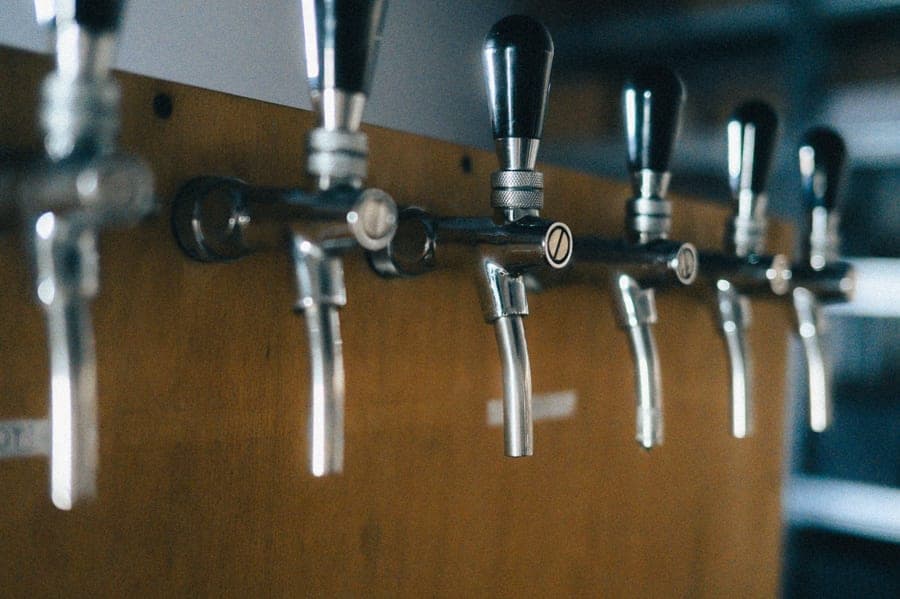 Makes cleaning easier Intertap Stainless Forward-Sealing Faucet Forward-sealing stainless leaves no beer in the faucet body between pours, so the faucet itself stops being a source of soil in the first place. | Replacing a sticky stock faucet |
Prices are checked on Amazon when you click. We never print a number we cannot verify.
Cleaning schedule
| Interval | What to do | Why |
|---|---|---|
| Every keg change | Rinse the line, sanitize | Baseline hygiene |
| Every 2 weeks of service | Full alkaline clean cycle | Biofilm forms on this timescale |
| Between very different beers | Full clean cycle | Flavor carryover is real |
| Every 3 months | Dismantle faucets and disconnects | Soil hides in the bodies |
| Annually | Replace beverage line | Line goes permanently cloudy |
What actually grows in there
Why this is not optional
A beer line is a dark, wet, sugar-coated tube at a comfortable temperature. Within a few weeks of service it develops a biofilm of lactic acid bacteria, acetic acid bacteria and wild yeast -- organisms that live happily in beer and produce exactly the flavors you do not want: sourness, vinegar, cidery notes, a dull mustiness.
The insidious part is where the blame lands. The beer in the keg is fine; the beer in the glass is not; so the brewer concludes the batch was infected, or the yeast was bad, or the recipe was wrong. Meanwhile the actual cause is six feet of tubing that has not been cleaned since it was installed.
This is the most-skipped maintenance task in home draft and the cause of the most wasted beer. It takes twenty minutes a fortnight.
The cycle
How to actually do it
- Disconnect the keg and relieve the pressure.
- Push water through first to clear beer out of the line, until it runs clear.
- Push alkaline line cleaner through at the concentration on the label, then let it sit in the line for 15 to 20 minutes. The dwell is doing the work; pushing it straight through achieves much less.
- Rinse thoroughly. Line cleaner is caustic and must not reach your beer. Push several volumes of clean water through until there is no slipperiness and no smell.
- Push sanitizer through and leave it in the line until the next keg goes on.
- Brush the faucet and the shank with the brushes in the kit. The faucet body is where visible soil accumulates, and a rear-sealing faucet is much worse than a forward-sealing one.
Replace, do not rescue
When a line is past cleaning
Beverage line does not last forever. PVC tubing goes permanently cloudy, absorbs flavor and eventually develops a surface texture that no cleaning cycle will restore. If a line looks hazy when you hold it up after a clean, replace it -- it is a cheap consumable and the cause of recurring off-flavors that survive cleaning.
Annually is a sensible default for lines in constant service. Thicker beverage line is also what you use to balance the system: line length and internal diameter determine how much pressure is dropped between keg and faucet, which is half of why a pour foams. The numbers are in CO2 regulator settings.
The picks, in order
Every pick in detail
#1
Best overall
Entry tier
Beer Line Cleaning Kit
Mark's Keg Wash / Kegco
A pressurized bottle or hand pump with ball lock and faucet adapters, alkaline line cleaner concentrate, and faucet and shank brushes. Everything the job needs in one purchase.
Spec sheet
- Method
- Hand pump or CO2-pressurized bottle
- Cleaner
- Alkaline line cleaner concentrate
- Fittings
- Ball lock disconnect and faucet thread adapters
- Brushes
- Faucet and shank brushes included
- Cycle time
- 15-20 minutes for a two-tap system
- Frequency
- Every two weeks of active service
What it is not good at
The caustic cleaner needs thorough rinsing before the next keg goes on. Twenty minutes per cycle that you have to actually do.
Who it is for
Any kegerator or keezer in regular service
#2
Best general cleaner to pair with it
Entry tier
Five Star PBW Alkaline Brewery Wash
Five Star Chemicals
Non-caustic alkaline wash that is safe on stainless, PET and silicone. Use it for soaking kegs, lids and disconnects while the line cleaner handles the lines.
Spec sheet
- Type
- Alkaline, non-caustic powdered wash
- Dose
- ~1 oz per gal for heavy soil
- Temperature
- Works best warm (120-150 F)
- Contact
- 20-30 min soak, or recirculate
- Safe on
- Stainless, PET, glass, silicone
- Not a sanitizer
- Clean first, then sanitize separately
What it is not good at
Not a sanitizer -- clean first, then sanitize separately. Works best warm.
Who it is for
Kegs, fermenters and anything that is not a line
#3
What goes in after the rinse
Entry tier
Five Star Star San Sanitizer
Five Star Chemicals
No-rinse acid sanitizer. After cleaning and rinsing a line you push sanitizer through it, and you leave it there until the next keg goes on.
Spec sheet
- Type
- Acid-anionic, no-rinse
- Contact time
- 1-2 minutes
- Dilution
- 1 oz per 5 gal
What it is not good at
Needs low-alkalinity water to stay effective. The foam is harmless and should not be rinsed away.
Who it is for
The final step of every cleaning cycle
#4
Makes cleaning easier
Mid tier
Intertap Stainless Forward-Sealing Faucet
Intertap
Forward-sealing stainless leaves no beer in the faucet body between pours, so the faucet itself stops being a source of soil in the first place.
Spec sheet
- Seal type
- Forward sealing
- Material
- 304 stainless
- Spout
- Interchangeable (stout, growler)
What it is not good at
You still have to clean the lines. This reduces the problem rather than eliminating it.
Who it is for
Replacing a sticky stock faucet
FAQ
Questions brewers actually ask
How often should beer lines be cleaned?
Every two weeks of active service, and always between kegs of very different beers. Biofilm containing lactic and acetic acid bacteria and wild yeast forms on roughly that timescale, and once established it sours everything passing through the line. A full cycle takes about twenty minutes for a two-tap system.
What happens if you do not clean beer lines?
The line develops a biofilm of lactic acid bacteria, acetic acid bacteria and wild yeast, which produces sourness, vinegar notes and a dull mustiness in every beer that passes through. The beer in the keg stays fine, so brewers typically blame the batch, the yeast or the recipe rather than the tubing. It is the most common cause of mysteriously bad draft beer.
Can I clean beer lines with just hot water?
No. Water rinses out beer residue but does nothing to the biofilm that is actually causing the problem, because biofilm is a structured microbial layer that needs a chemical attack. Use a proper alkaline line cleaner, let it dwell in the line for 15 to 20 minutes rather than pushing it straight through, then rinse thoroughly and follow with sanitizer.
How often should I replace beer line?
Annually for lines in constant service. PVC beverage tubing goes permanently cloudy, absorbs flavor compounds and eventually develops a surface texture that no cleaning cycle restores. If a line still looks hazy after a full clean, replace it rather than cleaning again, because it is a cheap consumable and the cause of off-flavors that survive cleaning.
Do I need to take the faucet apart to clean it?
Every few months, yes. Pushing cleaner through a closed faucet does not clean the inside of the faucet body, which is where visible soil accumulates, especially on rear-sealing designs that hold beer between pours. Dismantle it, soak the parts in a non-caustic alkaline wash, brush them and inspect the seals.
Read next
More on kegging
Roundup
The Best Kegerators for Homebrew
Kegerators compared on corny capacity, internal height and temperature range.
Guide
CO2 Regulator Settings: PSI by Temperature and Style
PSI by temperature and style, with the line-balancing numbers.
Guide
Homebrew Kegging Setup, Step by Step
The setup order, plus the three day-one failures and how to avoid them.
Guide
How to Clean a Brew Kettle
Alkaline for protein, acid for scale, and why the valve must come apart.
Roundup
The Best Homebrew Keg Systems
What a kegging kit includes, what it omits, and the complete cost.