Roundup
The Best Electric All-in-One Brewing Systems
Five systems that cover the whole useful range, from a first all-grain rig to a 240V workhorse, with the generation differences spelled out.
The short answer
The Anvil Foundry 10.5 is the best electric all-in-one for most upgrading homebrewers: its switchable 120V/240V heater means you can start on a kitchen circuit and move to a dryer outlet later without buying a second system. Choose the BrewZilla Gen 4.1 instead if you want built-in wifi and a chiller included.
DisclosureWe earn a commission on qualifying purchases made through links on this page, at no extra cost to you. It does not change what we recommend or how we rank it -- here is how we pick and here is the full disclosure.
At a glance
Quick picks
| # | Product | Best for | Price |
|---|---|---|---|
| 1 |  Best overall Anvil Foundry 10.5 Gallon The dual-voltage heater is the feature that matters: 1600W on a standard 120V outlet to get started, 2800W on 240V when you have the circuit. Nothing else in this class lets you defer that electrical decision. | Brewers who want one system to cover 5 and 10 gallon batches | |
| 2 |  Best connected system BrewZilla Gen 4.1 35 L RAPT wifi, a delay timer and real step-mash programming, plus a counterflow chiller in the box. The Gen 4.1 base drains fully concave and puts the pump where you can reach it, which the older generations did not. | Brewers who want step mashing scheduled and logged without standing over it | |
| 3 |  Best for 10 gallon batches Grainfather G40 A 40 L vessel that genuinely delivers around 30 L into the fermenter, with a variable-speed recirculation pump and the best-documented app control in the category. The counterflow chiller is included. | Brewers who have settled on bigger batches and want the brew day shortened | |
| 4 | 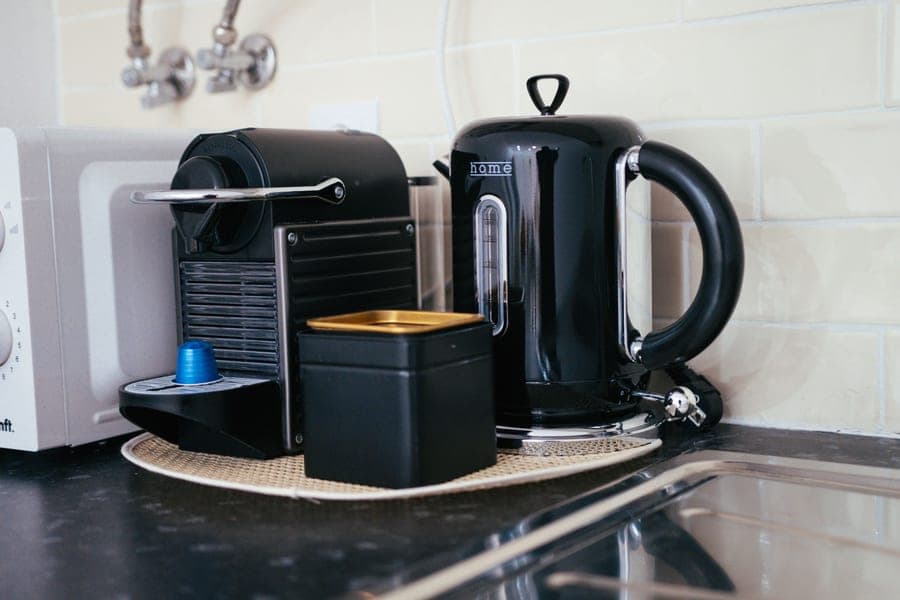 Best compact option Grainfather G30 The same app control and pump quality as the G40 in a 30 L vessel that fits a normal counter. If you will never brew more than 6 gallons, this is the G40 without the footprint or the premium. | Brewers with a kitchen rather than a garage, making 5 to 6 gallon batches | |
| 5 | 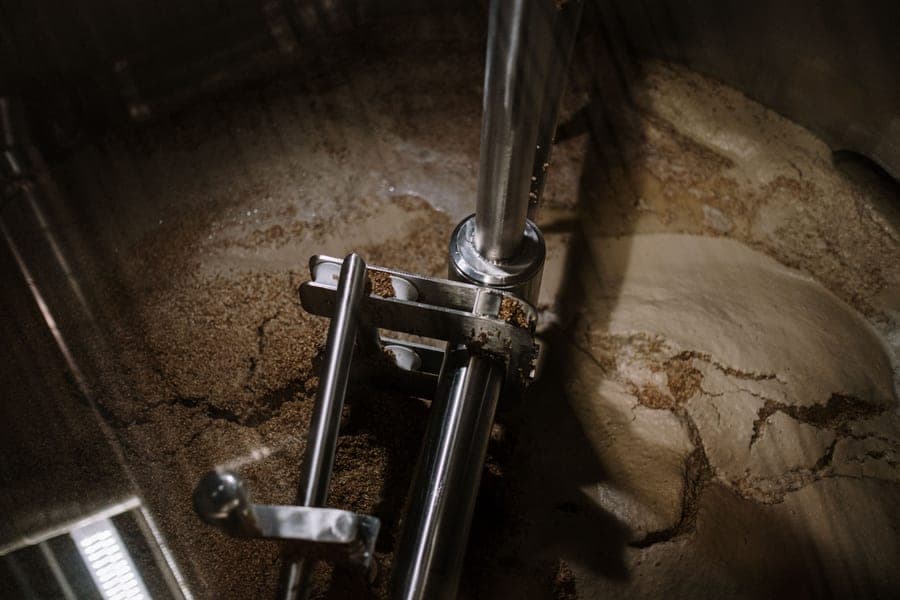 Best welded build Clawhammer Supply 10 Gallon Electric Brewing System Welded 304 stainless with a 5500W 240V element. This is the one on the list you service rather than replace, and the one that boils a 10 gallon batch hardest. | Brewers who want a rebuildable 240V rig rather than a sealed appliance |
Prices are checked on Amazon when you click. We never print a number we cannot verify.
Spec comparison, manufacturer published figures
| Spec | Anvil Foundry 10.5 | BrewZilla Gen 4.1 | Grainfather G40 | Clawhammer 10 gal |
|---|---|---|---|---|
| Vessel capacity | 10.5 gal / 40 L | 35 L / 9.2 gal | 40 L / 10.5 gal | 10 gal / 38 L |
| Realistic finished volume | 7-8 gal | ~30 L / 8 gal | ~30 L / 8 gal | ~8 gal |
| Voltage | 120V or 240V switchable | 110V or 220V by region | Single voltage by region | 240V only |
| Element power | 1600W / 2800W | 1600W / 2500W | Regional | 5500W |
| Pump | Optional add-on | Built in | Built in, variable speed | External |
| Wort chiller included | No | Yes | Yes | No |
| App / wifi control | No | RAPT wifi | Bluetooth app | No |
| Fittings | Stamped | Stamped | Stamped | Welded tri-clamp |
An orange rule marks the better of the two on that row.
How to read this list
Buy for finished volume and voltage, in that order
Every one of these systems will mash and boil a batch of beer. The differences that actually decide whether you are happy in two years are not the ones the marketing leads with. They are: how much beer you really get into the fermenter, whether your house can feed the element, and whether you will still be able to buy a gasket.
Finished volume, not vessel volume. A 35 L system does not make 35 L of beer. Grain absorbs roughly a liter per kilogram, you boil off 8 to 12 percent, and there is dead space below the false bottom. Expect 23 to 30 L into the fermenter from a 35 to 40 L vessel. If you want 5 gallon batches with headroom for a big stout, that is the range to be in.
Voltage decides your ceiling. A 120V 1600W element will boil a 5 to 6 gallon batch, gently. It will not hold a vigorous boil on 10 gallons, and no firmware fixes that. If a 240V circuit is not realistically available to you, either size down or buy a switchable system and defer the decision. This is the most common sizing regret in the category.
Parts support is the quiet one. Seals perish, pumps fail, and element gaskets are consumables. The mid-tier brands here all have a real aftermarket; budget house brands frequently do not. Working that out before you buy is worth more than a spec sheet comparison.
The generation problem
Check which revision a review describes
This category has an information-quality problem that affects buying decisions directly. BrewZilla Gen 3, Gen 4 and Gen 4.1 are meaningfully different machines -- different pump placement, different base geometry, different connectivity. The Anvil Foundry 6.5 and 10.5 differ in more than capacity. The Grainfather G30, G40 and G70 are three products, not three sizes.
Retailer listings routinely blur these together, and so do most roundups, which means advice you read may describe hardware two revisions old. Before you buy, check the revision number against the feature you are buying for. Our brewing system generations explained page keys the differences model by model, because no competitor page does.
What this does not fix
The cold side is still the cold side
An electric all-in-one makes brew day repeatable. It does nothing for the two weeks afterwards, which is where most detectable off-flavors are actually produced. If your beer is inconsistent batch to batch, this purchase helps. If your beer has a specific recurring fault -- solventy heat, swinging esters, under-attenuation -- the cause is almost certainly fermentation temperature, and a dual-stage controller plus a spare fridge costs a fraction of any system here.
Once the hot side is sorted, the next real gain is the vessel. A conical fermenter buys you yeast harvesting and clean transfers; a pressure-rated one buys you closed transfer, which matters more than anything else on a hoppy beer. That sequencing argument is the whole of the upgrade path.
How we picked
The basis for these five
These systems were selected from published manufacturer specifications, current retail availability at US homebrew retailers, and documented homebrewer consensus in brewing communities. We have not bench-tested all five side by side and do not claim to have. Where a judgment rests on specs and consensus rather than hands-on use, that is what it rests on -- how we pick sets out the full method, including what disqualifies a product.
The picks, in order
Every pick in detail
#1
Best overall
Mid tier
Anvil Foundry 10.5 Gallon
Anvil Brewing Equipment
The dual-voltage heater is the feature that matters: 1600W on a standard 120V outlet to get started, 2800W on 240V when you have the circuit. Nothing else in this class lets you defer that electrical decision.
Spec sheet
- Capacity
- 10.5 gal / 40 L
- Power
- Switchable 120V 1600W or 240V 2800W
- Heating
- Triple low-watt-density element
- Pump
- Optional recirculation pump
- Grain basket
- High-flow, dual-height false bottom
- Material
- 304 stainless
What it is not good at
The pump is an add-on rather than built in, so the sticker price understates what a recirculating setup actually costs. The basket's dual-height false bottom is fiddly to seat correctly the first few times.
Who it is for
Brewers who want one system to cover 5 and 10 gallon batches
#2
Best connected system
Mid tier
BrewZilla Gen 4.1 35 L
KegLand
RAPT wifi, a delay timer and real step-mash programming, plus a counterflow chiller in the box. The Gen 4.1 base drains fully concave and puts the pump where you can reach it, which the older generations did not.
Spec sheet
- Capacity
- 35 L / 9.2 gal
- Power
- 110V 1600W / 220V 2500W (region dependent)
- Connectivity
- RAPT wifi, step mash, delay timer
- Pump
- Built-in magnetic drive, easy-access base
- Base
- Fully concave draining base
- Included
- Counterflow chiller, grain basket
What it is not good at
Generation confusion is a genuine buying hazard here. Gen 3, Gen 4 and Gen 4.1 differ in pump, base and connectivity, and plenty of listings and reviews do not say which one they describe.
Who it is for
Brewers who want step mashing scheduled and logged without standing over it
#3
Best for 10 gallon batches
Prosumer tier
Grainfather G40
Grainfather
A 40 L vessel that genuinely delivers around 30 L into the fermenter, with a variable-speed recirculation pump and the best-documented app control in the category. The counterflow chiller is included.
Spec sheet
- Capacity
- 40 L / 10.5 gal
- Max batch
- ~30 L / 8 gal into the fermenter
- Control
- Bluetooth app, programmable step mash
- Pump
- Variable-speed recirculation pump
- Chiller
- Counterflow wort chiller included
- Grain capacity
- ~9 kg / 20 lb
What it is not good at
Priced well above the mid tier, and the ecosystem pushes you toward Grainfather accessories rather than generic parts. Heavy enough that where you put it is where it stays.
Who it is for
Brewers who have settled on bigger batches and want the brew day shortened
#4
Best compact option
Mid tier
Grainfather G30
Grainfather
The same app control and pump quality as the G40 in a 30 L vessel that fits a normal counter. If you will never brew more than 6 gallons, this is the G40 without the footprint or the premium.
Spec sheet
- Capacity
- 30 L / 8 gal
- Max batch
- ~23 L / 6 gal
- Control
- App-connected
What it is not good at
At 30 L nominal you are realistically capped around 23 L finished, so high-gravity batches get tight. No headroom to grow into.
Who it is for
Brewers with a kitchen rather than a garage, making 5 to 6 gallon batches
#5
Best welded build
Prosumer tier
Clawhammer Supply 10 Gallon Electric Brewing System
Clawhammer Supply
Welded 304 stainless with a 5500W 240V element. This is the one on the list you service rather than replace, and the one that boils a 10 gallon batch hardest.
Spec sheet
- Capacity
- 10 gal / 38 L
- Power
- 240V 5500W
- Build
- Welded 304 stainless
What it is not good at
Requires a 240V circuit, full stop, and it is a kit-of-parts philosophy rather than a plug-and-play appliance. The controller is less polished than the Grainfather or BrewZilla apps.
Who it is for
Brewers who want a rebuildable 240V rig rather than a sealed appliance
FAQ
Questions brewers actually ask
Which electric brewing system is best for a beginner moving to all-grain?
The Anvil Foundry 10.5 or a Grainfather G30, depending on space. The Foundry's switchable voltage means a 120V kitchen outlet gets you started and a 240V circuit later unlocks the rest of the system, so you are not forced to make an electrical decision before you know whether all-grain suits you. The G30 is the better pick if counter space is the binding constraint and you will never brew more than 6 gallons.
Do I need the pump on an all-in-one system?
Not to make beer, but you lose most of the convenience without it. Recirculating during the mash is what holds temperature evenly through the grain bed and clarifies the wort as it goes, which is the main practical advantage of these systems over a cooler mash tun. If a pump is optional on the model you are buying, treat its price as part of the system price rather than an accessory.
Can I use an all-in-one brewing system indoors?
Yes, and that is one of the main reasons to buy one. There is no combustion, so no carbon monoxide risk. What you do get is a large volume of steam during the boil, which will mark ceilings and paint over time in a room without extraction. Brewers typically run them under a kitchen extractor, in a garage, or with a condenser lid fitted.
How much electricity does an electric brewing system use per batch?
Roughly 3 to 6 kilowatt hours for a typical 5 gallon batch, depending on element power, insulation and how long you hold the boil. The element draws full power only while heating strike water and during the boil ramp; mash holding and the boil itself cycle at a much lower duty. At average US residential rates this is a small single-digit dollar figure per brew day.
Is a BrewZilla or an Anvil Foundry better?
They answer different questions. The BrewZilla Gen 4.1 ships with a pump, a chiller and wifi connectivity included, so it is the better value if you want those features. The Anvil Foundry's switchable 120V/240V heater is the better choice if your electrical situation might change, because it is the only one that lets you upgrade the circuit later rather than the system. Our head-to-head compares them spec by spec.
Sources
Also useful
Read next
More on brewing systems
Comparison
Anvil Foundry vs BrewZilla: Which Should You Buy?
Dual voltage against a more complete box: the two systems most brewers choose between.
Guide
Brewing System Generations, Explained
Every revision of every major system, keyed to what actually changed.
Review
Anvil Foundry 10.5 Review
The dual-voltage all-in-one, reviewed on what it does and does not include.
Roundup
The Best Conical Fermenters
Stainless, plastic and pressure-capable conicals compared, with chamber-fit warnings.
Roundup
The Best All-Grain Brewing Systems
Single-vessel, hybrid and welded all-grain approaches compared on time, space and cost.
Roundup
The Best Budget Electric Brewing Systems
Budget single-vessel systems and what the saving really costs you.