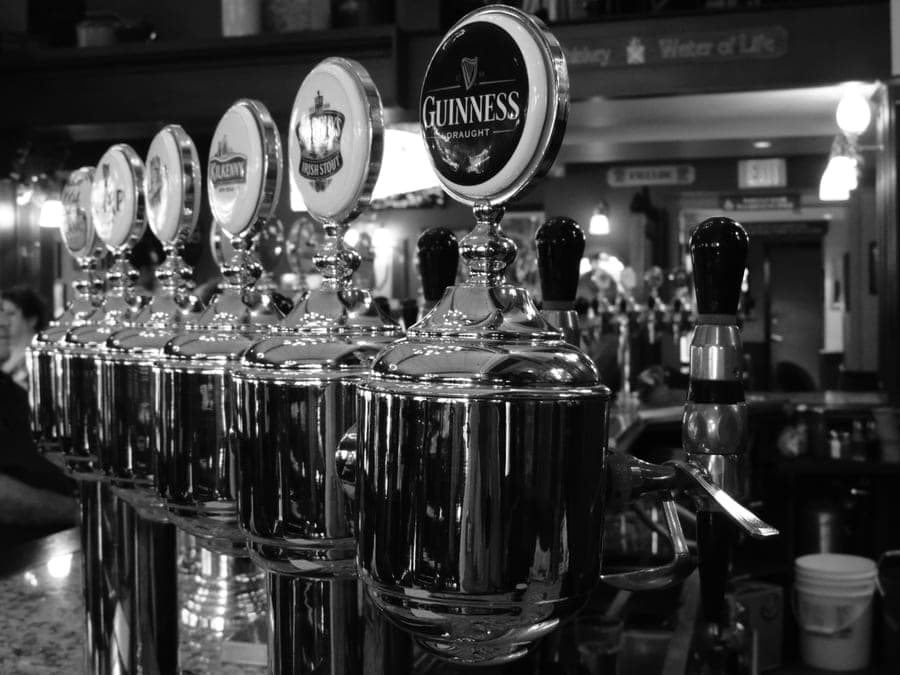
Comparison
Kegging vs Bottling
Kegging costs a few hundred dollars and gives you back two hours per batch forever. Here is the full accounting, including where bottles still win.
The short answer
Kegging replaces roughly two hours of bottling and two weeks of conditioning per batch with about twenty minutes and a gas line, and it lets you purge oxygen out of the process entirely. Bottling stays better for sharing, for competitions, for long-aged beers and for anyone without space for a refrigerator.
DisclosureWe earn a commission on qualifying purchases made through links on this page, at no extra cost to you. It does not change what we recommend or how we rank it -- here is how we pick and here is the full disclosure.
Per batch, and up front
| Bottling | Kegging | |
|---|---|---|
| Packaging time per batch | ~2 hours | ~20 minutes |
| Time to carbonated | 2 weeks | 2-3 days force carbonated |
| Cost of entry | Very low | Kit plus cooling |
| Ongoing cost | Caps, cleaning bottles | CO2 refills |
| Oxygen exposure | At bottling and in every bottle | None with closed transfer |
| Carbonation control | Fixed by priming sugar | Adjustable any time |
| Portability | Take a six pack anywhere | Needs a jockey box or growler |
| Competition entry | Straightforward | Requires bottling off the keg |
| Space needed | A cupboard | A refrigerator |
| Long-term aging | Good in bottles | Keg ties up capacity |
An orange rule marks the better of the two on that row.
The time argument
Two hours per batch, forever
Bottling a 5 gallon batch means sanitizing roughly fifty bottles, mixing and adding priming sugar, filling each bottle, capping each bottle, and then washing fifty bottles at some point before the next batch. Realistically that is two hours of standing work, and it is the part of homebrewing that people quietly stop enjoying first.
Kegging a 5 gallon batch means sanitizing one keg, transferring, and connecting gas. Twenty minutes. Then you clean one vessel instead of fifty.
Over a year of monthly brewing that is roughly twenty hours of your life back, which is the honest reason almost nobody who switches switches back.
The quality argument
Oxygen, and carbonation you can change
Oxygen. Bottling exposes beer to air twice: during the transfer to the bottling bucket, and in the headspace of every bottle. On a hoppy beer that is measurable -- hop aroma fades noticeably over weeks in a bottle. Kegging from a pressure-rated fermenter via closed transfer into a CO2-purged keg means the beer never meets air at all, which is the single largest quality improvement available to a homebrewer.
Adjustable carbonation. Priming sugar commits you. Once bottled, the beer is as carbonated as it is going to be, and a miscalculation is either a flat beer or fifty grenades. On a keg you set a pressure, taste it, and change it. A stout that wants 1.9 volumes and a saison that wants 2.9 can be dialed in individually.
Where bottles still win
Four genuine cases
- Sharing. A six pack goes to a friend’s house. A keg does not. Most keggers keep a counter-pressure filler or a growler setup for exactly this.
- Competitions. Entries are bottles. You can bottle off a keg, but it is an extra step with its own oxygen exposure.
- Long aging. A barleywine you want to open in three years belongs in bottles. A keg holding one beer for three years is capacity you cannot use.
- Space. Bottles live in a cupboard. A keg needs a refrigerator, and if you do not have one and cannot fit one, the decision is made for you.
The hybrid
What most experienced brewers actually do
Keg the batch, then bottle two or three off the keg under counter-pressure for sharing and competitions. You get the twenty-minute packaging, the adjustable carbonation and the oxygen-free transfer, and you still have portable bottles when you need them.
That is the arrangement to aim for. Start with best homebrew keg systems for the hardware and homebrew kegging setup for the first-time walkthrough.
Our verdict
Which one should you buy?
Switch to kegging if
Complete Homebrew Kegging Starter Kit
- Bottling day has stopped being fun
- You brew hoppy beer and keg oxygen pickup matters
- You have, or can fit, a refrigerator
- You want carbonation you can adjust after the fact
Keep bottling if
5 Gallon Ball Lock Corny Keg
- You have nowhere to put a refrigerator
- You share most of what you brew
- You enter competitions regularly
- You age beers for years rather than months
What we recommend
The products on this page
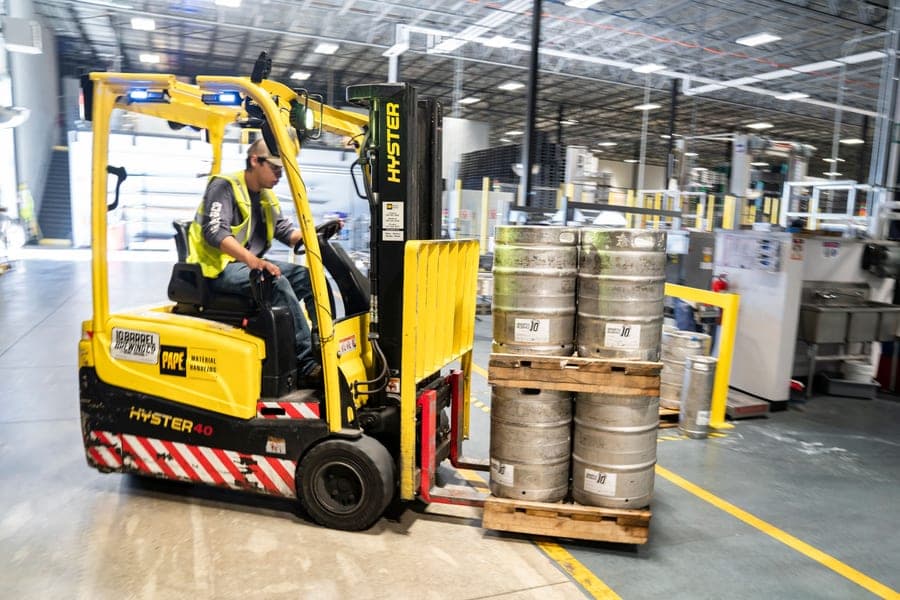
The kegging route
Mid tier
Complete Homebrew Kegging Starter Kit
Kegco / KOMOS / MoreBeer
Keg, CO2, regulator, lines and a tap. Twenty minutes to package a batch, carbonation in days rather than weeks, and no bottles to wash.
Spec sheet
- Keg
- One 5 gal ball-lock corny (new or reconditioned)
- Gas
- 5 lb CO2 cylinder (usually empty on arrival)
- Regulator
- Single-body dual-gauge
- Lines
- Gas line, beverage line, disconnects
- Dispense
- Picnic (party) tap on most kits
- Not included
- Cooling -- that is the kegerator decision
What it is not good at
Needs cooling, which the kit does not include. The CO2 cylinder usually arrives empty.
Who it is for
Brewers who have stopped enjoying bottling day
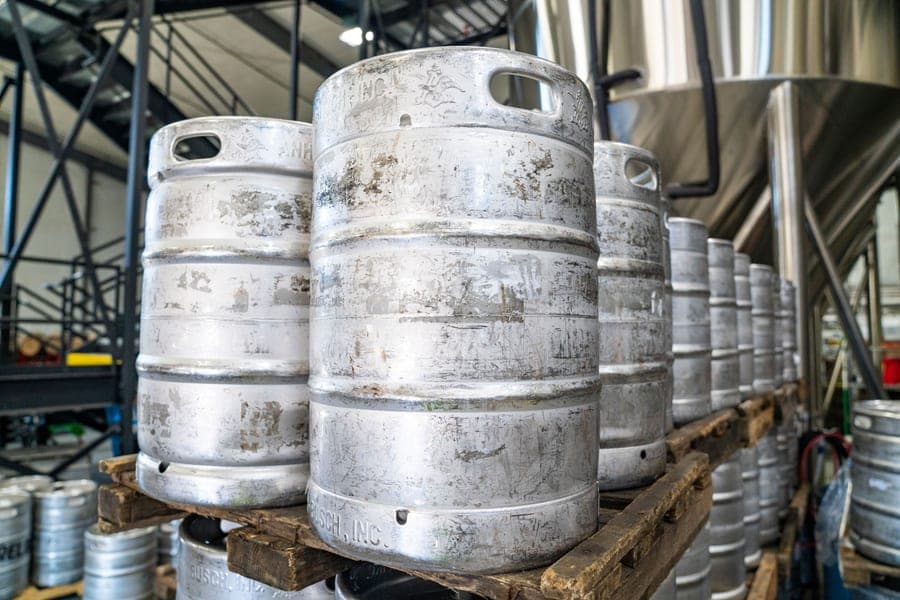
Buy two
Entry tier
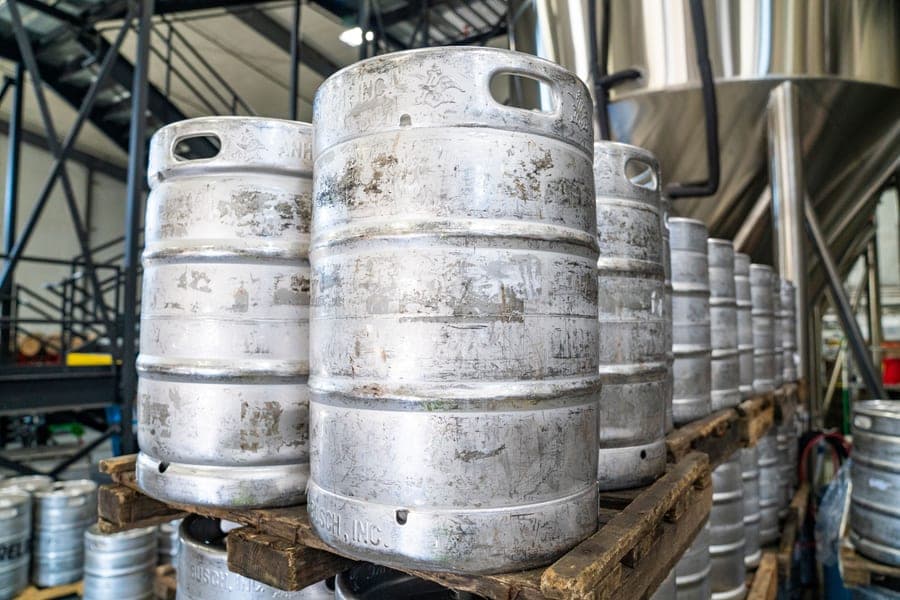
5 Gallon Ball Lock Corny Keg
AMCYL / NSI
One keg means you cannot brew again until it is empty. Two means one serves while the next carbonates.
Spec sheet
- Capacity
- 5 gal / 19 L
- Height
- ~25 in (26 in with posts)
- Diameter
- ~8.5 in
- Connection
- Ball lock gas and liquid posts
- Pressure rating
- 130 psi typical, 55 psi working
- Lid
- Oval pry-out lid with a PRV
What it is not good at
Reconditioned kegs need a new seal set before first use.
Who it is for
Keeping a brewing cadence
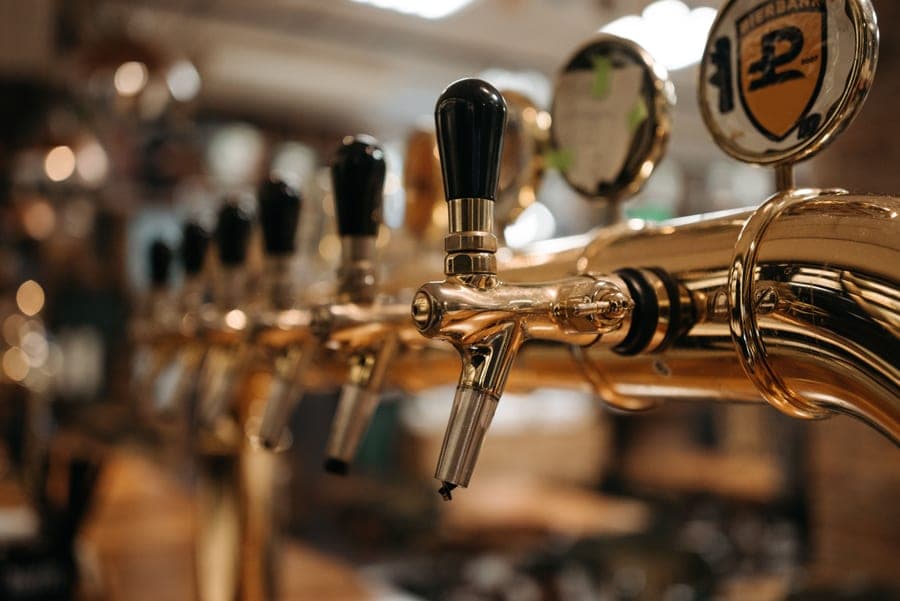
The cooling half
Mid tier
Kegco Full-Size Digital Kegerator
Kegco
The part of the kegging decision that kits leave out. Without cold storage a keg is a very large bottle of warm beer.
Spec sheet
- Keg capacity
- 1 half barrel, or 4 ball-lock corny kegs
- Control
- Digital thermostat
- Temperature range
- Draft serving range
- Taps
- Single, dual and triple configurations sold
- Gas
- CO2 regulator included on most SKUs
- Mobility
- Casters
What it is not good at
The larger half of the real cost of switching.
Who it is for
Brewers without a spare refrigerator
FAQ
Questions brewers actually ask
Is kegging cheaper than bottling?
Not up front, and cheaper over time. Bottling needs almost no equipment; kegging needs a keg, CO2, a regulator, lines, a tap and cooling. Once running, kegging costs only CO2 refills against caps and the water and time to wash fifty bottles per batch. The real return is time: about two hours saved per batch, permanently.
Does kegged beer taste better than bottled?
It can, for one specific reason: oxygen. Bottling exposes beer to air during transfer and leaves air in every bottle's headspace, and oxygen degrades hop aroma faster than anything else. A closed transfer from a pressure-rated fermenter into a CO2-purged keg means the beer never meets air, which is noticeable on hoppy styles and marginal on malt-forward ones.
How long does it take to carbonate a keg?
Two to three days at serving pressure if you are patient, or a few hours using the high-pressure shake method, which carries more risk of over-carbonating. Compare that with two weeks for bottle conditioning, during which the beer is doing nothing you can taste or adjust.
Can you bottle beer from a keg?
Yes, and most keggers do it occasionally. A counter-pressure filler or a simple growler filler lets you fill bottles from the keg without losing carbonation, which covers sharing and competition entries. It introduces a little oxygen at the moment of filling, so bottle what you need shortly before you need it rather than in advance.
Do I need a kegerator to start kegging?
You need cooling of some kind, and a spare refrigerator works fine for a first keg with a picnic tap. What you cannot do is keg without cold storage, because a keg at room temperature cannot hold carbonation at a sensible pressure and the beer will pour as foam. The cooling is the larger half of the real cost of switching.
Read next
More on kegging
Roundup
The Best Homebrew Keg Systems
What a kegging kit includes, what it omits, and the complete cost.
Guide
Homebrew Kegging Setup, Step by Step
The setup order, plus the three day-one failures and how to avoid them.
Roundup
The Best Kegerators for Homebrew
Kegerators compared on corny capacity, internal height and temperature range.
Roundup
The Best Fermentation Temperature Controllers
Dual-stage controllers compared, with the probe-placement rule that matters most.