Roundup
The Best All-Grain Brewing Systems
All-grain does not mean one kind of rig. Here are the systems worth buying across single-vessel, hybrid and welded approaches.
The short answer
For most homebrewers the best all-grain system is a single-vessel electric unit such as the Anvil Foundry 10.5 or BrewZilla Gen 4.1: one footprint, one element, and mash temperature held without supervision. Welded 240V rigs like the Clawhammer are the better buy only at 10 gallon batches or higher brewing frequency.
DisclosureWe earn a commission on qualifying purchases made through links on this page, at no extra cost to you. It does not change what we recommend or how we rank it -- here is how we pick and here is the full disclosure.
At a glance
Quick picks
| # | Product | Best for | Price |
|---|---|---|---|
| 1 |  Best overall all-grain system Anvil Foundry 10.5 Gallon Covers 5 and 10 gallon all-grain in one vessel, and the switchable heater means the 240V upgrade is a circuit rather than a new purchase. | A first all-grain rig that will not need replacing when batches grow | |
| 2 |  Best value all-grain package BrewZilla Gen 4.1 35 L The most complete package at the price: built-in pump, counterflow chiller included, programmable step mash and RAPT connectivity. | Brewers who want pump, chiller and step-mash control in the box | |
| 3 |  Best for serious volume Clawhammer Supply 10 Gallon Electric Brewing System Welded 304 stainless and a 5500W element. The hardest boil here and the only one with tri-clamp fittings you can rebuild indefinitely. | Ten gallon batches, frequent brewing, and brewers who repair rather than replace | |
| 4 | 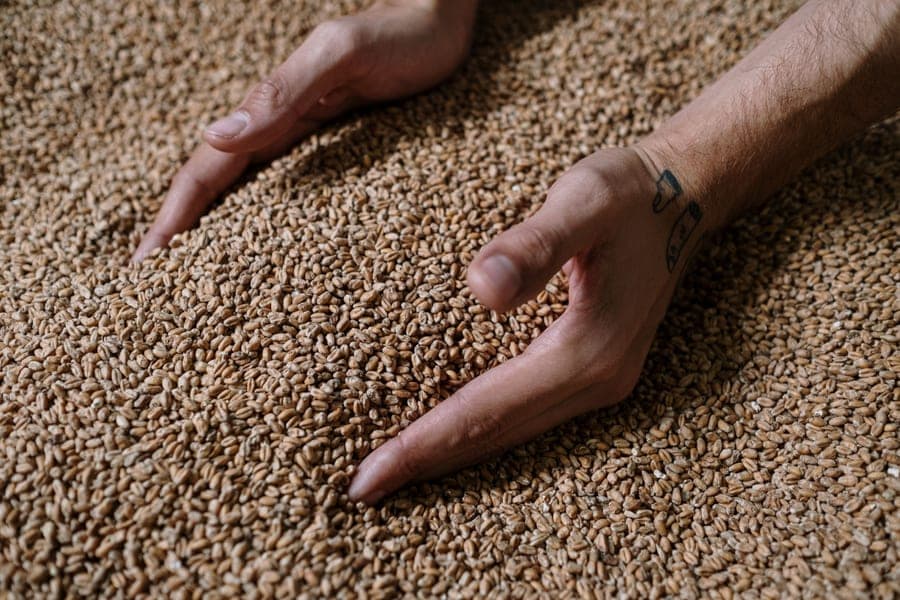 Best low-cost route into all-grain Insulated Mash Tun with False Bottom A 10 gallon insulated cooler with a domed false bottom holds mash temperature within a couple of degrees for an hour and costs a fraction of any electric system. | Brewers who already own a kettle and want to batch sparge for very little money | |
| 5 | Best automated all-grain Grainfather G40 The most polished control of the group: programmable steps, variable-speed recirculation, and genuinely useful app logging across the whole brew day. | Brewers who want the mash schedule programmed and the pump managed for them |
Prices are checked on Amazon when you click. We never print a number we cannot verify.
What each approach costs you
| Single vessel electric | Insulated cooler mash tun | Welded 240V multi-vessel | |
|---|---|---|---|
| Typical brew day length | 4-5 hours | 5-6 hours | 4-5 hours |
| Footprint | One vessel | Cooler plus kettle | Two to three vessels plus stand |
| Step mashing | Programmable | Infusion only | Programmable |
| Electrical requirement | 120V or 240V | None | 240V required |
| Entry cost | Mid | Lowest | Highest |
| Rebuildable fittings | Rarely | Bulkhead only | Yes, tri-clamp |
| Back-to-back brewing | Poor | Poor | Good |
An orange rule marks the better of the two on that row.
Start here
All-grain is a process, not a product category
All-grain brewing means you make your own wort from malted barley rather than reconstituting malt extract. That is a process change, and there are three quite different ways to buy into it. Lists that rank an electric all-in-one against a cooler mash tun as though they were the same kind of purchase are not helping you decide.
- Single-vessel electric. Mash and boil in the same insulated vessel with a grain basket, recirculating with a pump. One footprint, programmable temperature, no propane. This is what most upgrading homebrewers should buy.
- Insulated cooler plus kettle. Mash in a cooler, batch sparge into your existing kettle, boil on your existing heat source. By far the cheapest route in, and the beer is just as good. The cost is a longer, more manual brew day and infusion arithmetic instead of a set point.
- Welded multi-vessel. Separate hot liquor tank, mash tun and kettle, usually 240V, usually on a stand. Parallel rather than sequential: you heat sparge water while the mash rests. The right answer for volume and frequency, overkill for one 5 gallon batch a month.
Efficiency
Your crush matters more than your rig
Brewers upgrading to all-grain frequently blame low mash efficiency on their system when the cause is the crush. A homebrew shop mills to one gap chosen to be safe across every customer’s process, and that gap is usually looser than a single-vessel recirculating system wants. Tightening it a few thousandths of an inch is commonly worth several efficiency points -- more than any difference between the systems on this page.
That is why a mill is the first accessory we would buy after the system itself, ahead of anything else. See best grain mills and grain mill gap settings for the numbers.
Still on extract
Whether to make the jump at all
All-grain gives you control over the grain bill, the mash profile and the cost per batch. It does not automatically give you better beer -- a well-made extract beer fermented at a controlled temperature beats a careless all-grain one. If you are weighing the move, the honest comparison is all-grain vs extract brewing, and the shopping list without the upsells is the all-grain brewing equipment list.
The picks, in order
Every pick in detail
#1
Best overall all-grain system
Mid tier
Anvil Foundry 10.5 Gallon
Anvil Brewing Equipment
Covers 5 and 10 gallon all-grain in one vessel, and the switchable heater means the 240V upgrade is a circuit rather than a new purchase.
Spec sheet
- Capacity
- 10.5 gal / 40 L
- Power
- Switchable 120V 1600W or 240V 2800W
- Heating
- Triple low-watt-density element
- Pump
- Optional recirculation pump
- Grain basket
- High-flow, dual-height false bottom
- Material
- 304 stainless
What it is not good at
Single vessel means no simultaneous sparge water heating, so your brew day is sequential rather than parallel. Add the pump to the budget.
Who it is for
A first all-grain rig that will not need replacing when batches grow
#2
Best value all-grain package
Mid tier
BrewZilla Gen 4.1 35 L
KegLand
The most complete package at the price: built-in pump, counterflow chiller included, programmable step mash and RAPT connectivity.
Spec sheet
- Capacity
- 35 L / 9.2 gal
- Power
- 110V 1600W / 220V 2500W (region dependent)
- Connectivity
- RAPT wifi, step mash, delay timer
- Pump
- Built-in magnetic drive, easy-access base
- Base
- Fully concave draining base
- Included
- Counterflow chiller, grain basket
What it is not good at
Check the generation before buying -- Gen 3, 4 and 4.1 have different bases and pumps, and listings often do not distinguish them.
Who it is for
Brewers who want pump, chiller and step-mash control in the box
#3
Best for serious volume
Prosumer tier
Clawhammer Supply 10 Gallon Electric Brewing System
Clawhammer Supply
Welded 304 stainless and a 5500W element. The hardest boil here and the only one with tri-clamp fittings you can rebuild indefinitely.
Spec sheet
- Capacity
- 10 gal / 38 L
- Power
- 240V 5500W
- Build
- Welded 304 stainless
What it is not good at
240V is mandatory, not optional. Expect to assemble and tune rather than unbox and brew.
Who it is for
Ten gallon batches, frequent brewing, and brewers who repair rather than replace
#4
Best low-cost route into all-grain
Mid tier
Insulated Mash Tun with False Bottom
Igloo conversion / Spike
A 10 gallon insulated cooler with a domed false bottom holds mash temperature within a couple of degrees for an hour and costs a fraction of any electric system.
Spec sheet
- Capacity
- 10 gal (fits a 5-6 gal batch comfortably)
- Insulation
- Holds mash temp within 1-2 F over 60 min
- Manifold
- Domed false bottom, braid or slotted manifold
- Valve
- Ball valve bulkhead through the wall
- Heat
- No direct heat -- infusion steps only
- Best for
- Batch sparging without an electric system
What it is not good at
No direct heat, so step mashing requires infusions and arithmetic. You still need a separate kettle and heat source, and the brew day is longer and more manual.
Who it is for
Brewers who already own a kettle and want to batch sparge for very little money
#5
Best automated all-grain
Prosumer tier
Grainfather G40
Grainfather
The most polished control of the group: programmable steps, variable-speed recirculation, and genuinely useful app logging across the whole brew day.
Spec sheet
- Capacity
- 40 L / 10.5 gal
- Max batch
- ~30 L / 8 gal into the fermenter
- Control
- Bluetooth app, programmable step mash
- Pump
- Variable-speed recirculation pump
- Chiller
- Counterflow wort chiller included
- Grain capacity
- ~9 kg / 20 lb
What it is not good at
The highest price here, and the accessory ecosystem is proprietary enough that generic parts are not always an option.
Who it is for
Brewers who want the mash schedule programmed and the pump managed for them
FAQ
Questions brewers actually ask
What is the cheapest way to start all-grain brewing?
An insulated 10 gallon cooler with a domed false bottom or a stainless braid, batch sparging into a kettle you already own. It costs a small fraction of any electric system and makes beer that is indistinguishable in the glass. What you pay instead is time: a longer brew day, manual temperature management, and infusion calculations rather than a programmed set point.
Do I need a pump for all-grain brewing?
No for a cooler mash tun, effectively yes for a single-vessel electric system. Recirculating wort through the grain bed is what keeps the mash at an even temperature top to bottom and clarifies the wort as it goes, which is the main practical advantage these systems offer. Without a pump, a single-vessel system has hot spots near the element and cool spots at the top of the bed.
How long does an all-grain brew day take?
Four to five hours on a single-vessel electric system from switch-on to cleanup, and five to six on a cooler-and-kettle setup where you heat water separately and manage temperatures by hand. A multi-vessel 240V rig is similar to a single vessel for one batch but much faster for two back to back, because you can be heating the next batch's strike water while the first boils.
Is all-grain cheaper than extract brewing?
Per batch, yes, substantially. Base malt in bulk costs considerably less than the equivalent malt extract, and the gap widens if you mill your own grain. The equipment to get there costs money up front, so the break-even depends on how often you brew. A brewer making one batch a month recovers the cost of a cooler mash tun quickly and an electric system over a couple of years.
Sources
Read next
More on brewing systems
Roundup
The Best Electric All-in-One Brewing Systems
Five all-in-one systems compared on finished volume, voltage and parts support.
Guide
All-Grain Brewing Equipment List
The full list in three tiers, with the sizes that matter and the things to skip.
Roundup
The Best Grain Mills for Homebrewing
Grain mills compared on rollers, gap adjustment and build quality.
Comparison
Mash Tun vs Lauter Tun
What each vessel does, and why homebrewers combine the two functions.
Roundup
The Best Budget Electric Brewing Systems
Budget single-vessel systems and what the saving really costs you.