Guide
Grain Mill Gap Settings
The actual numbers, by process, in thousandths of an inch. Tighter if you do not sparge, wider if you fly sparge.
The short answer
Set around 0.035 inches as a general starting point. Go tighter -- 0.025 to 0.030 -- for brew-in-a-bag and single-vessel electric systems where no sparge depends on the husk filter bed. Stay wider, 0.038 to 0.045, if you fly sparge and need the husks intact and the bed permeable.
DisclosureWe earn a commission on qualifying purchases made through links on this page, at no extra cost to you. It does not change what we recommend or how we rank it -- here is how we pick and here is the full disclosure.
The numbers
Gap by process
Starting points in thousandths of an inch
| Process | Gap | Why |
|---|---|---|
| Brew in a bag (BIAB) | 0.025-0.030 in | No sparge, so husk filtration does not matter |
| Single-vessel electric | 0.028-0.033 in | Recirculates through a basket; tight is fine |
| Batch sparge | 0.033-0.038 in | Bed gets stirred anyway; moderate is safe |
| Fly sparge | 0.038-0.045 in | Needs an intact, permeable husk filter bed |
| Unsure / general | 0.035 in | The safe default |
| With wheat or flaked adjuncts | Widen slightly, add rice hulls | Adjuncts contribute no husk |
These are starting points, not prescriptions. Your mill’s roller diameter, your malt’s moisture content and your water-to-grain ratio all shift the optimum a thousandth or two. Use the table to get close, then adjust by measured efficiency.
The principle
Why the sparge method decides the gap
It comes down to one question: does your process rely on the grain husks as a filter bed?
Fly sparging does. You trickle sparge water onto the top of an undisturbed bed while draining from the bottom, and the whole thing only works if the bed stays permeable throughout. Shredded husk compacts, channels and sticks. So fly spargers crush wider, accepting slightly lower conversion for a bed that drains.
Brew-in-a-bag does not. The bag is the filter, the bed gets lifted and squeezed, and husk integrity is irrelevant. So BIAB brewers crush as tight as their mill will manage, maximizing the surface area the enzymes can reach -- which is why BIAB efficiency can match sparged systems despite the simpler process.
Batch sparging sits between. You stir the bed when you add sparge water, so it is not relying on an undisturbed filter bed, but you are still draining through grain rather than lifting it out. A moderate gap suits it.
Terminology, if any of that was unfamiliar: mash tun vs lauter tun.
Setting it
Feeler gauge, both ends
- Get an automotive feeler gauge set -- leaves in thousandths of an inch, for very little money.
- Slide the leaf you want between the rollers and adjust until it is a firm but sliding fit.
- Repeat at the other end. A mill adjustable at only one end pivots, producing a wedge-shaped gap where one side over-crushes and the other under-crushes.
- Note the setting. Mill markings drift and you want to be able to return to a known number.
Adjusting
Change one thing, then measure efficiency
Gap setting is an optimization, and optimization requires measurement. The method:
- Record your mash efficiency on your current gap -- your pre-boil gravity and volume against your grain bill. Most brewing calculators will do the arithmetic.
- Change the gap by 0.002 to 0.003 inches, no more. Bigger jumps give you two variables at once.
- Brew the same recipe and measure again. Same grain bill, same water volumes, same process.
- Keep the direction that helped. If efficiency rose and the runnings still flowed, go tighter again. If the sparge stuck or slowed noticeably, you have gone too far.
A few points of mash efficiency is a realistic gain and it is worth more than any difference between brewing systems. It is also free once you own the mill.
Troubleshooting
What the symptoms mean
Diagnosing from what happened
| Symptom | Likely cause | Action |
|---|---|---|
| Low efficiency, bed drained fine | Gap too wide | Tighten 0.003 in |
| Stuck or very slow sparge | Gap too tight, or mill too fast | Slow the mill first; then widen |
| Flour in the crush | Mill speed, not gap | Run slower, low gear |
| Many whole kernels | Gap too wide | Tighten |
| Uneven crush in the same pass | Wedge-shaped gap | Set both ends with a gauge |
| Stuck sparge with wheat in the bill | Adjuncts contribute no husk | Add rice hulls |
Note the second and third rows. A stuck sparge or a floury crush is more often a speed problem than a gap problem -- a drill at full speed shatters grain regardless of how carefully you set the rollers. Slow the mill before you widen the gap, or you will give up efficiency you did not need to.
Technique in full: how to mill grain.
What we recommend
The products on this page
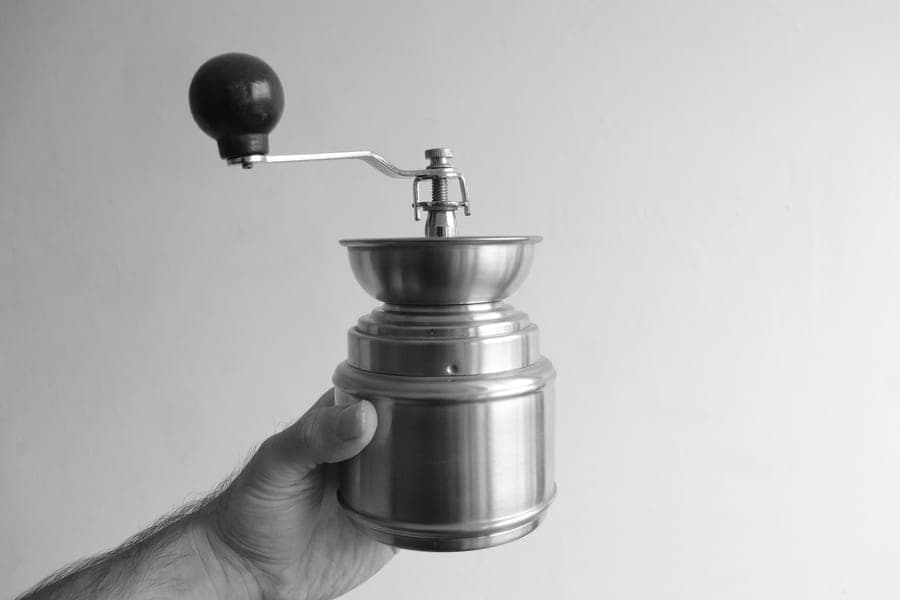
Adjustable at both ends
Mid tier
Monster Mill MM2 Two-Roller Grain Mill
Monster Brewing Hardware
Gap adjustment at both ends of the rollers, which is what lets you set a parallel gap rather than a wedge. The single most important feature for this purpose.
Spec sheet
- Rollers
- Two, 1.5 in diameter, knurled
- Gap
- Adjustable on both ends, 0.015-0.070 in
- Drive
- Hand crank or drill at reduced speed
- Build
- Steel, made in USA
- Throughput
- Slower per pound than the MM3
- Best for
- Most homebrewers; the MM3 is for volume
What it is not good at
You still need a feeler gauge; the markings are a reference, not a measurement.
Who it is for
Setting an actual parallel gap
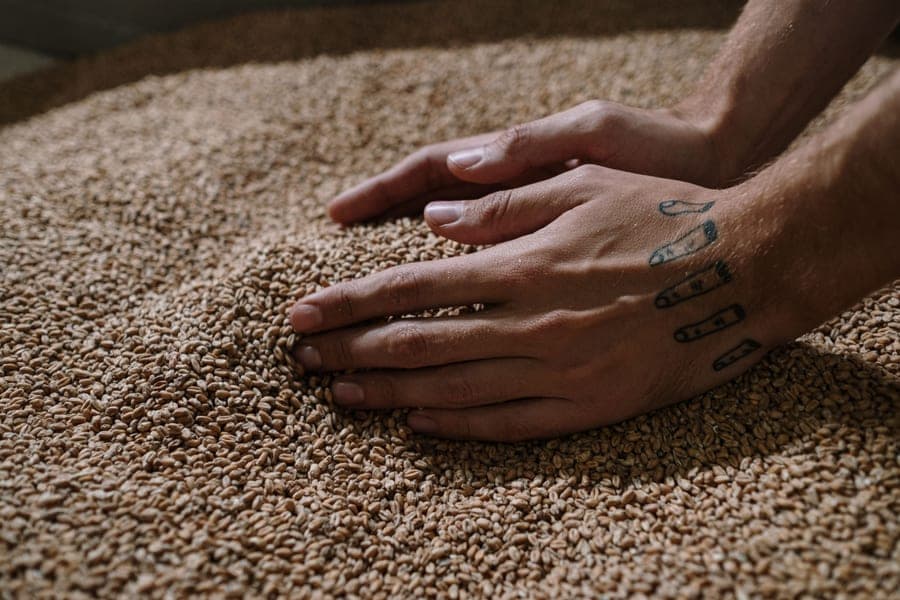
Better at tight gaps
Prosumer tier
Monster Mill MM3 Three-Roller Grain Mill
Monster Brewing Hardware
Two gentler nips rather than one firm squeeze keeps the husk intact better at tight settings, which is exactly where a two-roller mill struggles.
Spec sheet
- Rollers
- Three, 1.5 in diameter, knurled
- Gap
- Adjustable on both ends
- Hopper
- Optional, several sizes
- Drive
- Hand crank or drill at reduced speed
- Build
- Steel, made in USA
- Best for
- High-efficiency crush without shredding husk
What it is not good at
A clear premium for a difference that only shows at tight gaps or high volume.
Who it is for
BIAB and all-in-one brewers crushing tight

Budget option
Entry tier
KegLand MaltMuncher Grain Mill
KegLand
Adjustable gap in two and three roller versions. Does the job that matters -- letting you control a number -- for the least money.
Spec sheet
- Rollers
- 2 or 3 roller versions
- Gap
- Adjustable
- Positioning
- Budget adjustable mill
What it is not good at
Looser gap tolerance, so checking with a feeler gauge is not optional.
Who it is for
Brewers who want adjustability cheaply
FAQ
Questions brewers actually ask
What gap should I set my grain mill to?
Around 0.035 inches as a general starting point. Go tighter, 0.025 to 0.030, for brew-in-a-bag and single-vessel electric systems where no sparge depends on the husk filter bed. Stay wider, 0.038 to 0.045, if you fly sparge and need an intact permeable bed. Then adjust in 0.002 to 0.003 inch steps and measure efficiency between changes.
Why do BIAB brewers crush finer?
Because the bag is the filter rather than the grain husks. Fly sparging depends on an undisturbed permeable husk bed to drain through, so shredded husk causes a stuck sparge. In brew-in-a-bag the bed gets lifted and squeezed and husk integrity is irrelevant, so you can crush tight and maximize the surface area the enzymes reach.
How do I measure my grain mill gap?
With an automotive feeler gauge set, which has leaves in thousandths of an inch and costs very little. Slide the leaf you want between the rollers and adjust until it is a firm but sliding fit, then repeat at the other end. Checking both ends matters because a mill adjusted at one end only produces a wedge-shaped gap.
Will a tighter crush cause a stuck sparge?
It can, but mill speed is the more common culprit. A drill run at full speed shatters grain into flour and destroys the husk regardless of how carefully you set the gap, and that is what sticks a sparge. Slow the mill to low gear under 500 rpm before widening the gap, or you give up efficiency you did not need to lose.
How much efficiency can a better crush gain?
Several points of mash efficiency is realistic when moving from a shop's conservative one-size-fits-all crush to a gap set for your own process. That is more than the difference between brewing systems, and it is free once you own the mill. Measure your pre-boil gravity and volume before and after each adjustment so you know what the change actually did.
Do I need to widen the gap for wheat beers?
Slightly, and more importantly add rice hulls. Wheat and flaked adjuncts contribute no husk of their own, so a bill with a high proportion of them has less filter material regardless of how you crush. Rice hulls are inert and add bulk to open the bed, which is a more effective fix than widening the gap and losing conversion.
Read next
More on brew day gear
Roundup
The Best Grain Mills for Homebrewing
Grain mills compared on rollers, gap adjustment and build quality.
Comparison
Two Roller vs Three Roller Grain Mill
Crush quality, husk integrity and throughput, and when the third roller pays.
Comparison
Mash Tun vs Lauter Tun
What each vessel does, and why homebrewers combine the two functions.
Guide
Hydrometer vs Refractometer
Sample size against accuracy, plus the alcohol correction problem explained.