Guide
Keezer Build Guide
A chest freezer, a wooden collar and an external controller. The parts list, the dimensions and the condensation problem.
The short answer
A keezer is a chest freezer with a wooden collar between the body and the lid, shanks drilled through the collar, and an external dual-stage controller overriding the freezer thermostat to hold serving temperature. Budget a weekend, and plan for condensation on the floor of the box.
DisclosureWe earn a commission on qualifying purchases made through links on this page, at no extra cost to you. It does not change what we recommend or how we rank it -- here is how we pick and here is the full disclosure.
Parts list
Everything the build needs
- Chest freezer, 5 to 7 cubic feet for four to six cornies. Check interior floor dimensions against keg diameter -- about 8.5 inches each -- and note the compressor hump, which eats usable area at one end.
- Collar timber. 2x6 or 2x8 is standard. 2x8 gives more height for shank clearance and more room for a manifold inside.
- External dual-stage temperature controller. Not optional -- see below.
- Shanks and faucets, one per tap. Shank length must match collar thickness.
- Beverage line, several feet per tap for balancing.
- CO2 cylinder, primary regulator and a secondary manifold if running more than one keg.
- Weatherstripping or adhesive foam for the collar-to-freezer and collar-to-lid seals.
- Silicone sealant, food-safe where it faces the interior.
- Finish for the timber -- paint, stain or veneer. The interior face will see condensation, so seal it properly.
The collar
Why it exists and how to build it
The collar is a timber box that sits between the freezer body and its lid, raising the lid by the collar’s height. It exists for one reason: you drill the collar, not the freezer. Drilling the freezer wall risks the refrigerant lines running through the insulation, which turns the appliance into scrap.
It also solves the height problem. A corny keg with posts and disconnects fitted is around 27 inches, and a chest freezer interior frequently is not. A 2x6 or 2x8 collar adds the clearance that makes the kegs fit.
- Measure the freezer’s top rim and build a rectangular frame to match, with corner joints of your choosing -- butt joints with screws and glue are entirely adequate.
- Dry fit it and check the lid still closes and the hinges still clear. Lid hinges mounting to the freezer body rather than the collar is the detail that catches people -- plan how the hinges will attach before you cut.
- Seal both faces. Adhesive foam weatherstripping between freezer and collar, and between collar and lid. The seal is what keeps the running cost low.
- Finish the timber inside and out. The interior face sits in a cold humid box and bare wood will grow mold.
- Drill the shank holes last, after you have decided the tap spacing. Measure faucet handle clearance -- taps too close together cannot both be pulled.
The controller
Why the freezer thermostat cannot do this
A chest freezer’s own thermostat is designed to hold a freezing temperature and typically cannot be set anywhere near 38°F. The standard solution is to leave it set to its coldest position and override it entirely with an external dual-stage controller:
- The freezer plugs into the controller’s cooling outlet rather than the wall.
- The controller’s probe goes inside the box, hanging in the air away from the compressor wall and not touching a keg.
- Set the target to 38°F with a sensible differential (1 to 2°F) and a compressor delay so it does not short-cycle.
- In an unheated garage, the heating outlet can run a small tube heater so the box does not drop below target in winter.
Controller options are in best temperature controllers.
The detail nobody mentions
Condensation on the floor
A keezer at 38°F in a humid garage collects water. Every time the lid opens, warm moist air enters and condenses, and over weeks a puddle forms on the floor of the box -- which, in a chest freezer, is a stainless or painted steel tray with nowhere for the water to go.
Left alone it causes rust and smells. The fixes, in order of effort:
- A towel on the floor of the box, wrung out occasionally. Crude and effective.
- A tub of desiccant or a damp-absorbing product in one corner.
- A small drain. Some builders fit a drilled drain in the floor with a tube to a bottle outside. Effective and involves drilling the freezer floor, which risks refrigerant lines -- check where they run before considering it.
- A computer fan inside to circulate air. Reduces stratification and helps surfaces dry between openings.
Still deciding whether to build or buy? Kegerator vs keezer has the comparison. Once it is running, CO2 regulator settings covers dialing in the pours.
What we recommend
The products on this page
The base
Mid tier
Chest Freezer Fermentation Chamber (with controller)
Chest freezer + Inkbird
A 7 cubic foot chest freezer is the common size. Better insulated than any upright cabinet and it loses almost no cold air when opened, because cold air sinks.
Spec sheet
- Approach
- Chest freezer with an external dual-stage controller
- Capacity
- 5-7 cu ft fits one or two 5 gal fermenters
- Range
- Lager temps through a 32 F cold crash
- Heat side
- Pair with a wrap heater for winter ale temps
- Energy
- Cheapest running cost per degree of any method
- Limitation
- Vessel height is the binding constraint
What it is not good at
You lift full kegs down into it, which is a real consideration at 55 lb each. The hump over the compressor eats usable floor area.
Who it is for
Four to six cornies plus a CO2 cylinder
The controller
Entry tier
Inkbird ITC-308 Dual-Stage Temperature Controller
Inkbird
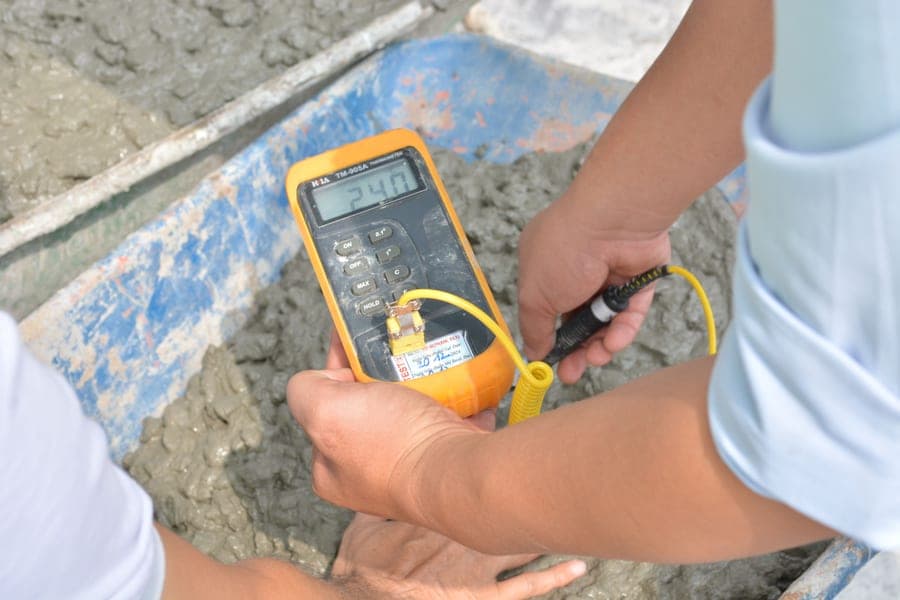
A freezer thermostat cannot be set to 38 F. A dual-stage external controller switches the compressor directly to hold whatever setpoint you choose, and the second outlet can run a heater in a cold garage.
Spec sheet
- Stages
- Dual -- one heating and one cooling outlet
- Outlet rating
- ~1100W per outlet
- Probe
- NTC sensor on a 2 m lead
- Calibration
- User offset
- Compressor delay
- Configurable
- Wifi version
- ITC-308 Wifi sold separately
What it is not good at
The probe placement matters: inside the box, away from the compressor wall and not touching a keg.
Who it is for
Overriding the freezer thermostat
The faucets
Mid tier
Intertap Stainless Forward-Sealing Faucet
Intertap
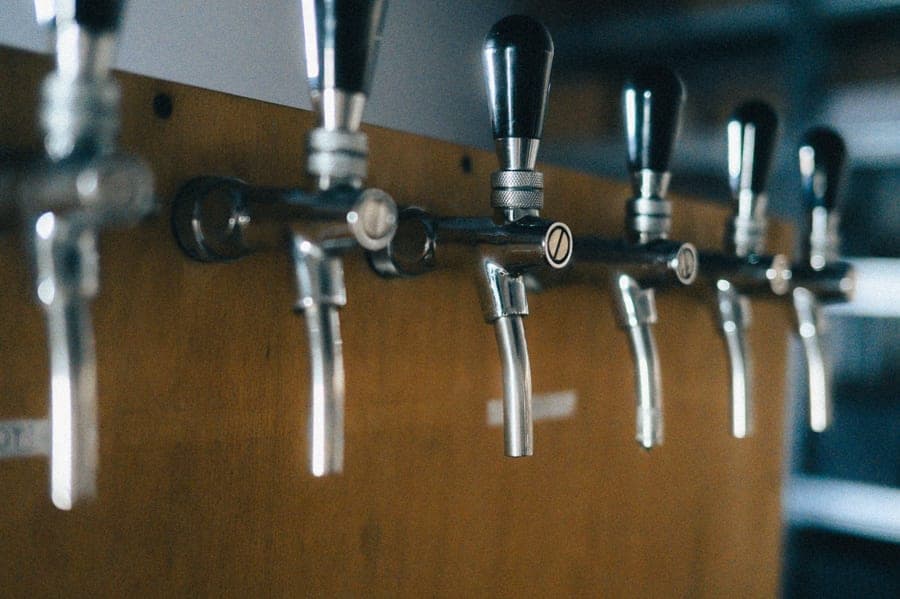
Forward-sealing stainless, so no beer sits in the faucet body between pours. Collar mounting means the shank sits in cold air, so the first pour is as cold as the last.
Spec sheet
- Seal type
- Forward sealing
- Material
- 304 stainless
- Spout
- Interchangeable (stout, growler)
What it is not good at
Shank length must match the collar thickness -- measure before ordering.
Who it is for
Collar-mounted shanks
The gas distribution
Prosumer tier
Secondary CO2 Regulator Manifold
Taprite / Duotight
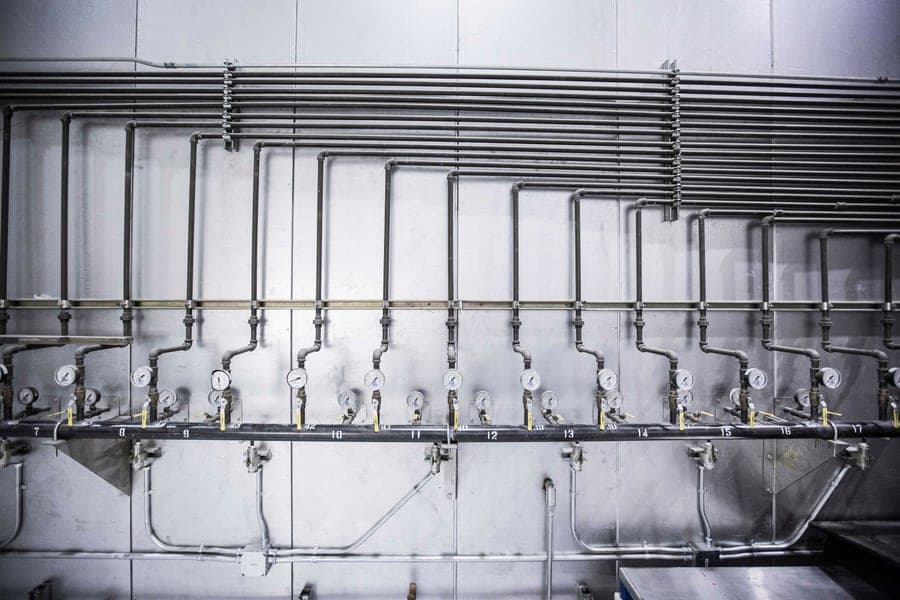
Mounted on the inside of the collar, a manifold feeds each keg at its own pressure from one cylinder.
Spec sheet
- Outputs
- 2, 3 or 4 bodies
- Adjustment
- Each body set independently
- Feed
- Runs off the primary regulator
- Gauges
- One per body on gauged versions
- Shutoff
- Per-body shutoff on most models
- Why
- Serve a stout at 8 psi beside a saison at 14
What it is not good at
Takes collar space you also want for shanks. Plan the layout before drilling.
Who it is for
Four kegs at four pressures
FAQ
Questions brewers actually ask
What is a keezer?
A chest freezer converted into a draft beer dispenser. A wooden collar sits between the freezer body and its lid, the beer shanks and faucets are drilled through the collar rather than the freezer itself, and an external dual-stage temperature controller overrides the freezer thermostat to hold serving temperature instead of freezing.
Why do you need a collar on a keezer?
Two reasons. It gives you something to drill: the freezer's walls have refrigerant lines running through the insulation, and drilling into one destroys the appliance. It also adds height, because a corny keg with posts and disconnects fitted stands around 27 inches and many chest freezer interiors do not clear that.
What size chest freezer do I need for a keezer?
Five to seven cubic feet suits four to six corny kegs plus a CO2 cylinder. Check the interior floor dimensions against keg diameter -- about 8.5 inches each -- and note the compressor hump, which raises the floor at one end and eats usable area. Floor space is usually the limiting factor rather than height, since the collar adds the clearance.
Can you use the freezer's own thermostat for a keezer?
No. A chest freezer thermostat is designed to hold freezing temperatures and generally cannot be set anywhere near 38 degrees Fahrenheit. Set it to its coldest position, plug the freezer into an external dual-stage controller, and let the controller switch the compressor to hold the serving temperature you choose.
How do you deal with condensation in a keezer?
Plan for it from the start. Every lid opening admits warm moist air that condenses on cold surfaces, and chest freezer floors have no drain. Options are a towel on the floor wrung out periodically, a desiccant tub in one corner, a small circulating fan to help surfaces dry, or a drilled drain to a bottle outside -- the last of which risks refrigerant lines and needs care.
Does a keezer cost less to run than a kegerator?
Yes, generally. Chest freezers are better insulated than upright cabinets because they were built for lower temperatures, and they lose far less cold air when opened since cold air sinks rather than pouring out of a doorway. Both effects reduce compressor run time for the same interior volume and setpoint.
Read next
More on kegging
Comparison
Kegerator vs Keezer: Which Should You Build?
Kegs per dollar, insulation and build effort, compared properly.
Roundup
The Best Kegerators for Homebrew
Kegerators compared on corny capacity, internal height and temperature range.
Roundup
The Best Fermentation Temperature Controllers
Dual-stage controllers compared, with the probe-placement rule that matters most.
Guide
CO2 Regulator Settings: PSI by Temperature and Style
PSI by temperature and style, with the line-balancing numbers.
Roundup
The Best CO2 Regulators for Homebrew
Primary regulators and secondary manifolds, and what to check before buying.
Roundup
The Best Homebrew Keg Systems
What a kegging kit includes, what it omits, and the complete cost.