Guide
What Size CO2 Tank for a Kegerator?
Five pounds is the default and ten pounds is the better buy. The reason is the refill, not the gas.
The short answer
A 5 lb CO2 cylinder is the right size for most homebrew kegerators: it fits inside a full-size cabinet and dispenses several 5 gallon kegs per fill. Choose 10 lb if the cylinder lives outside the kegerator, because refills cost nearly the same as a 5 lb fill.
DisclosureWe earn a commission on qualifying purchases made through links on this page, at no extra cost to you. It does not change what we recommend or how we rank it -- here is how we pick and here is the full disclosure.
Cylinder sizes against kegerator use
| Size | Fits inside a full-size kegerator | Suits |
|---|---|---|
| 2.5 lb | Yes, easily | One keg, infrequent service |
| 5 lb | Yes, the usual choice | Most homebrew kegerators |
| 10 lb | Usually not | Outside mounting, several kegs |
| 20 lb | No | Keezers and multi-tap builds |
| Paintball 20 oz | Yes | Portable and picnic-tap use only |
| Refill cost | Similar across 5 and 10 lb | Favors the larger cylinder |
The straight answer
Five pounds, unless it lives outside
A 5 lb aluminum cylinder is the default for homebrew kegerators for one practical reason: it fits inside a full-size cabinet alongside the kegs, so the whole system is self-contained and nothing runs through the door seal.
Five pounds of CO2 carbonates and dispenses several 5 gallon kegs per fill in normal use. That is a vague number on purpose -- it depends on your serving pressure, how cold the kegs are, how much you purge, and above all whether the system leaks. A tight system gets a lot of beer out of five pounds; a leaky one gets days.
If the cylinder is going to stand next to the kegerator rather than inside it, buy 10 lb instead. Nothing about the gas changes; the economics do.
The refill economics
Why bigger is cheaper
CO2 is sold with a fill fee that is largely independent of how much gas goes in. The handling, the paperwork and the few minutes of someone’s time cost the same whether the cylinder holds five pounds or ten, so a 10 lb fill often costs only a little more than a 5 lb fill.
Over a few years that difference adds up, and so does the halved number of trips to the supplier. Brewers who end up with two cylinders -- a 5 lb inside the kegerator and a 10 lb as the refill-and-swap spare -- have usually arrived there for exactly this reason. The sizes themselves, with capacities, footprints and what each one costs you per keg, are laid out in best CO2 tanks for homebrew.
Inside or outside the cabinet
Each has a real cost
Inside is tidy. No gas line through the door seal, nothing to knock over, and the whole system moves when the kegerator moves. The cost is space: a 5 lb cylinder occupies roughly the footprint of a corny keg, so a four-keg cabinet with the cylinder inside is really a three-keg cabinet.
Outside is the opposite trade. All the internal space goes to beer, and you can run a 10 or 20 lb cylinder. The cost is a gas line passing through or around the door seal, a cylinder standing in the room, and something that can be knocked over -- a CO2 cylinder with the regulator snapped off is genuinely dangerous, so it gets strapped to something solid -- keezer build guide covers external gas routing in detail.
How the gauge lies
Liquid CO2 and the cliff
CO2 in a cylinder is mostly liquid with gas above it. As you draw gas off, more liquid evaporates to replace it, and the pressure stays almost constant the whole time. That is why the tank gauge sits at the same reading for weeks and then collapses.
So the gauge is a warning rather than a fuel level: when it starts moving down, you have very little left. The reliable method is weight. A cylinder is stamped with its tare weight, so weigh it on a bathroom scale and subtract -- the difference is pounds of CO2 remaining.
What actually drains a cylinder
Three things, one of them avoidable
- Leaks. By a wide margin the biggest consumer of CO2 in a homebrew system, and the one nobody suspects. A hardened lid O-ring or a loose post will empty five pounds in under a week. Soap-test every connection whenever you change a keg -- how to clean a keg covers the gasket replacement schedule.
- Purging. Purging kegs properly before transfer uses real gas, which is one reason the sanitizer-push purge is worth learning -- it displaces air with far less CO2 than pressurize-and-vent cycling -- closed transfer to keg.
- Force carbonating. Getting a flat keg to serving carbonation takes a meaningful amount of gas, which is why beer transferred from a spunded pressure fermenter arrives needing far less -- how to force carbonate.
What we recommend
The products on this page
Mid tier
Taprite Dual-Gauge CO2 Regulator
Taprite
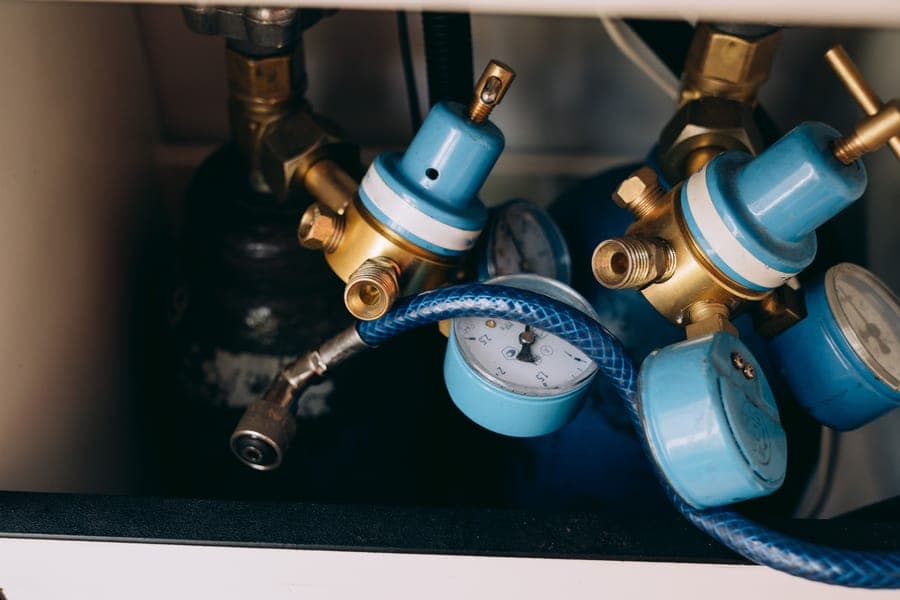
Whatever size cylinder you buy, the tank gauge is how you know what is left. A forged-brass dual-gauge regulator reads output pressure and tank contents and is rebuildable rather than disposable.
Spec sheet
- Gauges
- Dual -- output pressure and tank contents
- Output range
- 0-60 psi
- Inlet
- CGA-320 CO2 tank thread
- Outlet
- 1/4 in MFL or barb
- Body
- Forged brass
- Serviceable
- Rebuild kits widely available
What it is not good at
The tank gauge reads full until the liquid CO2 is gone, then falls fast -- it is a warning, not a fuel gauge.
Who it is for
Any cylinder, any kegerator
Mid tier
Complete Homebrew Kegging Starter Kit
Kegco / KOMOS / MoreBeer
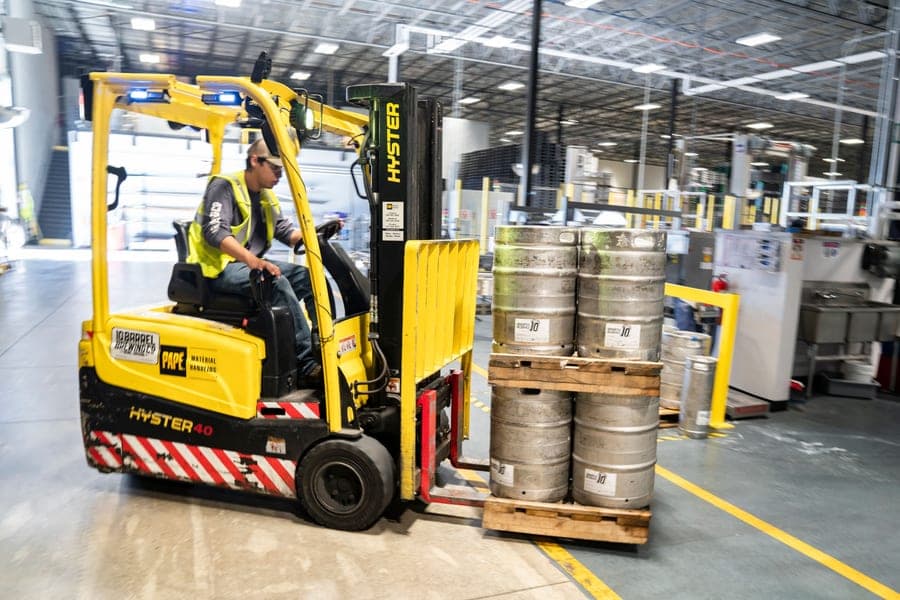
Kits bundle a cylinder, usually 5 lb, with the keg, regulator and lines. The cheapest way to acquire a cylinder, provided you know it arrives empty.
Spec sheet
- Keg
- One 5 gal ball-lock corny (new or reconditioned)
- Gas
- 5 lb CO2 cylinder (usually empty on arrival)
- Regulator
- Single-body dual-gauge
- Lines
- Gas line, beverage line, disconnects
- Dispense
- Picnic (party) tap on most kits
- Not included
- Cooling -- that is the kegerator decision
What it is not good at
The cylinder ships empty, and the included regulator is often the part you upgrade first.
Who it is for
A first kegging purchase where the cylinder is one line item of several
Prosumer tier
Secondary CO2 Regulator Manifold
Taprite / Duotight
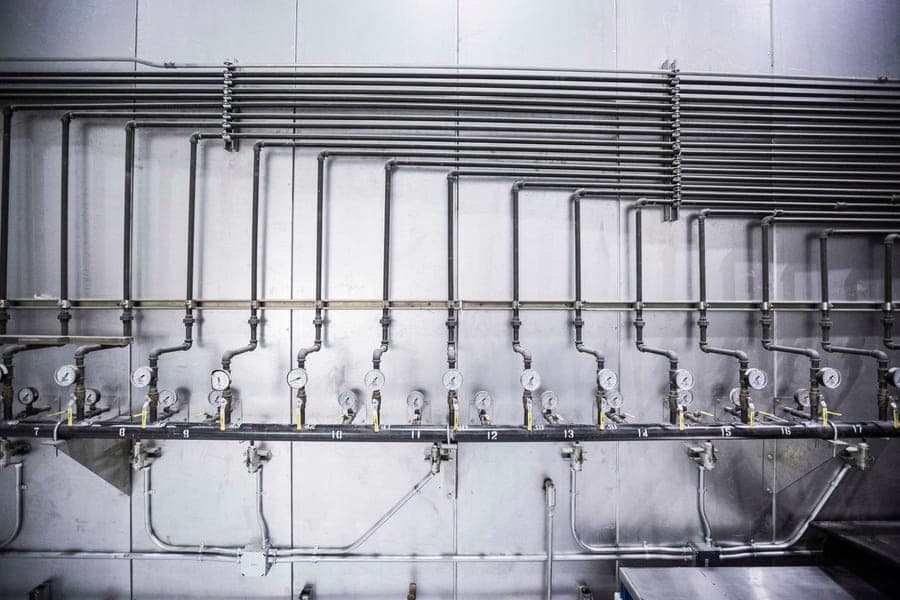
Running several kegs off one cylinder is normal; running them at one pressure is a compromise. A manifold with a body per keg gives each beer its own pressure from the same tank.
Spec sheet
- Outputs
- 2, 3 or 4 bodies
- Adjustment
- Each body set independently
- Feed
- Runs off the primary regulator
- Gauges
- One per body on gauged versions
- Shutoff
- Per-body shutoff on most models
- Why
- Serve a stout at 8 psi beside a saison at 14
What it is not good at
Needs mounting inside the cabinet or on a wall, and feeds from the primary regulator.
Who it is for
Two or more kegs at different carbonation levels
Entry tier
5 Gallon Ball Lock Corny Keg
AMCYL / NSI
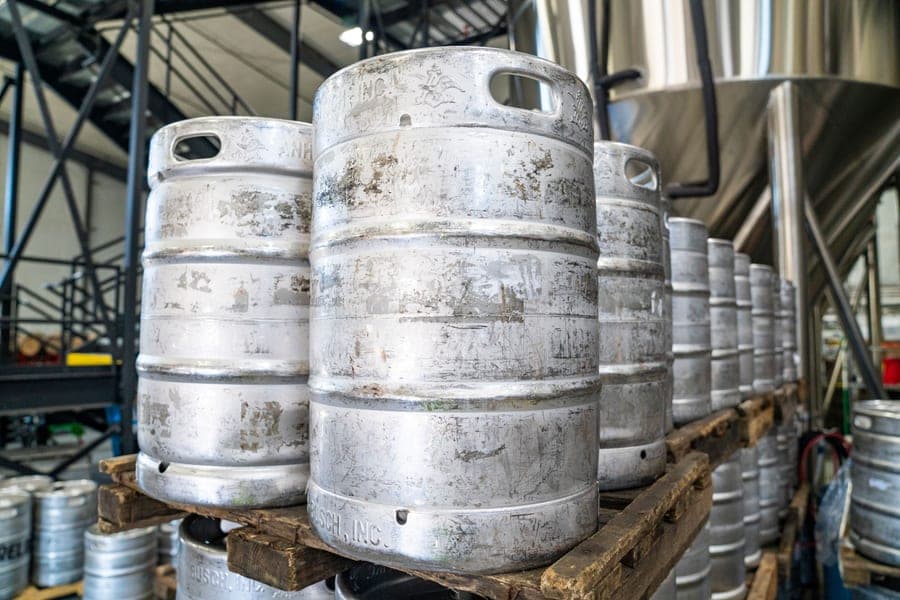
Tank sizing follows keg count. Each 5 gallon corny needs carbonating from flat and then dispensing, and a second keg roughly doubles the gas you get through in a month.
Spec sheet
- Capacity
- 5 gal / 19 L
- Height
- ~25 in (26 in with posts)
- Diameter
- ~8.5 in
- Connection
- Ball lock gas and liquid posts
- Pressure rating
- 130 psi typical, 55 psi working
- Lid
- Oval pry-out lid with a PRV
What it is not good at
Each keg needs about 27 inches of clearance with posts fitted, which also competes with the cylinder for cabinet space.
Who it is for
Working out how much gas you actually need
FAQ
Questions brewers actually ask
What size CO2 tank is best for a kegerator?
A 5 lb cylinder for most homebrew kegerators, because it fits inside a full-size cabinet and dispenses several 5 gallon kegs per fill. Go to 10 lb if the cylinder will stand outside the kegerator, since the refill fee is largely the same for both sizes and you halve the trips.
How many kegs will a 5 lb CO2 tank dispense?
Several 5 gallon kegs per fill in normal use, but the honest answer is that it depends on your serving pressure, how much you purge, and whether the system leaks. A tight system gets a lot of beer out of five pounds. A slow leak on a gas post will empty the same cylinder in under a week.
Does the CO2 tank go inside the kegerator?
It can, and in most full-size cabinets it does, which keeps the system self-contained with no gas line through the door seal. The cost is space -- a 5 lb cylinder takes roughly the footprint of a corny keg. Mounting outside frees that space and lets you use a larger cylinder.
Is a 10 lb CO2 tank better than a 5 lb?
Cheaper per pound of gas, yes, because the fill fee dominates the price and is similar for both. The reason most homebrewers still buy 5 lb is that it fits inside the kegerator. If the cylinder lives outside the cabinet, the 10 lb is the better buy.
Why does my CO2 gauge read full and then suddenly empty?
Because the cylinder holds liquid CO2 with gas above it. As gas is drawn off, more liquid evaporates and the pressure stays almost constant until the liquid is gone, then falls quickly. Weigh the cylinder instead: subtract the stamped tare weight to get the pounds of CO2 remaining.
Do CO2 tanks come full when you buy them?
Almost never. Full cylinders are hazardous goods, so new cylinders and kegging kits ship empty. Find a filler or exchange service before you need it -- welding gas suppliers, fire-extinguisher services, paintball shops and some homebrew shops all do it, at widely different prices.
Read next
More on kegging
Roundup
The Best CO2 Regulators for Homebrew
Primary regulators and secondary manifolds, and what to check before buying.
Guide
CO2 Regulator Settings: PSI by Temperature and Style
PSI by temperature and style, with the line-balancing numbers.
Guide
Homebrew Kegging Setup, Step by Step
The setup order, plus the three day-one failures and how to avoid them.
Roundup
Best Beginner Kegging Setups
Three beginner routes into kegging compared, and the parts each one actually covers.

Guide
How to Force Carbonate a Keg
Set-and-forget, shake and burst methods with real pressures and timings.
Roundup
The Best Kegerators for Homebrew
Kegerators compared on corny capacity, internal height and temperature range.