Guide
How to Force Carbonate a Keg
Three methods, from two days of patience to thirty minutes of risk. Which to use and the pressures for each.
The short answer
The reliable method is set-and-forget: chill the keg to serving temperature, set the regulator to your target serving pressure, and leave it connected for two to three days. The shake method carbonates in under an hour but easily over-carbonates, and the burst method is a compromise at around 30 psi for 24 hours.
DisclosureWe earn a commission on qualifying purchases made through links on this page, at no extra cost to you. It does not change what we recommend or how we rank it -- here is how we pick and here is the full disclosure.
Method 1
Set and forget -- the one to use
The reliable method, and the one to default to.
- Chill the keg to serving temperature and let it get there fully. Around 38°F for most beers. This step is not optional -- CO2 solubility depends on temperature and carbonating a warm keg means carbonating against the physics.
- Set the regulator to your target serving pressure. Roughly 10 to 12 psi for most ales at 38°F; see CO2 regulator settings for styles.
- Connect the gas and leave it. Two to three days. Taste on day two, and if it is close, leave it one more day.
- Leave the gas connected permanently at serving pressure for the life of the keg.
Why this is the right default: the equilibrium carbonation at a given pressure and temperature is fixed, so the beer cannot over-carbonate no matter how long you leave it. It is self-correcting. The only cost is patience.
Method 2
The shake method -- fast and easy to overshoot
If you need carbonated beer this evening:
- Chill the keg thoroughly first. Cold beer absorbs CO2 much faster.
- Set the regulator to around 30 psi.
- Lay the keg on its side and rock it back and forth for 60 to 90 seconds. You will hear gas flowing into it as the agitation drives CO2 into solution.
- Stand it up, drop the regulator to serving pressure, and vent the keg.
- Wait an hour, then pour a test glass.
- Repeat in short bursts if it needs more.
The risk is real: agitation drives CO2 in faster than you can judge, and an over-carbonated keg is much more annoying to fix than an under-carbonated one -- you have to vent it repeatedly over days and wait for equilibrium to re-establish. Do short bursts and check, rather than one long shake.
Method 3
The burst method -- a sensible compromise
Between the two: set around 30 psi, leave it connected for 24 hours without shaking, then drop to serving pressure and vent. Taste after a few hours.
This gets you most of the way in a day with far less overshoot risk than shaking, because there is no agitation accelerating absorption unpredictably. It is the method to use when you want it ready tomorrow rather than tonight.
The three methods compared
| Method | Pressure | Time | Overshoot risk |
|---|---|---|---|
| Set and forget | Serving pressure | 2-3 days | None |
| Burst | ~30 psi then serving | 24 hours | Low |
| Shake | ~30 psi with agitation | Under 1 hour | High |
An orange rule marks the better of the two on that row.
Before you blame carbonation
Three things that look like a carbonation problem
- A leak. A keg that never carbonates despite days at pressure is usually leaking. Pressurize it, close the cylinder valve overnight, and see whether the gauge drops. Check the lid gasket and post O-rings first.
- A short beer line. If the beer is correctly carbonated but pours as foam, the line is too short to drop keg pressure to zero at the faucet. Add line rather than lowering the pressure, which would under-carbonate the beer.
- The keg not actually being cold. A keg put in a cold cabinet a few hours ago is not at 38°F throughout. Carbonating against a warm core gives inconsistent results.
What we recommend
The products on this page
What you set
Mid tier
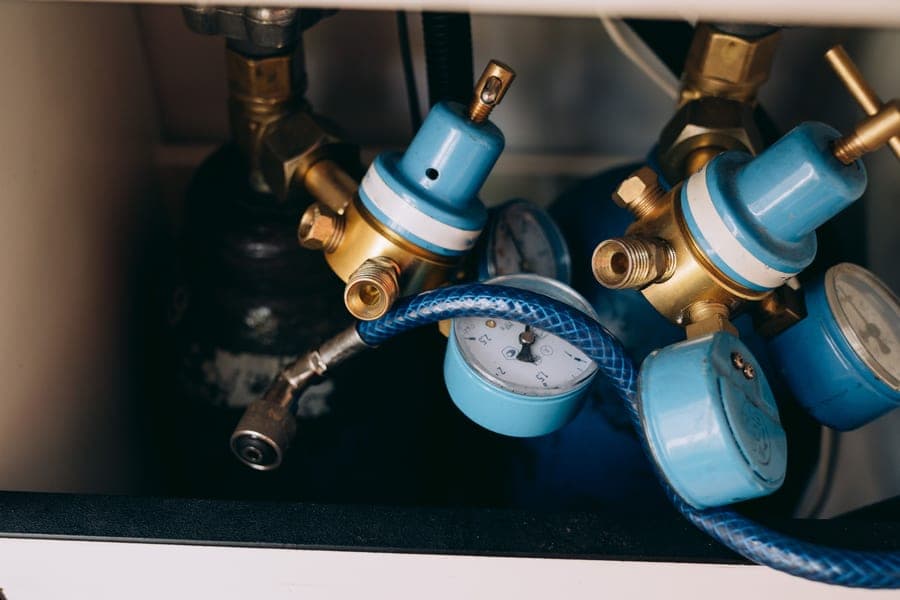
Taprite Dual-Gauge CO2 Regulator
Taprite
A 0-60 psi output range covers both serving pressures and the higher burst pressures, and the dual gauge lets you see what you actually set.
Spec sheet
- Gauges
- Dual -- output pressure and tank contents
- Output range
- 0-60 psi
- Inlet
- CGA-320 CO2 tank thread
- Outlet
- 1/4 in MFL or barb
- Body
- Forged brass
- Serviceable
- Rebuild kits widely available
What it is not good at
A single body means one pressure for all kegs, so you cannot burst one while serving another.
Who it is for
Any carbonation method
If you carbonate while serving
Prosumer tier
Secondary CO2 Regulator Manifold
Taprite / Duotight
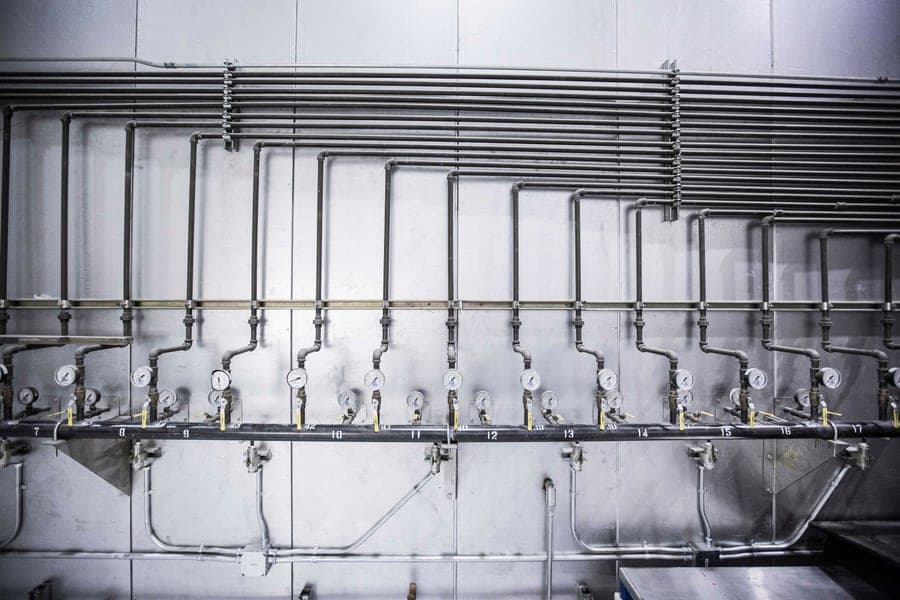
Independent bodies mean you can run a fresh keg at 30 psi while the serving keg stays at 11.
Spec sheet
- Outputs
- 2, 3 or 4 bodies
- Adjustment
- Each body set independently
- Feed
- Runs off the primary regulator
- Gauges
- One per body on gauged versions
- Shutoff
- Per-body shutoff on most models
- Why
- Serve a stout at 8 psi beside a saison at 14
What it is not good at
Extra purchase, extra interior space.
Who it is for
Force carbonating a new keg without affecting the current one
What holds it
Entry tier
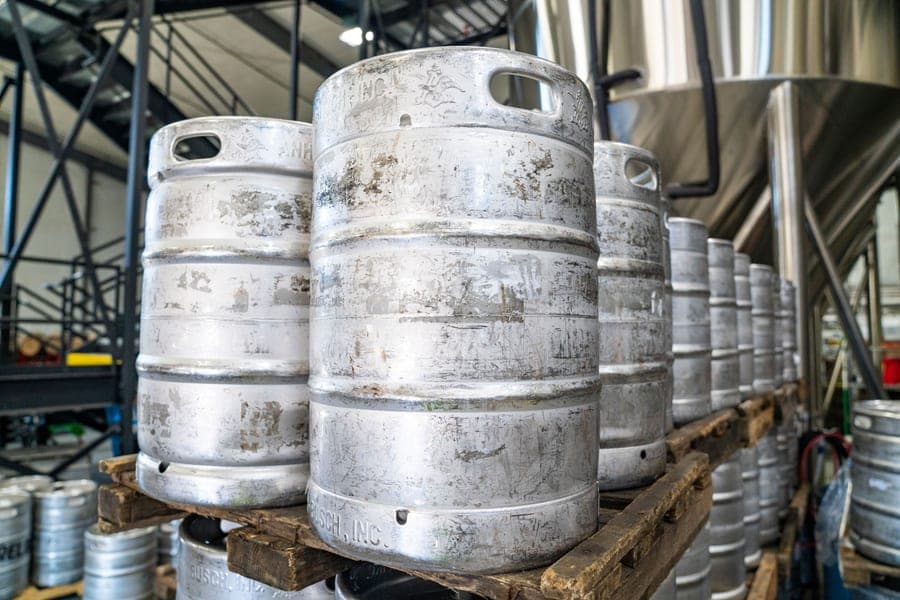
5 Gallon Ball Lock Corny Keg
AMCYL / NSI
Pressure ratings around 130 psi burst and 55 psi working mean every pressure in this guide is well inside the vessel's envelope.
Spec sheet
- Capacity
- 5 gal / 19 L
- Height
- ~25 in (26 in with posts)
- Diameter
- ~8.5 in
- Connection
- Ball lock gas and liquid posts
- Pressure rating
- 130 psi typical, 55 psi working
- Lid
- Oval pry-out lid with a PRV
What it is not good at
Check the lid gasket seals properly before applying higher pressures.
Who it is for
Any of these methods
FAQ
Questions brewers actually ask
How long does it take to force carbonate a keg?
Two to three days using the set-and-forget method at serving pressure, 24 hours using the burst method at around 30 psi, or under an hour using the shake method. The set-and-forget method is the only one that cannot over-carbonate, because equilibrium carbonation at a given pressure and temperature is fixed no matter how long you leave it.
What pressure should I use to force carbonate?
Your normal serving pressure if you are using the set-and-forget method -- roughly 10 to 12 psi for most ales at 38 degrees Fahrenheit. For the faster burst or shake methods, around 30 psi, then drop to serving pressure and vent the keg once it is close. Always chill the keg fully first.
How do you fix an over-carbonated keg?
Disconnect the gas, pull the lid's pressure relief ring to vent the headspace, and wait. Repeat several times over a day or two: each vent removes headspace gas, and the beer gradually releases dissolved CO2 to refill it. There is no fast remedy, which is precisely why the shake method deserves caution.
Should I shake the keg to carbonate it faster?
It works, and it overshoots easily. Agitation drives CO2 into solution faster than you can judge by feel, and an over-carbonated keg takes days of repeated venting to fix. If you use it, do 60 to 90 second bursts with the keg on its side at around 30 psi, then stand it up, drop to serving pressure, vent and taste before repeating.
Why will my keg not carbonate?
Almost always a leak. Pressurize the system, close the cylinder valve overnight, and check whether the regulator gauge has dropped by morning. If it has, spray every joint with soapy water and look for bubbles, starting with the lid gasket and post O-rings. The other possibility is that the keg has not reached serving temperature throughout.
Read next
More on kegging
Guide
CO2 Regulator Settings: PSI by Temperature and Style
PSI by temperature and style, with the line-balancing numbers.
Guide
Homebrew Kegging Setup, Step by Step
The setup order, plus the three day-one failures and how to avoid them.
Roundup
The Best CO2 Regulators for Homebrew
Primary regulators and secondary manifolds, and what to check before buying.
Roundup
The Best Kegerators for Homebrew
Kegerators compared on corny capacity, internal height and temperature range.