Roundup
The Best CO2 Tanks for Homebrew
Every tank on this page holds the same gas. The decision is size, and the brewers who get it wrong are the ones who bought for the cabinet instead of the refill trip.
The short answer
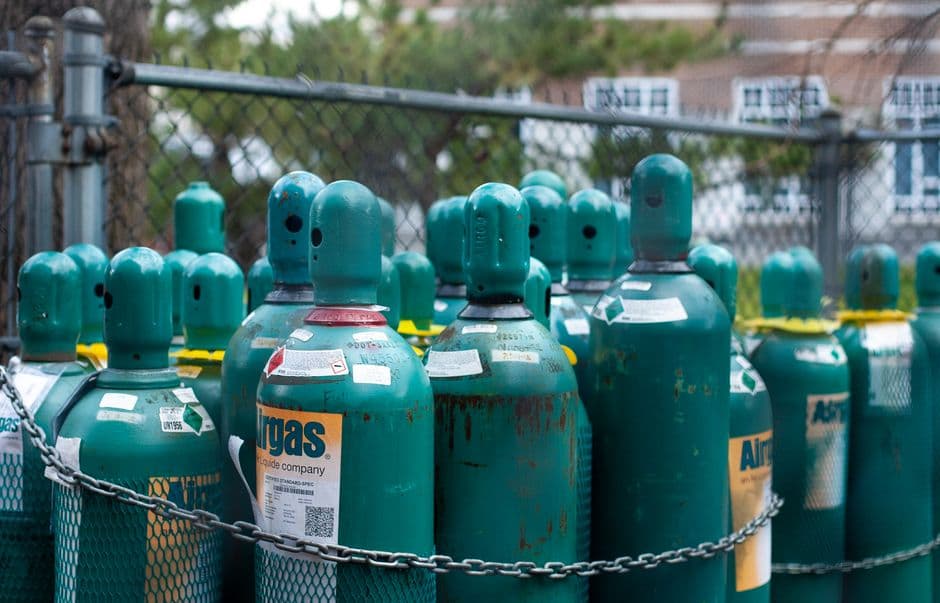
A 5 lb aluminum CO2 tank is the right first cylinder for most homebrewers: it dispenses roughly eight to nine corny kegs per fill and stands beside or inside most kegerators. Move to a 10 or 20 lb tank once the refill trip, not the shelf space, is the thing annoying you.
DisclosureWe earn a commission on qualifying purchases made through links on this page, at no extra cost to you. It does not change what we recommend or how we rank it -- here is how we pick and here is the full disclosure.
At a glance
Quick picks
| # | Product | Best for | Price |
|---|---|---|---|
| 1 | Best overall 5 lb Aluminum CO2 Tank Five pounds of liquid CO2 carbonates and dispenses around eight to nine 5 gallon corny kegs, which is a season of brewing for most people. At roughly 5.5 inches across and 18 inches tall it stands inside a full-size kegerator or tucks beside a keezer without an argument. | A first kegging setup, one or two kegs on tap | |
| 2 | Best cost per pour 20 lb Aluminum CO2 Tank Around 40 corny kegs per fill. The refill price of a 20 lb tank is nowhere near four times a 5 lb refill, so the gas gets dramatically cheaper per keg and the trip to the gas supplier becomes an annual event rather than a seasonal one. | Three or four taps, or anyone tired of the refill trip | |
| 3 | Best middle ground 10 lb Aluminum CO2 Tank The size nobody regrets. Double the gas of a 5 lb cylinder for well under double the refill cost, still short enough to stand beside a kegerator without dominating the corner, and light enough to carry to the car one-handed. | Two or three taps and a garage with limited floor space | |
| 4 | Best for tight spaces 2.5 lb Aluminum CO2 Tank The one size that genuinely fits inside a small cabinet alongside the keg, and light enough to carry to a party with a picnic tap. If the whole point of your build is that it hides, this is the cylinder that lets it. | Compact kegerators, keezer collars, party and camping rigs | |
| 5 | 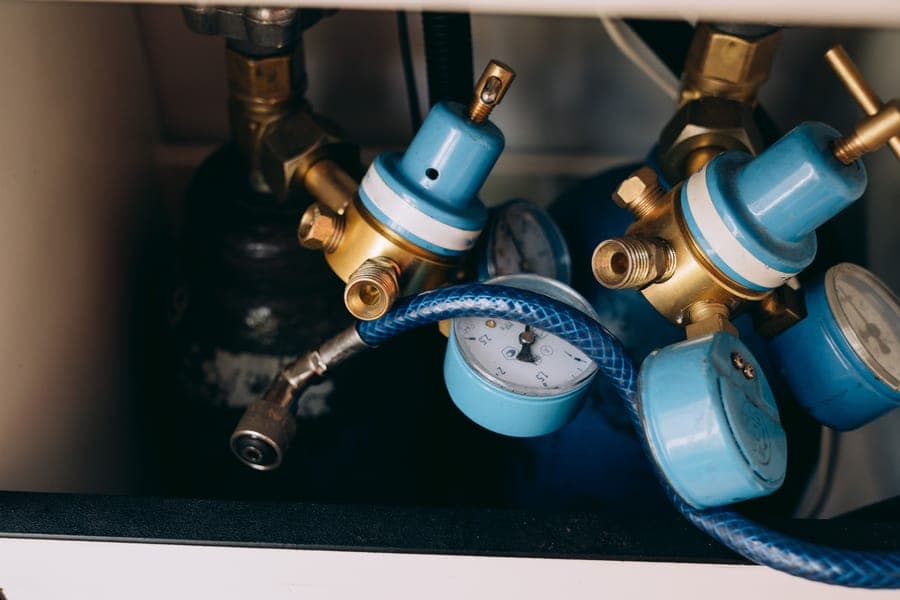 Buy it with the tank Taprite Dual-Gauge CO2 Regulator A CO2 tank is useless on its own. A forged-brass dual-gauge regulator threads onto the CGA-320 valve and shows both your serving pressure and roughly how much gas is left, which is the difference between planning a refill and discovering an empty tank mid-pour. | Every cylinder on this page |
Prices are checked on Amazon when you click. We never print a number we cannot verify.
CO2 tank sizes at a glance
| Size | Kegs per fill (approx) | Where it lives | Who it suits |
|---|---|---|---|
| 2.5 lb | ~4 | Inside a compact cabinet | Hidden builds, portable rigs |
| 5 lb | ~8-9 | Inside a full-size kegerator | First kegging setup |
| 10 lb | ~18-20 | Beside the cabinet | Two to three taps |
| 20 lb | ~40 | On the floor, beside the cabinet | Three-plus taps, frequent brewers |
The criteria
Four things separate these tanks, and only one is the gas
Every aluminum cylinder below holds the same commodity: food-grade liquid CO2, filled by the same gas supplier, at the same purity. There is no better or worse carbon dioxide. What differs is how much of it you carry home, how often, what it costs per keg, and whether the cylinder physically fits where you want to hide it. We ranked on those four, in that order.
Cost per keg, not cost per tank. Fill and swap pricing is close to flat across sizes -- a gas supplier charges for the handling far more than for the gas. That means the price per pound of CO2 falls steeply as the cylinder gets bigger, and the 2.5 lb tank is the most expensive gas you can buy. Nobody notices this on the first fill. Everybody notices it on the sixth.
Refill frequency. A cylinder is not an appliance you interact with; it is an errand. A 5 lb tank sends you to the supplier two or three times a year on a two-tap system. A 20 lb tank sends you once. If your gas supplier is twenty minutes away and closes at four on weekdays, that difference matters more than any spec.
Fit. Measure the inside of your cabinet before you order anything. A 5 lb cylinder stands inside most full-size kegerators; a 10 lb one usually does not; a 20 lb one definitely does not. The same arithmetic applies to the kegs themselves, which is why corny keg sizes and parts is worth reading with a tape measure in hand.
Valve and certification. All four sizes here carry a CGA-320 valve, which is the standard beverage CO2 thread in the US and what every homebrew regulator is built for. All four are aluminum and US DOT approved. These are not differentiators between the picks -- they are the floor, and a cylinder lacking either is not a homebrew CO2 tank.
The thing nobody warns you about
Your new tank arrives empty
Compressed gas cannot legally ship to a residential address by normal carrier, so a new CO2 tank arrives with nothing in it. The retailer states this plainly and brewers still miss it, which is how a kegging setup gets fully assembled on a Saturday and then sits useless until Monday.
Two ways to get gas into it. The first is a fill: your cylinder goes behind the counter, comes back with your valve and your stamp, and you are billed for the gas. The second is an exchange: you hand over your cylinder and receive a different filled one of the same size. Exchange is faster and usually cheaper. It also means the shiny tank you just bought is gone forever, so if you paid extra for a finish you like, ask for a fill.
Where to go: welding gas suppliers, fire extinguisher shops, beverage and bar supply companies, and some paintball stores and homebrew shops. Food-grade and beverage-grade CO2 is what you want. Welding-grade CO2 comes from the same bulk source at most suppliers but is not certified for consumption, and the sensible answer is to ask the counter which they are filling you with.
Sizing it properly
How much CO2 a keg actually consumes
Two separate jobs draw on the cylinder. The first is carbonation -- dissolving gas into the beer, which is where the bulk of it goes. The second is dispensing -- the headspace pressure that pushes beer up the dip tube, which replaces the volume of every pint you pour. Carbonating a keg from flat costs significantly more gas than serving the same keg, which is why force carbonation is where a tank empties fastest and why how to force carbonate matters for your gas budget as much as for your beer.
The published figures are a reasonable planning number and not a promise. Retailers put a 5 lb cylinder at roughly eight to nine 5 gallon homebrew kegs and a 20 lb cylinder at around 40. Your mileage depends on how highly you carbonate, how cold the keg sits, how much purging you do before filling, and -- decisively -- whether anything leaks.
Leaks are the real consumption variable. A tank that empties in three weeks does not have a sizing problem, it has a fitting problem. Spray every connection with soapy water at working pressure the day you build the system: the regulator-to-valve joint, both gas disconnects, the keg lid gasket and the gas post. A slow leak on a post O-ring will quietly drain a 5 lb cylinder over a fortnight while you blame the gauge. Replace the whole seal set on a reconditioned keg before first use and this problem largely disappears.
One more variable that catches people with multiple kegs on one regulator: every keg on a single output runs at the same pressure, so a stout at 8 psi and a saison at 14 cannot coexist without a properly set regulator and, usually, a secondary manifold. That is not a tank decision, but it is the next thing you will buy after one.
Aluminum, steel and the used market
What to look for on a second-hand cylinder
New cylinders sold for homebrew are almost universally aluminum, and that is the right default: aluminum does not rust internally, weighs substantially less than steel for the same capacity, and carries the same five-year retest obligation. Steel cylinders are still common on the used market, cost less, and are genuinely heavier -- a trade worth making only if the tank never moves.
Buying used is reasonable if you check three things before money changes hands. The stamp, so you know how long before the next retest. The valve, which must be CGA-320 and not a welding or medical thread -- an adapter is not the answer here. And the interior, by asking whether it has ever been used for anything but beverage CO2. A cylinder that lived on a welding cart can be requalified and cleaned, but you are buying someone else’s history.
Store it upright and strapped. A CO2 cylinder holds liquid, and a tank lying on its side can feed liquid CO2 into the regulator, which freezes the diaphragm and gives you wild pressure readings. Upright also means a knocked-over cylinder cannot shear its valve, which is the one genuinely dangerous failure mode in home draft.
How we picked
The basis for these five
Sizes, valve type and capacity figures come from current US retailer listings, linked in the sources below; the hydrostatic test interval is the federal requirement under 49 CFR 180.205. We have not emptied each of these cylinders under controlled conditions and do not claim to -- keg-per-fill figures are the retailers’ published estimates and vary with carbonation level and leak-tightness. Where a judgment here reflects reported owner experience rather than a published figure, it is written as such. See how we pick.
The picks, in order
Every pick in detail
#1
Best overall
Entry tier
5 lb Aluminum CO2 Tank
KOMOS / Kegco
Five pounds of liquid CO2 carbonates and dispenses around eight to nine 5 gallon corny kegs, which is a season of brewing for most people. At roughly 5.5 inches across and 18 inches tall it stands inside a full-size kegerator or tucks beside a keezer without an argument.
Spec sheet
- Capacity
- 5 lb of liquid CO2
- Material
- Aluminum, US DOT approved
- Valve
- CGA-320 (standard beverage CO2 thread)
- Footprint
- ~5.5 in diameter x ~18.25 in tall (Kegco 5 lb)
- Dispenses
- ~8-9 five gallon corny kegs per fill (MoreBeer)
- Ships
- Empty -- fill or exchange locally
What it is not good at
It ships empty, and you pay the same drive and the same swap fee to fill it as you would for a tank four times the size. If you brew constantly it is the sizing you outgrow first.
Who it is for
A first kegging setup, one or two kegs on tap
#2
Best cost per pour
Prosumer tier
20 lb Aluminum CO2 Tank
KOMOS / MoreBeer
Around 40 corny kegs per fill. The refill price of a 20 lb tank is nowhere near four times a 5 lb refill, so the gas gets dramatically cheaper per keg and the trip to the gas supplier becomes an annual event rather than a seasonal one.
Spec sheet
- Capacity
- 20 lb of liquid CO2
- Material
- Aluminum, US DOT approved
- Valve
- CGA-320
- Dimensions
- ~8 in diameter x ~27.25 in tall with the handle
- Dispenses
- ~40 five gallon corny kegs per fill
- Where it lives
- Floor beside the cabinet -- too tall for most interiors
What it is not good at
At roughly 8 inches across and 27 inches tall with the handle, it lives on the floor next to the cabinet, not inside it. It is heavy enough that you will think about where it stands.
Who it is for
Three or four taps, or anyone tired of the refill trip
#3
Best middle ground
Mid tier
10 lb Aluminum CO2 Tank
KOMOS / MoreBeer
The size nobody regrets. Double the gas of a 5 lb cylinder for well under double the refill cost, still short enough to stand beside a kegerator without dominating the corner, and light enough to carry to the car one-handed.
Spec sheet
- Capacity
- 10 lb of liquid CO2
- Material
- Aluminum, US DOT approved
- Valve
- CGA-320
- Fits
- Beside most kegerators, inside some full-size cabinets
- Refill
- Costs far less than two 5 lb fills
- Ships
- Empty
What it is not good at
Too tall for most kegerator interiors, so you are routing a gas line through or around the door either way -- at which point a 20 lb tank costs you nothing extra in floor plan.
Who it is for
Two or three taps and a garage with limited floor space
#4
Best for tight spaces
Entry tier
2.5 lb Aluminum CO2 Tank
KOMOS
The one size that genuinely fits inside a small cabinet alongside the keg, and light enough to carry to a party with a picnic tap. If the whole point of your build is that it hides, this is the cylinder that lets it.
Spec sheet
- Capacity
- 2.5 lb of liquid CO2
- Material
- Aluminum, US DOT approved
- Valve
- CGA-320 -- takes a standard homebrew regulator
- Fits
- Inside compact kegerators and keezer collars
- Trade-off
- Worst cost per pound of gas of any size
- Ships
- Empty
What it is not good at
The worst gas economics on this page by a distance -- you pay a fill fee for a fraction of the gas. Buy it for the dimensions, never for the price.
Who it is for
Compact kegerators, keezer collars, party and camping rigs
#5
Buy it with the tank
Mid tier
Taprite Dual-Gauge CO2 Regulator
Taprite
A CO2 tank is useless on its own. A forged-brass dual-gauge regulator threads onto the CGA-320 valve and shows both your serving pressure and roughly how much gas is left, which is the difference between planning a refill and discovering an empty tank mid-pour.
Spec sheet
- Gauges
- Dual -- output pressure and tank contents
- Output range
- 0-60 psi
- Inlet
- CGA-320 CO2 tank thread
- Outlet
- 1/4 in MFL or barb
- Body
- Forged brass
- Serviceable
- Rebuild kits widely available
What it is not good at
The tank-contents gauge reads pressure, not weight, so it sits near full until the liquid CO2 is gone and then drops fast. Treat it as a warning light, not a fuel gauge.
Who it is for
Every cylinder on this page
FAQ
Questions brewers actually ask
What size CO2 tank is best for homebrewing?
A 5 lb aluminum cylinder suits most homebrewers starting out. It dispenses roughly eight to nine 5 gallon corny kegs per fill and is the largest common size that still stands inside a full-size kegerator. Move up to 10 or 20 lb when the refill trip has become the annoying part, because fill fees are nearly flat across sizes and the gas gets much cheaper per keg.
Do CO2 tanks come filled?
No. Compressed gas cannot ship to a residential address by normal carrier, so every new CO2 tank arrives empty. You take it to a welding gas supplier, fire extinguisher shop, beverage supplier or homebrew store for a fill or an exchange. Ask for food-grade or beverage-grade CO2, and budget the trip before you plan your first pour.
How many kegs will a 5 lb CO2 tank dispense?
Retailers put it at roughly eight to nine 5 gallon homebrew kegs per fill. The real figure depends on how highly you carbonate, how much you purge before filling, and whether the system leaks. Carbonating from flat uses far more gas than serving does, so a tank that only serves already-carbonated kegs lasts noticeably longer.
How often does a CO2 tank need to be hydro tested?
Every five years for DOT-3AL cylinders, under 49 CFR 180.205. The requalification date is stamped on the cylinder shoulder as a month and year with the testing facility's identification mark, and a gas supplier cannot legally fill a cylinder that is past it. This is the main thing to check before buying a used tank.
Can a CO2 tank be stored on its side?
Store it upright and secured. A CO2 cylinder contains liquid, and on its side that liquid can reach the regulator, freeze the diaphragm and produce erratic pressure readings. Upright storage also prevents the one genuinely dangerous failure in home draft systems, which is a toppled cylinder shearing its valve.
Is welding CO2 the same as beverage CO2?
It usually comes from the same bulk supply, but it is not certified for consumption and may be filled through equipment that is not kept to food-grade standards. Ask the counter for beverage-grade or food-grade CO2. Most suppliers will tell you straight away which grade their fill line carries.
Sources
Read next
More on kegging
Guide
What Size CO2 Tank for a Kegerator?
Tank sizing for a kegerator, how long a fill lasts, and the refill economics nobody mentions.
Guide
CO2 Regulator Settings: PSI by Temperature and Style
PSI by temperature and style, with the line-balancing numbers.
Roundup
The Best CO2 Regulators for Homebrew
Primary regulators and secondary manifolds, and what to check before buying.

Guide
How to Force Carbonate a Keg
Set-and-forget, shake and burst methods with real pressures and timings.
Guide
Homebrew Kegging Setup, Step by Step
The setup order, plus the three day-one failures and how to avoid them.
Roundup
The Best Kegerators for Homebrew
Kegerators compared on corny capacity, internal height and temperature range.