Guide
Closed Transfer to Keg
Moving beer with gas instead of gravity. The whole method is one idea: the beer should never see an empty space.
The short answer
To do a closed transfer, purge the receiving keg with CO2, connect the fermenter's liquid post to the keg's liquid post with a jumper line, then connect the keg's gas post back to the fermenter headspace. Pressure in the fermenter pushes beer down while displaced CO2 returns, so no air enters either vessel.
DisclosureWe earn a commission on qualifying purchases made through links on this page, at no extra cost to you. It does not change what we recommend or how we rank it -- here is how we pick and here is the full disclosure.
The four connections a closed transfer needs
| Connection | From | To |
|---|---|---|
| Purge gas | CO2 regulator | Keg gas post |
| Beer path | Fermenter liquid post | Keg liquid post |
| Return gas path | Keg gas post | Fermenter headspace or PRV |
| Push pressure | CO2 regulator (2-4 psi) | Fermenter headspace |
| Relief | Keg PRV | Atmosphere, only if needed |
Step one
Purge the receiving keg
A keg sitting empty is a keg full of air. Push beer into it and that air dissolves straight into your beer, which is precisely the problem the method exists to avoid. So the keg is purged first, and how well you purge it is most of how well the transfer works.
The thorough method costs nothing but sanitizer. Fill the keg to the brim with sanitizer solution, seal it, then push the liquid out through the liquid post with CO2. The gas follows the liquid down and what is left behind is a keg of almost pure CO2, because the sanitizer physically displaced the air rather than diluting it.
The lazy method -- pressurize, vent, repeat -- works but needs many more cycles than people do, because each cycle only dilutes the remaining oxygen rather than displacing it.
Step two
Build the beer path
Connect a jumper line from the fermenter’s liquid post to the keg’s liquid post. Liquid to liquid, both times. The beer leaves the bottom of the fermenter through its dip tube and arrives at the bottom of the keg, filling from underneath, so it is not falling through gas and picking up foam on the way down.
Keep the line short and make sure both disconnects are properly seated. A ball-lock disconnect that is only half on will hiss, leak and eventually pop off under pressure, which is messy and wasteful -- corny keg sizes and parts covers which post is which.
Step three
Give the displaced gas somewhere to go
This is the step people skip and then wonder why nothing moves. The keg is full of CO2. Push beer in and that CO2 has to leave, or the pressure in the keg rises until it equals the fermenter and the transfer stops.
There are two correct answers. The elegant one is to run a second line from the keg’s gas post back to the fermenter headspace, so the displaced CO2 returns to the vessel it came from -- a closed loop that uses almost no new gas at all. The simpler one is to pull the keg’s pressure relief valve slightly and let the CO2 vent as beer arrives.
The loop is better because it wastes nothing and keeps everything sealed. The vent is easier when your fermenter has only two posts and both are already busy.
Step four
Push gently, and watch
Set the regulator feeding the fermenter to two to four psi above the keg. That is all the differential a transfer needs, and more is actively worse: high pressure drives beer fast enough to foam in the line and knock CO2 out of solution.
A 5 gallon transfer at low pressure takes several minutes, which is the right amount of time. Listen for the change in sound as the fermenter empties, and stop before the dip tube starts drawing trub -- on an opaque stainless vessel that is a judgment made on weight and sound rather than sight, which is one real advantage clear vessels retain -- FermZilla conical vs All Rounder.
What goes wrong
Five failures and their causes
- Nothing moves. The keg has nowhere to vent. Open the return path or crack the PRV.
- The keg fills with foam. Too much pressure, or the beer is too warm. Drop the differential and chill the beer.
- The transfer stalls halfway. Usually a blocked dip tube in the fermenter, from dry hops or a thick trub layer.
- Beer tastes oxidized anyway. The keg was not purged properly, or a leaking post let air in during conditioning. Soapy water on every fitting will find it.
- Trub in the keg. Transfer stopped too late. Cold crash longer next time, or use a floating dip tube in the fermenter.
Once the beer is in the keg, it is already carrying some carbonation from fermentation if you spunded, so top it up rather than starting from flat -- how to force carbonate has the pressures by temperature.
What we recommend
The products on this page
Entry tier
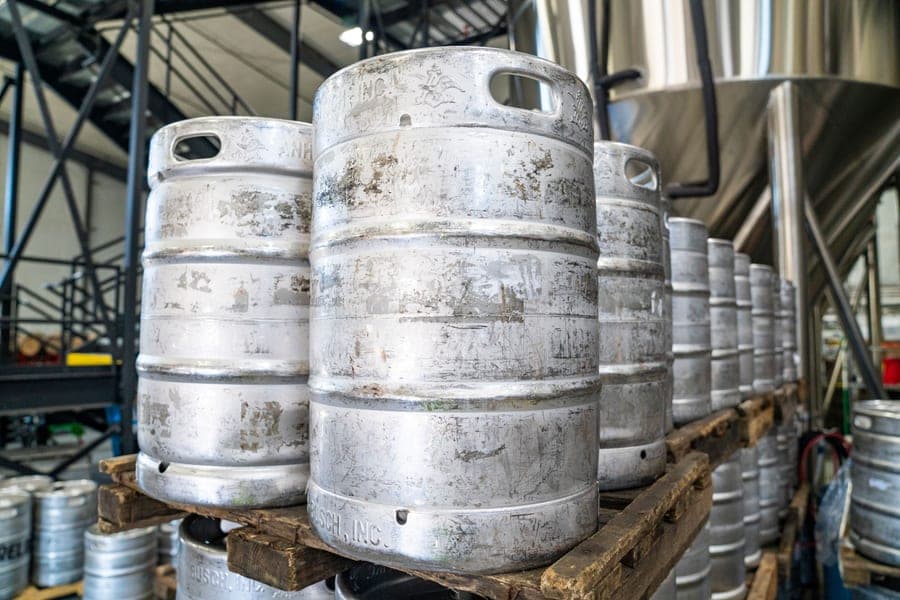
5 Gallon Ball Lock Corny Keg
AMCYL / NSI
The receiving vessel the whole method is built around. Ball-lock posts on both the keg and most pressure fermenters mean the transfer line is two disconnects and a length of tubing.
Spec sheet
- Capacity
- 5 gal / 19 L
- Height
- ~25 in (26 in with posts)
- Diameter
- ~8.5 in
- Connection
- Ball lock gas and liquid posts
- Pressure rating
- 130 psi typical, 55 psi working
- Lid
- Oval pry-out lid with a PRV
What it is not good at
Needs purging before the transfer, and a spare set of disconnects so you are not swapping fittings mid-job.
Who it is for
Any closed transfer, and for purging by filling with sanitizer
Mid tier
KegLand KegMenter Fermenter 30 L
KegLand
A pressure-rated stainless fermenter on ball-lock posts, so the transfer uses the same disconnects as your kegs. The simplest reliable source vessel for closed transfer.
Spec sheet
- Capacity
- 30 L / 7.9 gal (also 40 L and 58 L)
- Material
- 304 stainless, keg-style body
- Pressure
- Rated for pressure fermentation and transfer
- Shape
- Flat bottom -- no trub cone
- Ports
- Ball lock posts, floating dip tube option
- Opacity
- Opaque -- you cannot see the krausen
What it is not good at
Opaque, so you judge the end of the transfer by weight and sound rather than by eye.
Who it is for
Brewers who want the transfer to be routine rather than a project
Mid tier
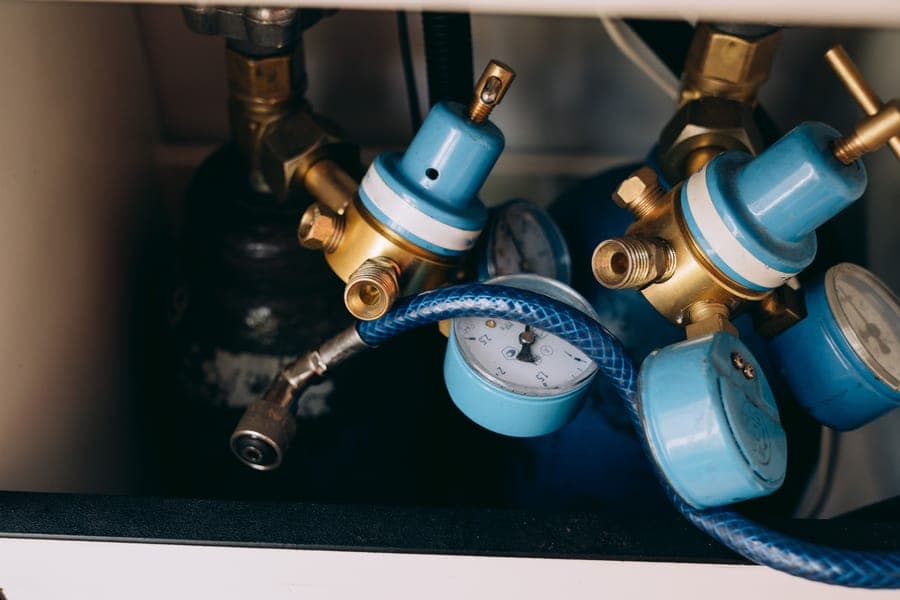
Taprite Dual-Gauge CO2 Regulator
Taprite
You need a gauge and an adjustable low-pressure output to push a transfer gently. Two to four psi of differential is plenty, and a regulator is how you get a number rather than a guess.
Spec sheet
- Gauges
- Dual -- output pressure and tank contents
- Output range
- 0-60 psi
- Inlet
- CGA-320 CO2 tank thread
- Outlet
- 1/4 in MFL or barb
- Body
- Forged brass
- Serviceable
- Rebuild kits widely available
What it is not good at
Single output, so transferring while serving another keg wants a secondary manifold.
Who it is for
Controlling transfer pressure and then carbonating the keg
Entry tier
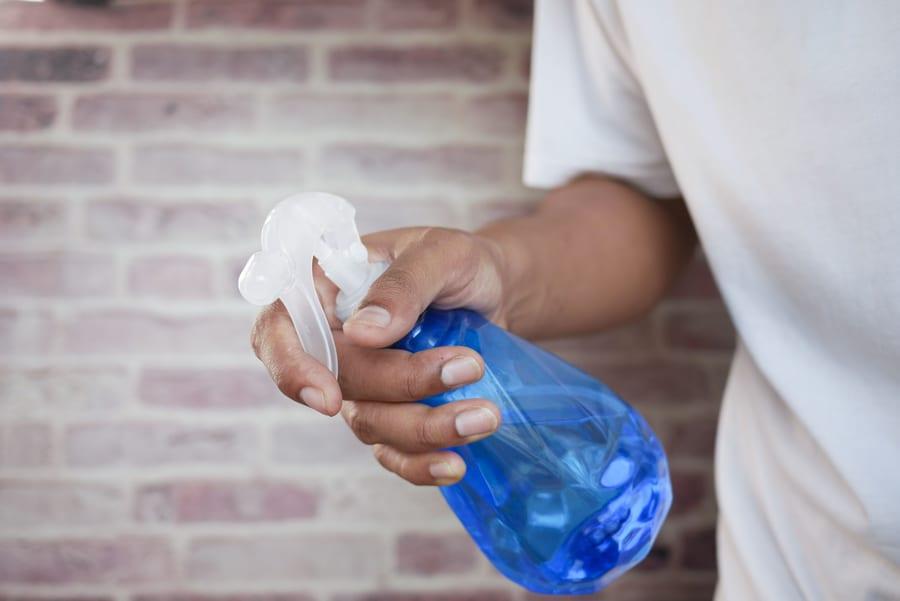
Five Star Star San Sanitizer
Five Star Chemicals
The cheapest purge there is: fill the keg with sanitizer, then push it out with CO2. The gas that replaces the liquid leaves a keg with effectively no oxygen in it.
Spec sheet
- Type
- Acid-anionic, no-rinse
- Contact time
- 1-2 minutes
- Dilution
- 1 oz per 5 gal
What it is not good at
Needs mixing and a place for five gallons of sanitizer to go afterwards.
Who it is for
Purging a keg properly without wasting a cylinder of gas
FAQ
Questions brewers actually ask
How do you do a closed transfer to a keg?
Purge the keg with CO2, connect the fermenter's liquid post to the keg's liquid post with a jumper line, then give the keg's displaced gas a path out -- either back to the fermenter headspace or through the keg's PRV. Two to four psi of differential then pushes the beer across without any air entering.
How do you purge a keg before a closed transfer?
The thorough way is to fill the keg with sanitizer and push the liquid out with CO2, so the gas physically displaces the air rather than diluting it. Pressurizing and venting repeatedly also works but needs many more cycles than most people do, because each cycle only dilutes what is left.
What pressure should I use for a closed transfer?
Two to four psi above the receiving keg. That is enough to move 5 gallons in a few minutes. Higher pressure pushes beer fast enough to foam in the line and knock dissolved CO2 out of solution, which costs you carbonation and fills the keg with head instead of beer.
Why has my closed transfer stopped moving?
Almost always because the displaced gas in the receiving keg has nowhere to go, so the pressure equalized and the beer stopped. Open a return line from the keg's gas post to the fermenter headspace, or crack the keg's pressure relief valve. A blocked dip tube is the other common cause.
Can you do a closed transfer from a bucket fermenter?
Not properly. A closed transfer needs a vessel that holds pressure so gas can push the beer out through a dip tube. A bucket can be transferred from with a sealed siphon setup, which reduces air contact, but it is not the same thing and oxygen still gets in.
Do I need a floating dip tube for a closed transfer?
Not required, but it helps. A floating dip tube draws from just below the beer surface rather than from the bottom of the vessel, so you get clear beer early in the transfer and leave the trub behind rather than racing to stop before you reach it.
Read next
More on fermenters
Roundup
The Best Pressure Fermenters
Genuinely rated pressure vessels, and what the working kit really costs.
Roundup
Best Pressure Brewing Systems
Complete pressure brewing setups ranked -- vessel, gas control and the keg at the end of it.

Guide
How to Force Carbonate a Keg
Set-and-forget, shake and burst methods with real pressures and timings.
Guide
Fermenting in a Keg
The headspace maths, the floating dip tube, and when a real pressure fermenter wins.
Roundup
The Best Conical Fermenters
Stainless, plastic and pressure-capable conicals compared, with chamber-fit warnings.