Roundup
The Best Beer Faucets
The stock chrome tap on a kegerator is the cheapest part of the system and the one most likely to ruin a pint. Replacing it costs less than a batch of beer.
The short answer
The NukaTap stainless forward-sealing faucet is the best beer faucet for most homebrewers: 304 stainless, no beer left standing in the body between pours, and interchangeable spouts for stout and growler duty. Choose a Perlick 650SS instead if you need flow control at the tap.
DisclosureWe earn a commission on qualifying purchases made through links on this page, at no extra cost to you. It does not change what we recommend or how we rank it -- here is how we pick and here is the full disclosure.
At a glance
Quick picks
| # | Product | Best for | Price |
|---|---|---|---|
| 1 | Best overall NukaTap Stainless Forward-Sealing Faucet Forward sealing in 304 stainless, with a ball-bearing lever shaft and spouts that unscrew so the same body can fill growlers or pour a nitro-style stout. It does everything the long-standing stainless taps do and adds the interchangeable spout, which is the feature you end up using. | Any kegerator or keezer with a stock rear-sealing tap | |
| 2 | Best build Perlick 630SS Stainless Faucet The faucet that bars have run for decades. Stainless body and internals, forward sealing, nothing adjustable to go wrong, and rebuild kits stocked by every draft supplier in the country. If you want a tap you will still be using in fifteen years, this is the safe answer. | Brewers who want the commercial-bar standard and no features | |
| 3 | 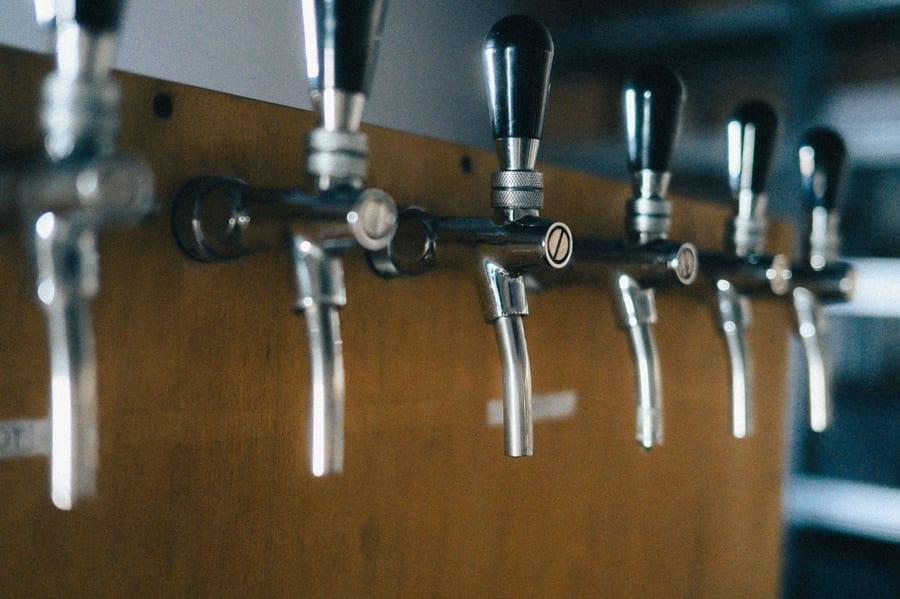 Best value forward sealing Intertap Stainless Forward-Sealing Faucet The original interchangeable-spout stainless faucet and still the cheapest honest way out of a rear-sealing tap. Same forward-sealing principle, same spout accessories, lower outlay than the Perlick alternatives. | A first upgrade away from a chrome-plated stock tap | |
| 4 | Best flow control Perlick 650SS Flow Control Faucet A side lever restricts flow at the faucet, which rescues a pour on a system you cannot easily rebalance -- a keezer with short lines, a keg carbonated harder than the rest, or a jockey box at an event where you have no time to fix anything properly. | Short lines, over-carbonated kegs, growler fills and parties | |
| 5 | Best for nitro Nitro Stout Faucet A perforated restrictor disc behind the spout shears nitrogen out of solution as the beer passes, which is what produces the cascading pour and the dense head. There is no way to approximate this with a standard faucet. | Nitro stouts and nitro-style pours, on beer gas only |
Prices are checked on Amazon when you click. We never print a number we cannot verify.
What separates these faucets
| Faucet | Seal | Material | Flow control | Spouts |
|---|---|---|---|---|
| NukaTap stainless | Forward | 304 stainless | No | Interchangeable |
| Perlick 630SS | Forward | Stainless | No | Fixed |
| Intertap stainless | Forward | 304 stainless | No | Interchangeable |
| Perlick 650SS | Forward | Stainless | Yes, side lever | Fixed |
| Stout faucet | Varies | Chrome-plated stainless nozzle | Restrictor plate | Fixed |
The criteria
Four specs decide a faucet, and the first one decides most of it
A beer faucet is a valve. It has one job, it costs a fraction of what the cabinet behind it cost, and it is still the part of a home draft system most likely to produce a bad pint. We ranked these on seal type first, then material, then flow control, then what else the body can be made to do.
Seal type. This is the whole argument and the only spec worth being dogmatic about. A rear-sealing faucet -- the chrome tap that ships on most budget kegerators -- closes at the back of the body, which leaves the entire front section full of beer between pours. That beer sits in air, warms, oxidizes and grows things. A forward-sealing faucet closes at the front, right behind the spout, so nothing is left standing. Every faucet on this list is forward sealing except the stout tap, which is a special case.
Material. Stainless or chrome-plated brass. The plating on a cheap chrome faucet wears through at the shaft and the seat, and once it does you have beer against brass. Stainless costs more and solves the problem permanently. This is also why faucet advice and cleaning advice are the same conversation -- see best beer line cleaning kits.
Flow control. A restrictor you can adjust at the faucet. Genuinely useful in specific situations, and a way to paper over a system problem in all the others. More on that below.
Spout interchangeability. Two of these taps take screw-off spouts, which means one body can wear a standard spout for daily pouring, a long stout spout for a nitro-style pour, or a growler filler that reaches to the bottom of the bottle. It is a small feature that quietly removes the need for a second faucet.
Forward sealing
Why the stock faucet is the first thing to replace
Take a rear-sealing faucet off a kegerator that has been in service a few months and look inside the body. The film you find is why the first pour tastes different from the second, why a tap smells sour after a weekend away, and why people conclude their beer has an infection when their faucet does.
A forward-sealing faucet eliminates the reservoir. The seat is right behind the spout, the body stays dry between pours, and the only beer exposed to air is the few drops on the spout face. Practically this means less cleaning, no sticky lever, and no mystery off-flavor on the first pint of the evening.
It is also the cheapest meaningful upgrade in a home draft system. A new kegerator is a serious purchase; a faucet is a rounding error against it, and the faucet is what your beer actually touches last on its way to the glass. If you are putting a system together from an appliance you already own, build the faucet choice into the plan -- best kegerator conversion kits covers the rest of that build.
Flow control
A real fix for three situations, and a crutch everywhere else
Flow control faucets have a restrictor built into the body, adjusted by a lever or screw on the side. Closing it down narrows the path the beer takes and drops the pressure gradually instead of all at once at the spout, which is exactly what a correctly sized beer line does.
The three situations where it genuinely earns its price:
- Short lines you cannot lengthen. A keezer with a tower, or a tight conversion where there is nowhere to coil five feet of extra line.
- One keg carbonated differently from the rest. Every keg on a single regulator output sits at the same pressure, so a highly carbonated beer on a system balanced for a milder one will foam at the tap.
- Growler fills and events. Slowing the pour to a trickle fills a growler from the bottom with far less foam, and a jockey box at a party is never balanced for the beer in it.
Everywhere else, foam is a balance problem and flow control is a way of not fixing it. The honest sequence is temperature first, then pressure, then line length -- beer line length works through the math, and CO2 regulator settings covers the pressure half. A system balanced properly pours beautifully through a plain faucet, and a system that is not will foam through an expensive one.
Forward sealing buys you one more thing worth knowing about: the best bottle fillers slide straight into a forward-sealing nozzle, so the faucet you choose decides whether you can bottle off the tap later. See the best counter pressure bottle fillers.
Fitting it
Shanks, threads and the parts the listing does not mention
A faucet does not mount to anything on its own. It threads onto a shank, which is the tube that passes through the tower wall or the refrigerator door and carries the beer line on the cold side. Faucet and shank have to share a thread standard, and US faucets and US shanks generally do. European and some duotight-based systems do not always, which is the one place people order a tap that will not fit.
You also need a faucet wrench, which costs almost nothing and makes an otherwise infuriating job take thirty seconds. A tap handle is usually separate. If you are replacing a tap on an existing tower, nothing else changes: the shank stays, the line stays, you unscrew one faucet and screw on the other.
One more thing worth knowing before ordering: a tower holds the last few inches of beer line in room-temperature air, so the first pour of an evening comes out warm and foamy regardless of which faucet is on the end of it. That is a tower problem with tower fixes -- insulation, a small fan, or a through-door shank -- and no faucet will solve it.
Nitro
The stout faucet is a gas decision, not a faucet decision
A stout faucet looks like a normal tap with a creamer handle, and behind the spout it carries a perforated plate. Beer forced through that plate at high pressure has its dissolved gas sheared out of solution, which gives the cascade and the tight, lasting head on a nitro pour.
What makes it a bigger project than a faucet swap is the gas. Nitro beer runs on a beer gas blend -- commonly around 70 percent nitrogen and 30 percent CO2 -- at pressures far higher than a CO2 system, often 25 to 35 psi. That means a separate cylinder, a separate regulator, and a keg dedicated to nitro service. Running a stout faucet on normal CO2-carbonated beer does not give you a nitro pour; it degasses the beer and hands you a flat pint.
If that sounds like a lot for one style, it is, and most homebrewers with a stout faucet got there by degrees rather than by planning it. The gas side of that upgrade starts with the cylinder -- best CO2 tanks for homebrew covers the sizing logic, which works the same way for a beer gas cylinder.
How we picked
The basis for these five
Seal type, material, flow control and spout compatibility come from current manufacturer and US retailer listings, cited below; every faucet here was confirmed as a currently sold model before it was written up. We have not run these five side by side on one tower for a season and do not claim to. Judgments about lever feel, parts availability and how quickly plating wears reflect documented owner experience and are written as such. See how we pick.
A stout faucet is only half of a nitro tap. The gas is the other half, and it is not CO2 -- beer gas vs CO2 for nitro covers the blend, the dispense pressure and why pure CO2 at nitro pressure ruins the beer.
The picks, in order
Every pick in detail
#1
Best overall
Mid tier
NukaTap Stainless Forward-Sealing Faucet
NukaTap (KegLand)
Forward sealing in 304 stainless, with a ball-bearing lever shaft and spouts that unscrew so the same body can fill growlers or pour a nitro-style stout. It does everything the long-standing stainless taps do and adds the interchangeable spout, which is the feature you end up using.
Spec sheet
- Seal type
- Forward sealing -- no beer in the body between pours
- Material
- 304 stainless steel
- Spouts
- Interchangeable (standard, stout, growler filler)
- Shaft
- Ball-bearing lever shaft
- Thread
- Standard US shank thread
- Variants
- Stainless, matte black, and a Mini duotight version
What it is not good at
It is a KegLand product sold through a smaller dealer network than Perlick, so if you want a rebuild kit on a Sunday afternoon you are ordering online rather than driving to a bar supply store.
Who it is for
Any kegerator or keezer with a stock rear-sealing tap
#2
Best build
Mid tier
Perlick 630SS Stainless Faucet
Perlick
The faucet that bars have run for decades. Stainless body and internals, forward sealing, nothing adjustable to go wrong, and rebuild kits stocked by every draft supplier in the country. If you want a tap you will still be using in fifteen years, this is the safe answer.
Spec sheet
- Seal type
- Forward sealing
- Flow control
- No -- balance the line instead
- Material
- Stainless steel body and internals
- Spout
- Fixed
- Reputation
- The long-running commercial-bar standard
- Parts
- Rebuild kits widely available
What it is not good at
Fixed spout and no flow control, so you cannot slow a fast pour at the tap -- you have to balance the line instead. Costs more than the equivalent NukaTap for fewer features.
Who it is for
Brewers who want the commercial-bar standard and no features
#3
Best value forward sealing
Mid tier
Intertap Stainless Forward-Sealing Faucet
Intertap
The original interchangeable-spout stainless faucet and still the cheapest honest way out of a rear-sealing tap. Same forward-sealing principle, same spout accessories, lower outlay than the Perlick alternatives.
Spec sheet
- Seal type
- Forward sealing
- Material
- 304 stainless
- Spout
- Interchangeable (stout, growler)
What it is not good at
The shaft runs on a plain bushing rather than the ball-bearing arrangement on the NukaTap, and the lever action is noticeably less smooth as a result.
Who it is for
A first upgrade away from a chrome-plated stock tap
#4
Best flow control
Prosumer tier
Perlick 650SS Flow Control Faucet
Perlick
A side lever restricts flow at the faucet, which rescues a pour on a system you cannot easily rebalance -- a keezer with short lines, a keg carbonated harder than the rest, or a jockey box at an event where you have no time to fix anything properly.
Spec sheet
- Seal type
- Forward sealing
- Flow control
- Yes -- adjustable side lever
- Material
- Stainless steel body and internals
- Spout
- Fixed (not interchangeable)
- Parts
- Perlick rebuild kits are widely stocked
- Thread
- Standard US shank thread
What it is not good at
It is the most expensive faucet here and the restrictor is one more thing to clean. Flow control also lets you ignore a line balance problem indefinitely instead of fixing it.
Who it is for
Short lines, over-carbonated kegs, growler fills and parties
#5
Best for nitro
Prosumer tier
Nitro Stout Faucet
Nitro Tap / NukaTap
A perforated restrictor disc behind the spout shears nitrogen out of solution as the beer passes, which is what produces the cascading pour and the dense head. There is no way to approximate this with a standard faucet.
Spec sheet
- Purpose
- Cascading nitro pour on stouts and nitro ales
- Mechanism
- Perforated restrictor disc shears the gas out of solution
- Gas required
- Beer gas blend, not straight CO2
- Pressure
- Runs far higher than a CO2 pour -- 25-35 psi typical
- Nozzle
- Chrome-plated stainless on common models
- Not for
- Normal CO2-carbonated beer -- it strips the carbonation
What it is not good at
It needs a beer gas blend and much higher dispensing pressure than a CO2 setup, so it is a second gas line and a second regulator, not just a faucet. On normal CO2-carbonated beer it strips the carbonation and gives you a flat pint.
Who it is for
Nitro stouts and nitro-style pours, on beer gas only
FAQ
Questions brewers actually ask
What is a forward-sealing beer faucet?
One that closes right behind the spout rather than at the back of the body. A rear-sealing faucet leaves the whole front of the body full of beer between pours, where it warms, oxidizes and grows biofilm. A forward-sealing faucet leaves nothing standing, which means less cleaning, no sticky lever and no sour first pour after a few days idle.
Are stainless beer faucets worth it over chrome?
Yes, and it is a small amount of money for a permanent fix. Chrome-plated brass faucets wear through the plating at the shaft and the seat with use, and once that happens the beer is in contact with brass. Stainless faucets do not have that failure mode, which is why commercial bars run them.
Do I need a flow control faucet?
Only if you cannot fix the balance properly. Flow control genuinely helps with short lines you cannot lengthen, a keg carbonated harder than the others on the same regulator, and growler fills or events. For ordinary foam, the real fix is temperature, then pressure, then line length -- a balanced system pours well through a plain faucet.
Will a new faucet fit my existing shank?
Almost always, if both are US standard. Faucets thread onto the shank, and US faucets and US shanks share a thread. The exceptions are European-spec and some duotight-based assemblies, so check the thread on the listing if your hardware came from outside the usual US draft supply chain. A faucet wrench makes the swap a thirty-second job.
Can I pour a nitro stout through a regular faucet?
No. The cascading pour comes from forcing beer through a restrictor plate at high pressure, which a standard faucet has no way to do. A stout faucet also needs a beer gas blend, typically around 70/30 nitrogen to CO2, at 25 to 35 psi, so it is a separate cylinder and regulator rather than a faucet swap.
How often should a beer faucet be cleaned?
Take it apart and brush it every time you clean the lines, which should be every couple of weeks of active service. A forward-sealing faucet makes that job quick because nothing has been standing in the body, but the seat and the shaft still need a brush and the lines still need an alkaline line cleaner.
Sources
Read next
More on kegging

Guide
Beer Line Length
Why short line foams, how much resistance each tubing type gives, and the length to cut.
Roundup
Best Kegerator Conversion Kits
The parts that turn a fridge or chest freezer into a working kegerator, ranked.
Roundup
The Best Beer Line Cleaning Kits
What to buy, how often to clean, and what grows if you do not.
Roundup
The Best CO2 Tanks for Homebrew
CO2 tank sizes compared on cost per fill, cabinet fit and how often you refill.

Roundup
The Best Kegerators for Homebrew
Kegerators compared on corny capacity, internal height and temperature range.
Comparison
NukaTap vs Perlick: Which Forward-Sealing Faucet?
Two forward-sealing faucets compared on mechanism, spouts, flow control and parts supply.