Roundup
The Best Counter Pressure Bottle Fillers
Kegging solved your packaging. Then somebody asked for a bottle to take home, and you discovered that a picnic tap makes two inches of foam and a flat beer.
The short answer
The Tapcooler Counter Pressure Bottle Filler is the best choice for most kegging homebrewers: it slides into a forward-sealing faucet you already own, every wetted part is 304 stainless, and it has both a CO2 purge button and an adjustable relief valve. If you do not have a faucet, the NukaTap filler connects to the keg posts directly.
DisclosureWe earn a commission on qualifying purchases made through links on this page, at no extra cost to you. It does not change what we recommend or how we rank it -- here is how we pick and here is the full disclosure.
At a glance
Quick picks
| # | Product | Best for | Price |
|---|---|---|---|
| 1 |  Best overall Tapcooler Counter Pressure Bottle Filler Slides into an Intertap, NukaTap, UltraTap, Vent-Matic or Perlick 600 series faucet, so the beer path you already clean is the beer path it fills through. Every part that touches beer is 304 stainless, there is a push-button CO2 purge and an adjustable pressure relief valve, and the telescoping tube handles bottles from 4.5 to 12.5 inches. | Anyone with a forward-sealing faucet on a kegerator or keezer | |
| 2 |  Best if you do not have a faucet NukaTap Counter Pressure Bottle Filler The most flexible connection of the group: a push-in spout for forward-sealing faucets, two 8 mm duotight adapters for direct tubing, and ball lock post adapters so it can work off a keg with no draft system at all. Stainless body, oxygen purge button, telescopic fill stem, and the EVABarrier tubing is in the box. | Filling straight from the keg, or from a tap, as the setup changes | |
| 3 |  Best traditional wand Deluxe Counter Pressure Bottle Filler The classic three-connection wand, with a stainless 3-way ball valve, an adjustable relief valve and -- the reason to pick it -- an integrated gauge showing actual bottle pressure. CO2 and beer share one stainless tube to the bottom of the bottle, and the flared quick-disconnect fittings come apart in seconds for cleaning. | Bottling sessions where you want to see the pressure you are filling at | |
| 4 | Best budget option Duotight Handheld Bottle Filler A handheld gun with duotight push-fit connections and a CO2 purge, at the lowest cost of anything here that purges at all. For taking two bottles to a friend's house, it does the job the picnic tap cannot. | Filling a handful of bottles from a carbonated keg now and then |
Prices are checked on Amazon when you click. We never print a number we cannot verify.
What to check on a counter pressure filler
| Spec | Why it matters | What to want |
|---|---|---|
| CO2 purge | Air left in the bottle oxidizes the beer in days | A dedicated purge button or valve |
| Pressure control | Balanced pressure is what stops foaming | Adjustable relief valve, gauge if possible |
| Connection | Decides whether you need a faucet at all | Faucet spout, duotight or ball lock |
| Wetted materials | Beer sits in these every session | 304 stainless, replaceable seals |
| Fill tube | Must reach the bottom of the bottle | Telescoping, matched to your bottles |
| Bottle range | 500 ml stems will not do bombers | Check against the bottles you use |
| Spares | Seals and dip tubes wear | Replacement kits sold separately |
What the problem actually is
Three things go wrong when you fill a bottle from a keg
Pressure drop. Carbonated beer leaving a keg into an open bottle goes from 12 psi to atmospheric in an instant. Dissolved CO2 comes out of solution immediately, which is the foam column you get from a picnic tap, and what finally sits in the bottle is flatter than what was in the keg.
Oxygen. An empty bottle is full of air. Fill it, trap that air under the cap, and you have packaged your beer with an oxidizer. Hop aroma fades, pale beer takes on a wet-cardboard staleness, and the bottle you were proud of tastes tired a fortnight later.
Fill level. Foam makes a bottle look full when it is not, so you cap it and discover an inch of headspace -- more air, and an inconsistent pour.
A counter pressure filler addresses all three in one sequence: purge the bottle with CO2, pressurize it to roughly keg pressure, then let beer displace the gas through a tube that reaches the bottom. Because the beer never sees a pressure drop, it never breaks out, and because the bottle was full of CO2 before the beer arrived, there is nothing to oxidize it. It is the same logic as a closed transfer to keg, one vessel further down the chain.
Counter pressure or purge and fill
The distinction the product names blur
Two different tools get sold as bottle fillers, and the difference decides how much foam you lose.
- A true counter pressure filler has a gas valve, a beer valve and a bleed. You seal the bottle, purge it, pressurize it to match the keg, then crack the bleed slowly so beer flows in while gas escapes. The beer is never decompressed. The Deluxe wand and the Tapcooler and NukaTap units work this way.
- A purge-and-fill gun blows CO2 into the bottle to displace the air, then fills at low pressure through a tube that reaches the bottom. Far better than an open tap and much quicker to use, but the beer still sees a pressure drop, so some carbonation is lost on every fill. The handheld duotight filler is in this family.
Neither is wrong. If you are filling two bottles for a friend, the gun is faster and perfectly good. If you are filling a case for a competition, or bottling a hoppy beer whose aroma you care about, the counter pressure sequence is worth the extra minute a bottle.
Where it connects
Faucet, tubing or straight off the keg posts
This is the specification that decides whether a filler will work in your brewery at all, and it is the one people get wrong when ordering.
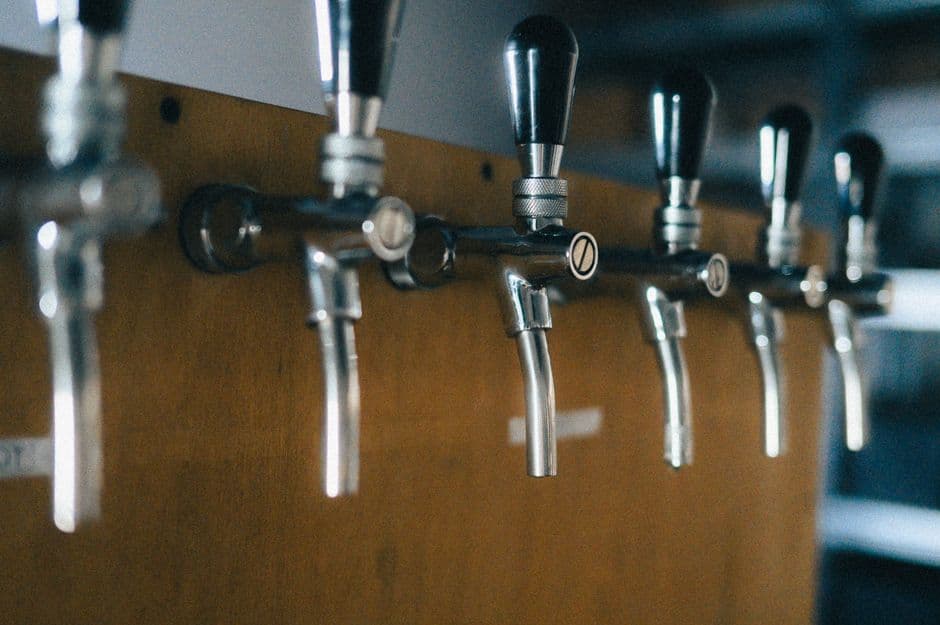
Faucet-mounted. The Tapcooler and the NukaTap spout slide into the nozzle of a forward-sealing faucet. The advantages are real: no new beer path to clean, no extra disconnects, and the beer is already cold from the tower or the keezer. The requirement is equally real -- your faucet must be forward sealing. Intertap, NukaTap, UltraTap, Vent-Matic and Perlick 600 series qualify; a ventilated faucet does not, and no adapter fixes that. Best beer faucets covers which is which.
Keg-direct. The NukaTap filler also takes ball lock post adapters, and the Deluxe wand connects to the keg with its own lines. That matters if you ferment and serve from kegs without a draft system, or if the beer you want to bottle is in a keg in a fermentation fridge rather than on tap. The trade is an extra beer path to clean and sanitize every session.
Materials and cleaning
You are adding a beer path, so make it one you can clean
Everything in this category is small, has internal passages, and sits unused between bottling sessions. That is the profile of a part that grows a biofilm if you let it. Stainless wetted parts are the baseline, and they are why the Tapcooler and the NukaTap filler earn their price over cheaper plastic fillers.
The practical routine is unglamorous: break the filler down after every session, soak the parts in an alkaline brewery wash, rinse, then sanitize before the next use. Flared or push-fit connections are not a luxury here -- a filler that comes apart in seconds is a filler that actually gets cleaned. The same chemicals you use on kegs do the job; see homebrew cleaners and sanitizers and how to clean a keg.
Check that replacement seals and dip tubes are sold for the model you buy. KegLand lists both a seal kit and a replacement dip tube for the NukaTap filler; the MoreBeer wands have replacement stoppers. A filler whose o-rings cannot be bought separately is a disposable tool.
The sequence
How a counter pressure fill actually goes
- Chill the beer and the bottles. Cold beer foams less, and cold glass does not warm the first pour.
- Sanitize the bottles and the filler, and drain them properly -- a puddle of sanitizer is a dilution and a nucleation point.
- Seal the filler into the bottle and purge with CO2 for a few seconds to push the air out. This step is the oxygen protection; do not rush it.
- Pressurize the bottle to roughly the pressure the keg is at, then close the gas.
- Open the beer valve and crack the bleed slowly. Beer flows in from the bottom of the bottle as gas escapes. Slower is better; the bleed is the throttle.
- Fill to just below where the cap will sit, close the beer valve, release the remaining pressure gently, and cap on the foam so the headspace is CO2 rather than air.
Expect to waste a bottle or two learning the bleed rate on a new filler. That is normal, and it is cheaper than a case of oxidized beer. If you are weighing this against going back to priming sugar, kegging vs bottling has the comparison, and how to force carbonate covers getting the keg right in the first place.
Also considered
What we left out, and why
Blichmann BeerGun V2. A well-regarded stainless purge-and-fill gun that would otherwise be an easy recommendation. We have left it out of the picks because on 24 October 2026 the retailer we check listed it as out of stock on pre-order, and this site does not feature products you cannot buy today. If it is back in stock when you read this, it is a reasonable alternative to the handheld duotight filler at a higher price.
Multi-head commercial fillers. The Medusa multi-head units and the XpressFill spout fillers are in stock and excellent, and they cost between roughly twenty and seventy times what the homebrew fillers above cost. They are built for taprooms packaging to sell. If you are bottling a few cases a year, they are not the answer.
The basic MoreBeer counter pressure filler. The same wand concept as our Deluxe pick without the pressure gauge, at a modest saving. We prefer the gauge: on a wand-type filler it is the only feedback you get about what is happening inside the bottle, and it shortens the learning curve considerably.
How we picked
The basis for these
Selected from current US retail listings checked on 24 October 2026, published manufacturer specifications for connection type, materials and bottle range, and documented homebrewer experience with foaming and oxygen pickup. We have not filled identical bottles on all four and measured dissolved oxygen, and do not claim to. Availability was verified before each pick was written up. See how we pick.
The picks, in order
Every pick in detail
#1
Best overall
Mid tier
Tapcooler Counter Pressure Bottle Filler
Tapcooler
Slides into an Intertap, NukaTap, UltraTap, Vent-Matic or Perlick 600 series faucet, so the beer path you already clean is the beer path it fills through. Every part that touches beer is 304 stainless, there is a push-button CO2 purge and an adjustable pressure relief valve, and the telescoping tube handles bottles from 4.5 to 12.5 inches.
Spec sheet
- Attachment
- Slides into Intertap, NukaTap, UltraTap, Vent-Matic and Perlick 600 series faucets
- Not compatible
- Ventilated (non forward-sealing) taps
- Wetted parts
- 304 stainless; aluminum CO2 adapters
- Purge
- Push-button CO2 purge valve
- Pressure control
- Adjustable pressure relief valve
- Fill tube
- Telescoping, bottles 4.5 to 12.5 in
- Included
- CO2 barb fitting and storage case
What it is not good at
It is useless without a forward-sealing faucet -- ventilated taps are explicitly not compatible, and Perlick 500 series needs an extra connector. The CO2 adapters are aluminum rather than stainless, and the hands-free magnetic clip is a separate purchase that is often out of stock.
Who it is for
Anyone with a forward-sealing faucet on a kegerator or keezer
#2
Best if you do not have a faucet
Mid tier
NukaTap Counter Pressure Bottle Filler
KegLand
The most flexible connection of the group: a push-in spout for forward-sealing faucets, two 8 mm duotight adapters for direct tubing, and ball lock post adapters so it can work off a keg with no draft system at all. Stainless body, oxygen purge button, telescopic fill stem, and the EVABarrier tubing is in the box.
Spec sheet
- Attachment
- Push-in spout for NukaTap, Intertap and Perlick 600 series faucets
- Direct connection
- Two 8 mm duotight adapters, or ball lock post adapters to the keg
- Body
- Stainless counter pressure filler
- Purge
- Oxygen purge button
- Fill stem
- Telescopic, bottles up to 500 ml
- Included
- Ball lock post adapters and 19.5 in of 8 mm EVABarrier tubing
What it is not good at
The telescopic stem is specified for bottles up to 500 ml, so 750 ml bombers and swing-tops are outside its stated range. Flexibility also means more small adapters to keep track of and to clean.
Who it is for
Filling straight from the keg, or from a tap, as the setup changes
#3
Best traditional wand
Mid tier
Deluxe Counter Pressure Bottle Filler
MoreBeer
The classic three-connection wand, with a stainless 3-way ball valve, an adjustable relief valve and -- the reason to pick it -- an integrated gauge showing actual bottle pressure. CO2 and beer share one stainless tube to the bottom of the bottle, and the flared quick-disconnect fittings come apart in seconds for cleaning.
Spec sheet
- Type
- Counter pressure wand -- CO2 and beer share one stainless tube to the bottom of the bottle
- Valves
- Stainless 3-way ball valve, adjustable pressure relief valve
- Gauge
- Integrated bottle pressure gauge (brass backing)
- Connections
- Flared quick-disconnect fittings
- Included
- Rubber bottle stopper
- Faucet needed
- None -- connects to the keg, not a tap
What it is not good at
It is the slowest and most hands-on option: you are working a stopper, a valve and a bleed on every bottle, and there is a real learning curve before the first foam-free fill. The gauge has a brass backing, and a bottle under pressure with a stopper jammed in it deserves respect.
Who it is for
Bottling sessions where you want to see the pressure you are filling at
#4
Best budget option
Entry tier
Duotight Handheld Bottle Filler
KegLand
A handheld gun with duotight push-fit connections and a CO2 purge, at the lowest cost of anything here that purges at all. For taking two bottles to a friend's house, it does the job the picnic tap cannot.
Spec sheet
- Type
- Handheld bottle filling gun fed from a keg
- Fittings
- Duotight push-fit connections for EVABarrier tubing
- Wetted parts
- Stainless filling tube
- Purge
- CO2 purge to displace air before filling
- Best use
- Filling a few bottles from a carbonated keg
What it is not good at
A purge-and-fill gun gives you less control than a true counter pressure valve set: there is no gauge and no pressure-balanced fill, so cold beer, a low pour pressure and patience are doing most of the work. Expect more foam loss than the Tapcooler on a highly carbonated beer.
Who it is for
Filling a handful of bottles from a carbonated keg now and then
FAQ
Questions brewers actually ask
What is a counter pressure bottle filler?
A device that fills a bottle from a carbonated keg without letting the beer decompress. It seals into the bottle, purges the air out with CO2, pressurizes the bottle to roughly keg pressure, then lets beer flow in from the bottom while gas bleeds out. Because the beer never sees a pressure drop it keeps its carbonation, and because the bottle was full of CO2 first there is no oxygen to stale it.
Do I need a special faucet for a counter pressure bottle filler?
For the faucet-mounted models, yes -- a forward-sealing faucet such as an Intertap, NukaTap, UltraTap, Vent-Matic or Perlick 600 series. Ventilated faucets are not compatible and no adapter changes that. If your kegerator has a standard ventilated tap, choose a filler that connects to the keg posts or to tubing instead.
Is a beer gun the same as a counter pressure filler?
Not quite. A beer gun purges the bottle with CO2 and then fills it at low pressure, which is a large improvement on an open tap but still lets the beer decompress slightly, so you lose some carbonation. A true counter pressure filler pressurizes the bottle first and fills under balanced pressure. Guns are faster and cheaper; counter pressure fillers preserve more carbonation.
How long does beer bottled from a keg last?
It depends almost entirely on oxygen. A bottle purged with CO2, filled under counter pressure and capped on foam keeps for months in the same way a commercial bottle does. The same beer filled through an open tap, with air trapped under the cap, noticeably stales within a couple of weeks -- hop aroma first, then a cardboard note in pale styles.
Why does my beer foam when I fill bottles from the keg?
Usually temperature or pressure rather than the filler. Beer above about 40 F releases CO2 readily, and filling at full serving pressure pushes beer in faster than it can settle. Chill the beer and the bottles, turn the regulator down for the fill, and open the bleed valve slowly -- the bleed rate is the throttle on a counter pressure fill.
Can I use a counter pressure filler with 750 ml bottles?
Check the fill stem length against the bottle. The Tapcooler's telescoping tube is specified for bottles 4.5 to 12.5 inches tall, which covers most large formats, while the NukaTap filler's telescopic stem is specified for bottles up to 500 ml. Using a stem that does not reach the bottom of the bottle defeats the point, because the beer splashes instead of filling from below.
Sources
- Counter pressure bottle filler range, prices and stock status (MoreBeer)
- Tapcooler Counter Pressure Bottle Filler specifications and faucet compatibility (MoreBeer)
- NukaTap Counter Pressure Bottle Filler specifications and included adapters (MoreBeer)
- Deluxe Counter Pressure Bottle Filler design, valves and gauge (MoreBeer)
Read next
More on kegging
Guide
How to Force Carbonate a Keg
Set-and-forget, shake and burst methods with real pressures and timings.
Roundup
The Best Beer Faucets
Beer faucets ranked on seal type, material, flow control and spout options.
Guide
CO2 Regulator Settings: PSI by Temperature and Style
PSI by temperature and style, with the line-balancing numbers.
Guide
Closed Transfer to Keg
The purge, the jumper line and the return gas path that move beer without oxygen.

Roundup
The Best Kegerators for Homebrew
Kegerators compared on corny capacity, internal height and temperature range.