Comparison
Beer Gas vs CO2 for Nitro
A nitro pour needs high pressure without high carbonation. That is a gas blend problem before it is a faucet problem.
The short answer
Use beer gas -- about 75 percent nitrogen and 25 percent CO2 -- for nitro pours, dispensed at roughly 30 to 38 psi through a stout faucet. Pure CO2 at that pressure would over-carbonate the beer, because CO2 dissolves into it and nitrogen largely does not.
DisclosureWe earn a commission on qualifying purchases made through links on this page, at no extra cost to you. It does not change what we recommend or how we rank it -- here is how we pick and here is the full disclosure.
Published dispense practice for the two gases
| Beer gas (nitrogen blend) | Pure CO2 | |
|---|---|---|
| Typical blend | About 75% N2 / 25% CO2 | 100% CO2 |
| Dispense pressure | Roughly 30-38 psi | Serving pressure, usually 10-14 psi |
| Effect on carbonation | Mostly inert -- N2 does not dissolve readily | Dissolves and carbonates continuously |
| Faucet | Stout faucet with restrictor plate | Standard or flow control faucet |
| Target carbonation | Low, around 1 to 1.5 volumes | Style-dependent, usually higher |
| Suits | Stout, Irish red, wee heavy, English bitter | Almost everything else |
An orange rule marks the better of the two on that row.
The physics
Why you cannot just turn the CO2 up
A nitro pour needs high pressure. The beer has to be forced through the restrictor plate in a stout faucet hard enough to break gas out of solution and build that dense, slow-cascading head. Published practice for nitro dispense sits around 30 to 38 psi -- roughly three times normal serving pressure.
Here is the problem with doing that on pure CO2. Carbon dioxide dissolves into beer, and the amount that dissolves is set by the pressure above it and the temperature. Leave a keg at 35 psi of CO2 and it does not simply pour harder; it keeps absorbing gas until the beer is violently over-carbonated. Within a day or two you have a foam machine, not a stout.
Nitrogen behaves differently. It is far less soluble in beer, so a blend that is mostly nitrogen can supply the push without supplying much carbonation. The 25 percent CO2 in a standard beer gas blend is there to hold the beer at the low carbonation level a nitro beer wants -- around one to one and a half volumes -- rather than to carbonate it further.
The faucet
Beer gas without a stout faucet is a waste of gas
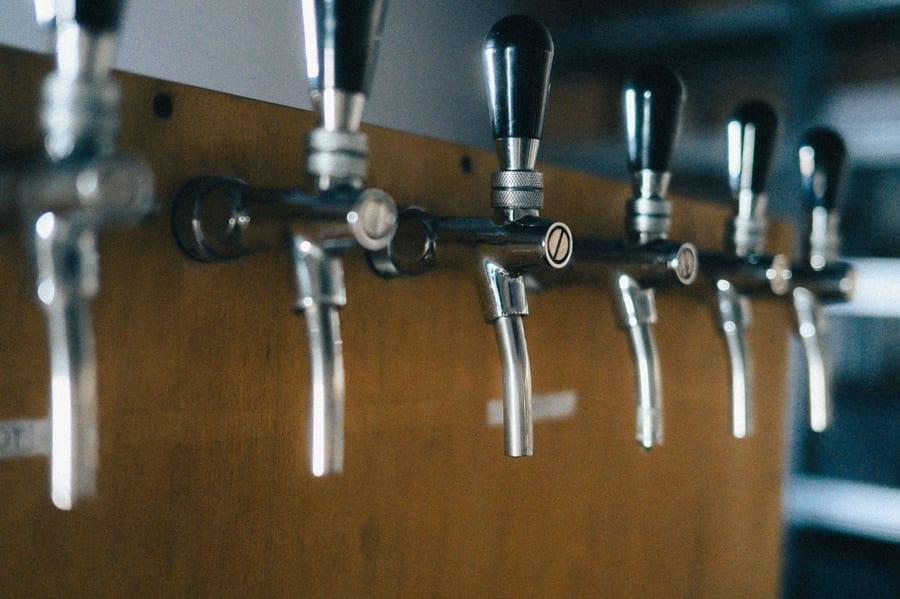
The cascade is mechanical. Inside a stout faucet is a plate drilled with small holes; beer forced through it at pressure shears gas out of solution into very fine bubbles, which is what produces the surging, tight-headed pour. Run beer gas through an ordinary faucet and you get beer pushed hard through a normal spout -- no cascade, no head, and a lot of noise.
The reverse also fails. A stout faucet on pure CO2 at normal serving pressure will barely pour: the restrictor plate is designed to be pushed against. The faucet and the gas are a pair, and the pressure is the third part of the set. Our beer faucet roundup covers the stout faucet alongside the standard and flow control options.
Line balance is the part people forget. Nitro systems typically use shorter restriction than a 35 psi CO2 system would need, precisely because the faucet is doing the restricting -- which is a different calculation from the one in beer line length, and worth doing separately for the nitro tap.
Running both
One cabinet, two pressures
Most homebrewers who pour nitro also pour ordinary beer, and the two cannot share a regulator output. Nitro wants roughly 30 to 38 psi; an ordinary ale wants something nearer 10 to 14. The clean solution is a separate cylinder of beer gas with its own regulator, and a standard CO2 cylinder running everything else.
Beer gas cylinders use a different valve connection from CO2 cylinders, and that is deliberate -- it stops a nitrogen regulator being fitted to a CO2 tank and vice versa. Plan for two cylinders in or beside the cabinet, and for the fact that a blend cylinder holds far less usable gas than a CO2 cylinder of the same size because it is a compressed gas rather than a liquid.
One honest warning before buying in: a nitro tap is a commitment to a style. A beer carbonated to one volume for nitro service is flat and dull poured any other way, so the keg is dedicated from the moment you carbonate it. If you want occasional nitro, dedicating a tap and a keg is still the only sensible way to do it.
Verdict
Which gas for which tap
Our verdict
Which one should you buy?
For the nitro tap
Nitro Stout Faucet
- Restrictor plate creates the cascade and the dense head
- Designed to be pushed at 30-38 psi
- Pairs with a 75/25 nitrogen blend, never pure CO2
- Suits stout, Irish red, wee heavy and English bitter
For running both at once
Taprite Dual-Gauge CO2 Regulator
- Two independently set outputs in one body
- Nitro pressure and serving pressure cannot share a line
- Keeps the rest of the cabinet at normal carbonation
- Gauges on each output so you can see both
If you are building the cabinet from scratch, settle the gas question before you buy faucets -- it decides the regulator count, the cylinder count and the line lengths. The regulator roundup and CO2 tank sizing cover the rest of the gas side.
What we recommend
The products on this page
Prosumer tier
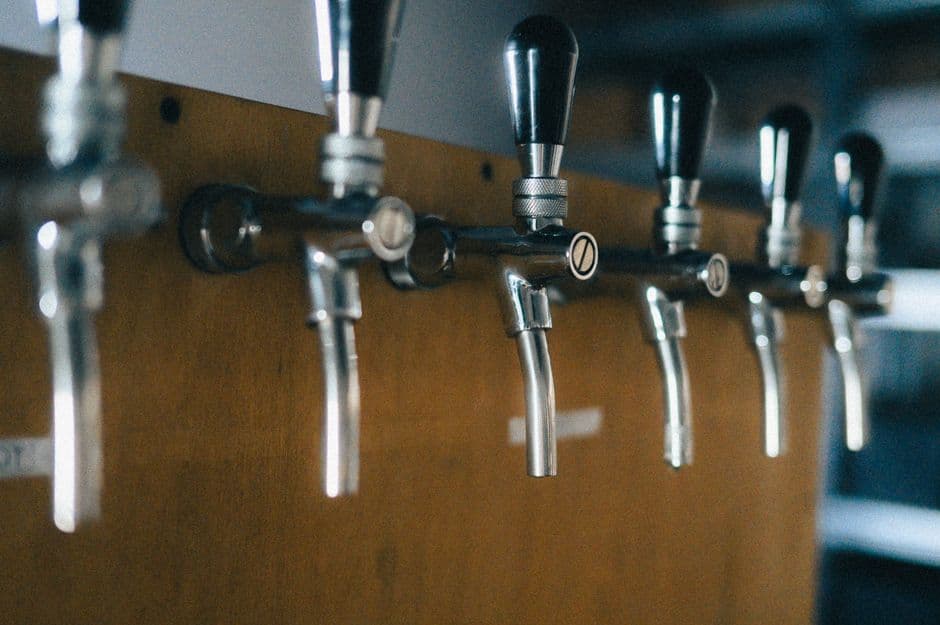
Nitro Stout Faucet
Nitro Tap / NukaTap
A stout faucet forces beer through a plate drilled with small holes, which knocks gas out of solution on the way to the glass and builds the dense head a nitro pour is bought for. No faucet, no cascade -- the gas blend alone will not do it.
Spec sheet
- Purpose
- Cascading nitro pour on stouts and nitro ales
- Mechanism
- Perforated restrictor disc shears the gas out of solution
- Gas required
- Beer gas blend, not straight CO2
- Pressure
- Runs far higher than a CO2 pour -- 25-35 psi typical
- Nozzle
- Chrome-plated stainless on common models
- Not for
- Normal CO2-carbonated beer -- it strips the carbonation
Who it is for
The restrictor plate that makes the cascade happen
Mid tier
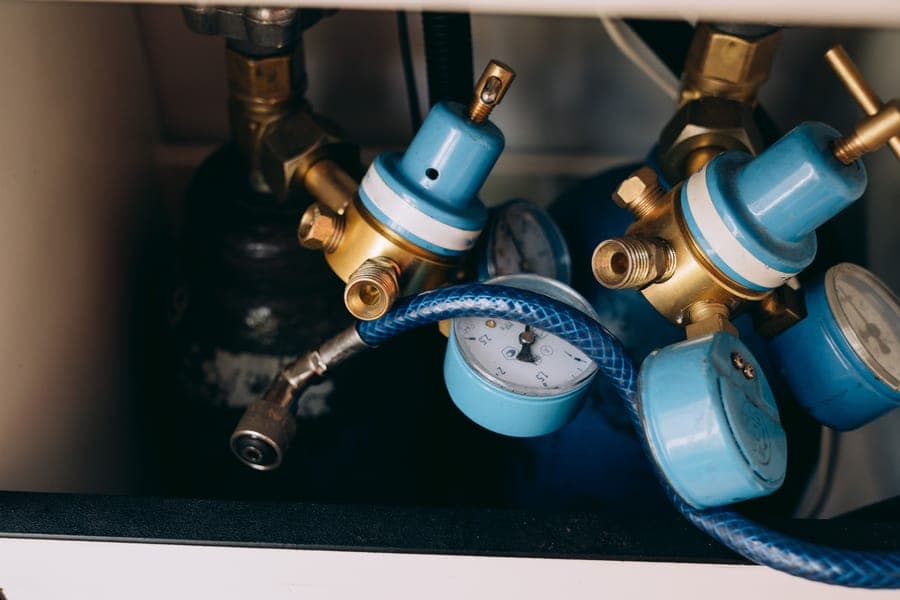
Taprite Dual-Gauge CO2 Regulator
Taprite
Two independently adjusted outputs, so a stout at nitro pressure and a pale ale at serving pressure can share one cabinet. Nitro dispense pressure is far above normal serving pressure, which is precisely why it needs its own regulator rather than a tee.
Spec sheet
- Gauges
- Dual -- output pressure and tank contents
- Output range
- 0-60 psi
- Inlet
- CGA-320 CO2 tank thread
- Outlet
- 1/4 in MFL or barb
- Body
- Forged brass
- Serviceable
- Rebuild kits widely available
Who it is for
Running nitro and normal beers from one kegerator
Entry tier
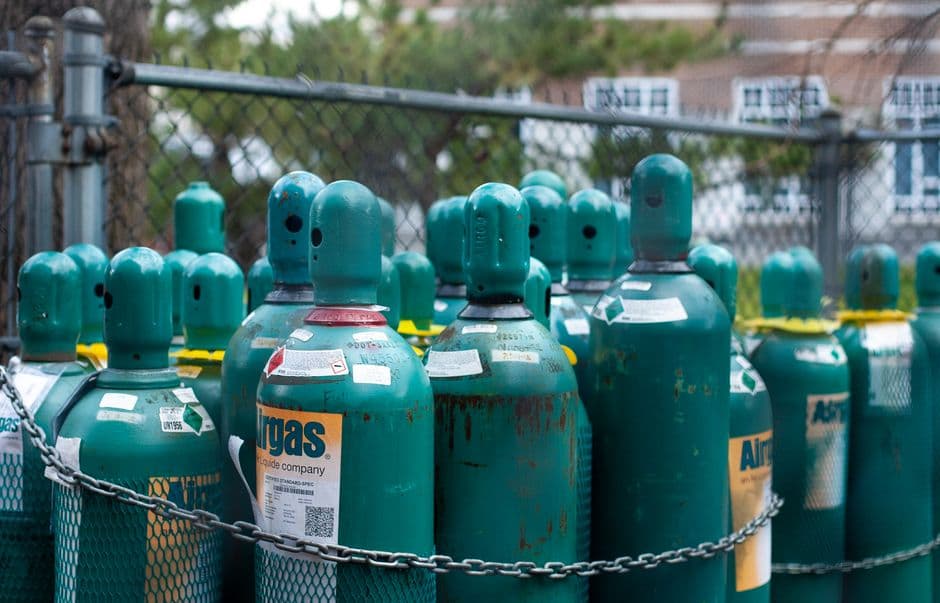
5 lb Aluminum CO2 Tank
KOMOS / Kegco
The standard homebrew cylinder with a CGA-320 valve, carbonating and dispensing ordinary kegs. Beer gas comes on its own cylinder with a different connection, so this stays in service alongside it rather than being replaced.
Spec sheet
- Capacity
- 5 lb of liquid CO2
- Material
- Aluminum, US DOT approved
- Valve
- CGA-320 (standard beverage CO2 thread)
- Footprint
- ~5.5 in diameter x ~18.25 in tall (Kegco 5 lb)
- Dispenses
- ~8-9 five gallon corny kegs per fill (MoreBeer)
- Ships
- Empty -- fill or exchange locally
Who it is for
Everything on the system that is not nitro
Mid tier
NukaTap Flow Control Gen 2 Faucet
NukaTap (KegLand)
Flow control at the faucet lets you dispense a highly carbonated beer without foam even when the line length is not perfect, which is useful on a mixed cabinet where one keg is already running at an unusual pressure.
Spec sheet
- Seal type
- Forward sealing
- Flow control
- Integrated, adjustable at the faucet
- Material
- 304 stainless steel
- Spouts
- Takes the same interchangeable NukaTap spouts
- Use case
- Short lines, over-carbonated kegs, growler fills
- Generation
- Gen 2 body
Who it is for
The non-nitro taps on the same cabinet
FAQ
Questions brewers actually ask
Can you use CO2 instead of beer gas for a nitro pour?
No, not at nitro pressure. A nitro pour needs roughly 30 to 38 psi to force beer through a stout faucet's restrictor plate, and CO2 at that pressure keeps dissolving into the beer until it is badly over-carbonated. Nitrogen is much less soluble, which is why the blend works.
What is the standard beer gas blend for nitro?
About 75 percent nitrogen to 25 percent CO2. The blend roughly mirrors the dissolved gas balance of a nitro beer, so the CO2 fraction holds the carbonation where it is rather than pushing it higher over the life of the keg.
What pressure do you dispense nitro beer at?
Published practice is roughly 30 to 38 psi through a stout faucet, with sources commonly citing the 30 to 35 psi range. That is around three times normal serving pressure, which is why a nitro tap needs its own regulator output rather than sharing one.
Do you need a stout faucet for nitro?
Yes. The cascade comes from beer being forced through a restrictor plate drilled with small holes, which shears fine bubbles out of solution. Beer gas through a standard faucet gives you a hard pour with no cascade and no head.
How should a nitro beer be carbonated before serving?
Low -- around 1 to 1.5 volumes of CO2. The dense head comes from the faucet and the gas blend, not from dissolved carbonation. A beer carbonated to normal levels and then poured through a stout faucet foams rather than cascades.
Which beer styles suit a nitro pour?
Malt-focused beers served at low carbonation: stout above all, plus Irish red ale, wee heavy and English bitter. Hoppy and highly carbonated styles generally do not benefit, because low carbonation flattens the aroma they depend on.
Sources
- Dispensing stout such as Guinness: gas blend, faucet and pressure (Micro Matic draft beer FAQs)
- Nitrogen draft systems: blends, solubility and dispense pressure (Brew Your Own)
- How to serve beer on nitro: carbonation levels and suitable styles (Craft Beer & Brewing)
- What you need to dispense a stout: faucet, blend and pressure (Midwest Supplies)
Read next
More on kegging
Roundup
The Best Beer Faucets
Beer faucets ranked on seal type, material, flow control and spout options.
Roundup
The Best CO2 Regulators for Homebrew
Primary regulators and secondary manifolds, and what to check before buying.

Guide
Beer Line Length
Why short line foams, how much resistance each tubing type gives, and the length to cut.
Guide
CO2 Regulator Settings: PSI by Temperature and Style
PSI by temperature and style, with the line-balancing numbers.
Comparison
NukaTap vs Perlick: Which Forward-Sealing Faucet?
Two forward-sealing faucets compared on mechanism, spouts, flow control and parts supply.
Roundup
The Best Kegerators for Homebrew
Kegerators compared on corny capacity, internal height and temperature range.