Guide
Beer Line Length
The line is not a hose. It is a pressure-dropping device, and the length is the setting.
The short answer
For a typical kegerator serving at 10-12 psi, use 8-10 feet of 3/16 inch ID beverage line. Short line is the number one cause of foaming pours, because the line's job is to drop pressure from serving pressure to near zero at the faucet through friction over its length.

DisclosureWe earn a commission on qualifying purchases made through links on this page, at no extra cost to you. It does not change what we recommend or how we rank it -- here is how we pick and here is the full disclosure.
Approximate resistance by tubing type
| Line type | Resistance | Typical use |
|---|---|---|
| 3/16 in ID vinyl beverage line | High per foot | Kegerator and keezer runs |
| 1/4 in ID vinyl beverage line | Low per foot | Long runs, jockey boxes |
| 5/16 in ID vinyl | Very low | Gas line, not beer |
| EVA barrier line | Lower than vinyl | Long draws, flavor-neutral |
| Serving pressure, typical | 10-12 psi | Most ales at 38 F |
| Target at the faucet | Near zero | The whole job of the line |
The idea
Why line length is a setting
Beer in a keg sits at serving pressure -- call it eleven psi. Beer in a glass sits at zero. Something has to get rid of those eleven psi between the keg and the glass, and if nothing does, the pressure drops all at once at the faucet, the dissolved CO2 comes out of solution instantly, and you get a glass of foam.
The beverage line is what does that job. Beer dragging along the inside wall of a narrow tube loses pressure to friction, continuously, over the whole length. Give it enough length and the beer arrives at the faucet at roughly atmospheric pressure, still carbonated, and pours as liquid.
So “how long should my beer line be” is really “how much resistance do I need”, and the answer depends on your serving pressure, your tubing bore, and how far the beer has to climb.
The practical answer
Eight to ten feet of 3/16
For a standard kegerator or keezer -- keg and faucet at similar heights, serving around 10 to 12 psi, beer at 38°F -- eight to ten feet of 3/16 inch inside-diameter vinyl beverage line is the right starting point. Cut ten, and shorten it a foot at a time if pours are slow.
That is dramatically more line than kits supply. Kits ship four or five feet because short line coils neatly into a box, and that single packaging decision is behind an enormous share of the foaming kegerators on the internet -- best kegerator conversion kits lists what else kits under-supply.
Bore matters more than length
Why 1/4 inch line is a trap
Resistance rises sharply as tubing bore falls. Narrow 3/16 inch line gives you a lot of pressure drop per foot. Wider 1/4 inch line gives very little, which means a 1/4 inch run needs several times the length of a 3/16 inch run to do the same job -- lengths that are unmanageable inside a kegerator cabinet.
This is why 3/16 inch is the standard homebrew beverage line and why swapping to wider tubing “to improve flow” makes foaming worse rather than better. Wider line belongs on long draws and jockey boxes, where the distance supplies the resistance -- kegerator vs jockey box.
Gas line is a different animal entirely: it is wider because resistance there is pointless, and it should never be used for beer.
Height and temperature
Two adjustments to the baseline
Every foot the beer has to rise from the keg to the faucet costs a little pressure that the line no longer has to remove, so a tall tower needs slightly less line than a through-door faucet at keg height. The effect is small in a domestic setup and worth ignoring until you are chasing the last bit of pour quality.
Temperature matters much more. Warm beer holds CO2 badly and foams at any line length, which is why the first pint through a warm tower is almost always foam even on a well-balanced system. An insulated tower, or a through-door faucet, fixes a problem that no amount of line will -- kegerator temperature settings.
The cost of long line
More surface to keep clean
There is a genuine trade here that line-length advice usually skips. Ten feet of line is ten feet of interior surface for yeast and bacteria to colonize, and a draft line in regular service grows a film whether you like it or not.
The answer is a cleaning cadence rather than shorter line: every couple of weeks of active service, push line cleaner through, then rinse and sanitize. Fifteen to twenty minutes for a two-tap system, and it is the difference between draft beer and draft beer with a sour note nobody can place -- best beer line cleaning kits.
The faucet is part of the same surface. A rear-sealing tap holds beer in the body between pours, which adds a small warm reservoir to everything you just cleaned, and a flow control faucet can mask a balance problem that longer line would have fixed properly. Both are covered in best beer faucets.
Diagnosing a bad pour
Four symptoms, four causes
- All foam, every pour. Line too short, or beer too warm. Lengthen the line, check the keg temperature at the keg.
- First pour foams, rest are fine. Warm tower or warm faucet. Insulate the tower or move to a through-door faucet.
- Pours fine but tastes flat. Someone turned the regulator down to fight foam. Put the pressure back and fix the line.
- Slow trickle. Line too long for your pressure, a kinked line, or a partly-blocked faucet. Shorten a foot at a time.
What we recommend
The products on this page
Entry tier
Beer Line Cleaning Kit
Mark's Keg Wash / Kegco
Longer line is more surface for a biofilm to grow on, which is the honest trade for calm pours. A pump kit with line cleaner and faucet brushes keeps that trade cheap.
Spec sheet
- Method
- Hand pump or CO2-pressurized bottle
- Cleaner
- Alkaline line cleaner concentrate
- Fittings
- Ball lock disconnect and faucet thread adapters
- Brushes
- Faucet and shank brushes included
- Cycle time
- 15-20 minutes for a two-tap system
- Frequency
- Every two weeks of active service
What it is not good at
Needs doing every couple of weeks, and the faucet still comes apart by hand.
Who it is for
Any kegerator with more than one tap in regular service
Mid tier
Taprite Dual-Gauge CO2 Regulator
Taprite
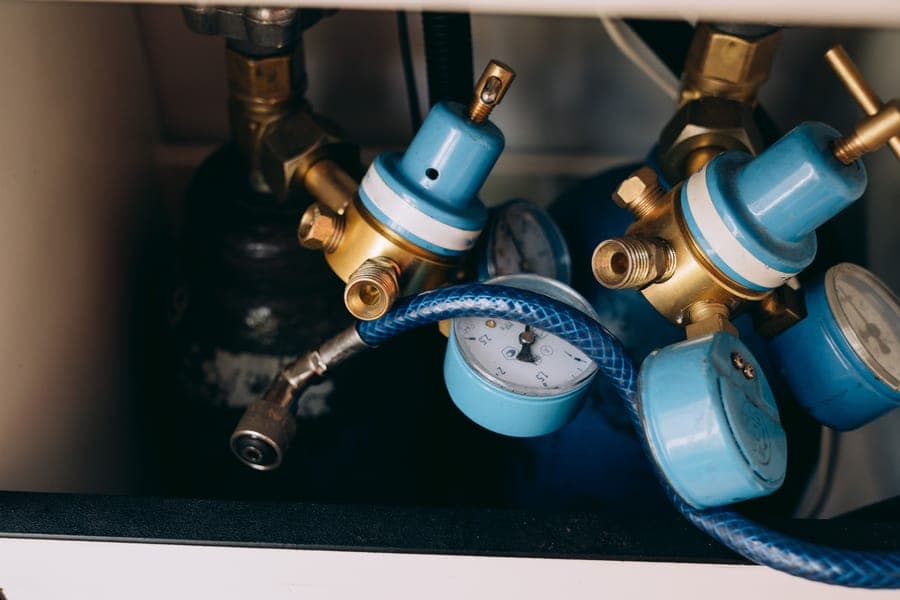
You cannot set line length sensibly without knowing your serving pressure, and you cannot know that without a gauge. Dual gauges show output pressure and remaining gas on a rebuildable brass body.
Spec sheet
- Gauges
- Dual -- output pressure and tank contents
- Output range
- 0-60 psi
- Inlet
- CGA-320 CO2 tank thread
- Outlet
- 1/4 in MFL or barb
- Body
- Forged brass
- Serviceable
- Rebuild kits widely available
What it is not good at
One output, so multiple kegs at different pressures need a manifold downstream.
Who it is for
Setting a real serving pressure instead of guessing
Mid tier
Intertap Stainless Forward-Sealing Faucet
Intertap
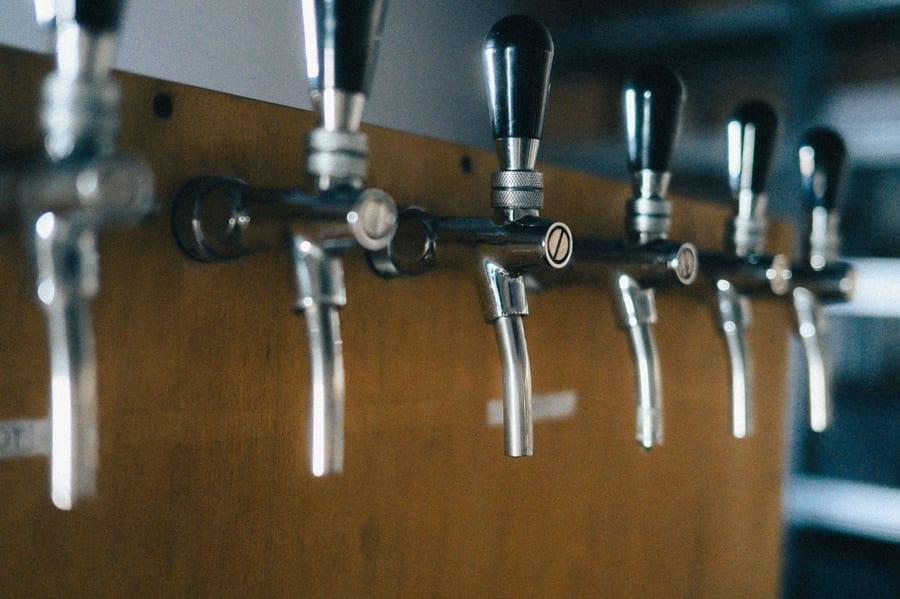
A forward-sealing faucet opens cleanly and fully, which matters because a partly-open faucet is itself a foam generator. It also leaves no beer standing in the shaft between pours.
Spec sheet
- Seal type
- Forward sealing
- Material
- 304 stainless
- Spout
- Interchangeable (stout, growler)
What it is not good at
Shank thread and tower clearance need checking before you order.
Who it is for
Replacing a rear-sealing faucet that spits the first inch
FAQ
Questions brewers actually ask
How long should my beer line be for a kegerator?
Eight to ten feet of 3/16 inch inside-diameter beverage line for a typical setup serving at 10 to 12 psi. Cut ten feet and shorten it a foot at a time if the pour is too slow. That is considerably longer than the line most kits supply, which is why so many new kegerators foam.
Why does my kegerator pour nothing but foam?
Usually the beer line is too short. The line's job is to drop pressure from serving pressure to near zero at the faucet through friction, and a short line cannot. The other common cause is warm beer or a warm tower, since warm beer releases CO2 the moment the pressure falls.
Should I turn the pressure down to stop foaming?
No. Lowering the regulator reduces foam by letting the beer go flat, and a week later it pours smoothly and tastes lifeless. Serving pressure should be set by the carbonation level you want at your serving temperature; foam is a line-resistance problem and gets fixed with line length.
Is 1/4 inch beer line better than 3/16?
Not for a kegerator. Resistance rises steeply as bore narrows, so 1/4 inch line needs several times the length of 3/16 inch line to drop the same pressure -- lengths you cannot fit in a cabinet. Wider line belongs on long draws and jockey boxes where the distance provides the resistance.
Does a tall tap tower change the line length I need?
Slightly. Every foot the beer climbs costs a little pressure the line no longer has to remove, so a tall tower needs marginally less line. The effect is small in a domestic setup. Tower temperature matters far more -- an uninsulated tower will foam the first pour at any line length.
Does longer beer line need more cleaning?
Yes, and that is the real cost of calm pours. More line is more interior surface for a biofilm to grow on. The answer is a cadence rather than shorter line: push line cleaner through every couple of weeks of active service, then rinse and sanitize.
Read next
More on kegging
Guide
CO2 Regulator Settings: PSI by Temperature and Style
PSI by temperature and style, with the line-balancing numbers.
Guide
How to Force Carbonate a Keg
Set-and-forget, shake and burst methods with real pressures and timings.
Guide
What Temperature Should a Kegerator Be?
The 38 F setting, the pressure it pairs with, and why the first pour foams.
Roundup
The Best Beer Line Cleaning Kits
What to buy, how often to clean, and what grows if you do not.
Roundup
Best Kegerator Conversion Kits
The parts that turn a fridge or chest freezer into a working kegerator, ranked.
Comparison
NukaTap vs Perlick: Which Forward-Sealing Faucet?
Two forward-sealing faucets compared on mechanism, spouts, flow control and parts supply.