Guide
What Temperature Should a Kegerator Be?
Thirty-eight Fahrenheit is the answer for most beer. The harder question is why your first pour is foam and your fifth one is fine.
The short answer
Set a kegerator to 38 F for most beer styles. That temperature keeps the beer cold enough to pour cleanly and matches the 10 to 12 psi serving pressure that holds 2.4 to 2.6 volumes of CO2. If the first pour is foam and later pours are fine, the problem is a warm tap tower, not the thermostat.
DisclosureWe earn a commission on qualifying purchases made through links on this page, at no extra cost to you. It does not change what we recommend or how we rank it -- here is how we pick and here is the full disclosure.
Temperature and pressure by style
| Style group | Serving temperature | Target CO2 volumes | Approx. pressure at that temp |
|---|---|---|---|
| American lager, pilsner | 36-38 F | 2.5-2.7 | 11-13 psi |
| Pale ale, IPA | 38-42 F | 2.3-2.5 | 10-12 psi |
| Stout, porter | 45-50 F | 1.9-2.3 | 8-11 psi |
| Belgian, hefeweizen | 42-46 F | 2.8-3.5 | 14-20 psi |
| Nitro stout | 38 F | Nitrogen blend | 25-35 psi, nitro gas |
The number
38 F, and why it is the compromise
If you serve several styles from one cabinet, 38 F is the setting. It is not the perfect temperature for any single style; it is the temperature at which the largest number of styles pour well and taste close to right, which is a different and more useful thing.
Colder than about 34 F and you risk freezing beer in the lines or in the keg nearest the cold plate, and cold also suppresses aroma -- a 32 F IPA smells of nothing. Warmer than about 45 F and CO2 comes out of solution readily on the way to the glass, which is foam, and the required serving pressure climbs to hold the same carbonation.
Thirty-eight Fahrenheit sits in the middle: cold enough that CO2 stays dissolved at a modest serving pressure, warm enough that hop and malt aroma survive. If you only ever drink stout, run warmer. If you only drink pilsner, run colder. For a mixed kegerator, 38 F.
The pairing
Temperature and pressure are one setting, not two
This is the thing that catches out almost every new kegger. How much CO2 stays dissolved in beer depends on both the pressure above it and the temperature of the beer, and the two move together. The same 12 psi that holds 2.5 volumes of CO2 at 38 F holds considerably less at 50 F, because warm beer cannot retain as much gas.
So when you change the temperature, you change the carbonation level unless you change the pressure to match. A kegerator turned down for summer will slowly over-carbonate the beer in it at an unchanged pressure; turned up, it will go flat. Neither is a fault in the beer.
The practical rule: set the temperature first and leave it alone, then set the pressure from a carbonation chart for that temperature and the volumes your style wants. The mechanics of getting there are in CO2 regulator settings, and the method for carbonating from flat is in how to force carbonate.
The real problem
Your first pour is foam because the tower is warm
Here is the symptom almost everyone describes: the first pint of the evening is three quarters foam, you dump it, and the second pint is perfect. The thermostat is not the problem. The tap tower is.
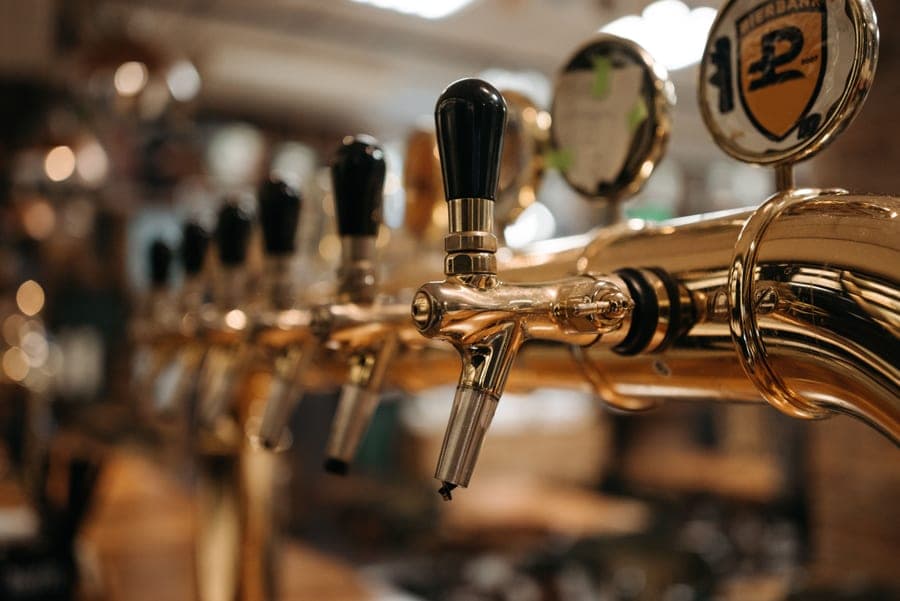
A tap tower sits above the cabinet, in room-temperature air, with several inches of beer line and a brass faucet inside it. Between sessions that beer warms to something close to room temperature. Warm beer cannot hold its CO2, so it breaks out of solution inside the line and arrives at the faucet as foam. Once a pint of cold beer has flushed the tower, everything behaves.
- A tower cooling fan is the proper fix. A small fan in the cabinet pushing cold air up into the tower keeps the line and the faucet at cabinet temperature. Most kegerators have a duct for this, and it is the single highest-value kegerator upgrade there is.
- Insulating the tower helps a little. It slows the warming but does not prevent it, because there is no cold source in the tower to maintain.
- A keezer with faucets through a collar avoids it entirely, because the line stays inside the cold space right up to the shank. That is one of the quiet advantages covered in kegerator vs keezer.
Measuring it
The cabinet thermostat is not the beer temperature
A kegerator thermostat reads air, usually near the cold plate or the evaporator, which is the coldest part of the cabinet. The beer in a keg at the far end of the cabinet can be several degrees warmer, and the beer in the tower warmer still.
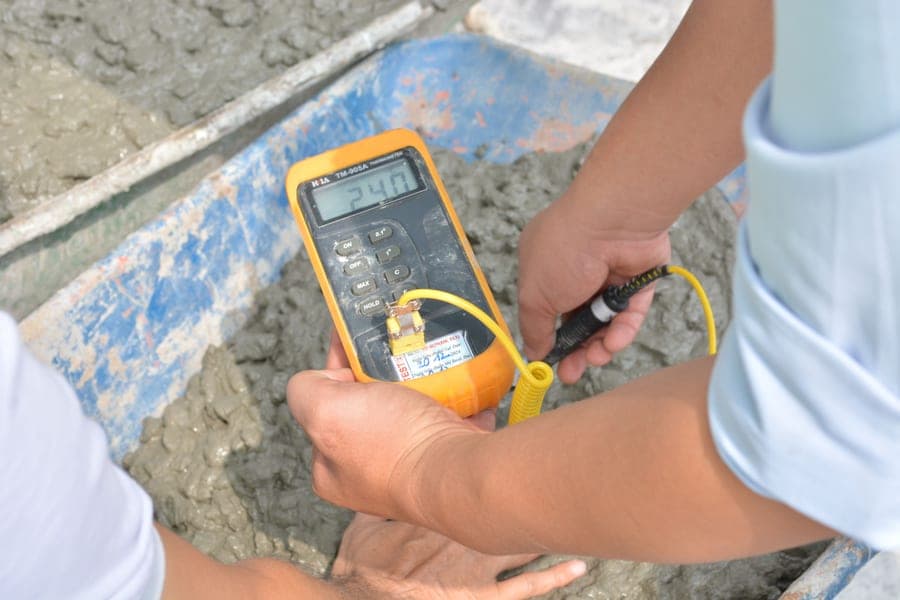
If carbonation is behaving strangely, measure the beer rather than trusting the dial. The simple method is a glass of water left in the cabinet overnight with a thermometer in it -- water has similar thermal behavior to beer and it tells you what a keg is actually sitting at. A dual-stage controller with the probe taped to a keg does the same job permanently and is the correct answer for a converted fridge or a keezer.
Edge cases
Styles that want something else
Stout and porter. Traditionally served warmer, 45 to 50 F, and at lower carbonation. In a mixed cabinet at 38 F a stout will taste tight and cold; pour it and let it sit for five minutes rather than running the whole cabinet warm.
Hefeweizen and Belgian styles. These want far more CO2 -- up to 3.5 volumes -- which at 38 F means pressures in the high teens or low twenties. That is a legitimate setting, but it needs longer beer line to pour without foaming, and it will over-carbonate anything else on the same regulator body. This is the case for a secondary regulator manifold, covered in best CO2 regulators.
Nitro. A nitro stout runs on a beer gas blend at 25 to 35 psi through a restrictor plate faucet, and the pressure is doing a different job entirely. Do not set a CO2-only kegerator to nitro pressures.
Where this came from
The basis for this
Kegerator temperature ranges and keg capacities are the manufacturers' published specifications. The temperature, CO2 volume and pressure pairings follow standard draft-dispense carbonation tables and long-standing homebrew practice; the figures in the table are working ranges rather than measurements from our own cabinet. See how we pick.
What we recommend
The products on this page
The standard setup
Mid tier
Kegco Full-Size Digital Kegerator
Kegco
A full-size cabinet holding one half barrel or four ball-lock corny kegs with a digital thermostat, and a CO2 regulator included on most SKUs, so serving pressure and temperature are set from one appliance.
Spec sheet
- Keg capacity
- 1 half barrel, or 4 ball-lock corny kegs
- Control
- Digital thermostat
- Temperature range
- Draft serving range
- Taps
- Single, dual and triple configurations sold
- Gas
- CO2 regulator included on most SKUs
- Mobility
- Casters
What it is not good at
A tap tower runs warmer than the cabinet, so first-pour foam is a design characteristic you manage rather than a fault.
Who it is for
Four corny kegs on a digital thermostat
Best temperature range
Prosumer tier
KOMOS Kegerator
KOMOS
A 26 to 82 F controller range, which is unusually wide for a kegerator and means the same cabinet can hold lager fermentation temperatures or ale temperatures when it is not serving.
Spec sheet
- Keg capacity
- 1 half barrel or 4 ball-lock corny kegs
- Temperature range
- 26-82 F -- unusually wide
- Secondary use
- Doubles as a fermentation chamber
- Control
- Extended-range digital controller
- Taps
- Stainless Intertap faucets on most SKUs
- Mobility
- Casters, regulator included
What it is not good at
Prosumer pricing, and using it as a fermentation chamber means it is not serving beer that month.
Who it is for
Brewers who want one cabinet to serve and ferment
For a converted fridge or keezer
Entry tier
Inkbird ITC-308 Dual-Stage Temperature Controller
Inkbird
Dual-stage control with a probe you can place where the beer actually is, plus a calibration offset -- which is what turns a chest freezer or an old fridge into a draft cabinet that holds 38 F.
Spec sheet
- Stages
- Dual -- one heating and one cooling outlet
- Outlet rating
- ~1100W per outlet
- Probe
- NTC sensor on a 2 m lead
- Calibration
- User offset
- Compressor delay
- Configurable
- Wifi version
- ITC-308 Wifi sold separately
What it is not good at
It switches an appliance; it cannot make a cabinet colder than the appliance can go, and the probe placement does all the work.
Who it is for
Anyone whose cabinet has no accurate thermostat
FAQ
Questions brewers actually ask
What temperature should a kegerator be set to?
Thirty-eight Fahrenheit for a mixed cabinet. It is cold enough that CO2 stays dissolved at a modest 10 to 12 psi serving pressure, and warm enough that hop and malt aroma survive. Colder than 34 F risks freezing lines, and warmer than 45 F means CO2 breaks out of solution on the way to the glass.
Why is my first beer from the kegerator all foam?
Because the tap tower sits in room-temperature air and the beer inside it warms between sessions. Warm beer cannot hold its CO2, so it foams inside the line and at the faucet. Once a pint of cold beer flushes the tower everything pours normally. A tower cooling fan is the proper fix.
Does changing the kegerator temperature change the carbonation?
Yes, and this is the most common source of confusion. The amount of CO2 that stays dissolved depends on both pressure and temperature. The same 12 psi that holds 2.5 volumes at 38 F holds less at 50 F. If you change the temperature, reset the pressure from a carbonation chart or the carbonation level will drift.
Can I serve stout and pilsner from the same kegerator?
Yes, at 38 F, accepting a compromise on both. Pilsner is happiest a couple of degrees colder and stout a good deal warmer and less carbonated. The practical approach is to run 38 F and let a poured stout sit for five minutes rather than running the whole cabinet warm for one keg.
Should I trust the kegerator's built-in thermostat?
Treat it as approximate. It reads air near the cold plate, which is the coldest point in the cabinet, so a keg at the far end can be several degrees warmer. Leave a glass of water with a thermometer in it overnight to find out what a keg is really sitting at, or fit a dual-stage controller with the probe against a keg.
Read next
More on kegging
Guide
CO2 Regulator Settings: PSI by Temperature and Style
PSI by temperature and style, with the line-balancing numbers.
Guide
How to Force Carbonate a Keg
Set-and-forget, shake and burst methods with real pressures and timings.
Roundup
The Best Kegerators for Homebrew
Kegerators compared on corny capacity, internal height and temperature range.
Comparison
Kegerator vs Keezer: Which Should You Build?
Kegs per dollar, insulation and build effort, compared properly.
Roundup
The Best CO2 Regulators for Homebrew
Primary regulators and secondary manifolds, and what to check before buying.
Roundup
The Best Homebrew Keg Systems
What a kegging kit includes, what it omits, and the complete cost.