Guide
How to Clean a Fermenter
The vessel is the easy part. The valve, the gasket and the racking arm are where infections live, and none of them clean themselves.
The short answer
Dump and rinse the fermenter the same day you empty it, while the residue is still soft. Then take off every removable part -- valve, racking arm, gaskets, thermowell, airlock -- and soak everything in warm alkaline brewery wash for 20 to 30 minutes rather than scrubbing. Rinse, dry, and sanitize only when you are about to use it again. Never use bleach on stainless, and never use an abrasive pad on anything.
DisclosureWe earn a commission on qualifying purchases made through links on this page, at no extra cost to you. It does not change what we recommend or how we rank it -- here is how we pick and here is the full disclosure.
Timing
The single thing that decides how hard this will be
Clean the fermenter the day you empty it. Yeast, protein and hop matter come off a wet vessel with a warm soak and almost no effort. The same residue left to dry for a week becomes a varnish that takes an hour and tempts you into using something abrasive, which is how vessels get ruined.
If you genuinely cannot clean it the same day, fill it with water before you walk away. A fermenter full of plain water is a fermenter you can clean in ten minutes on Sunday. A dry one is a project.
Disassembly
Everything that comes off, comes off
The inside wall of a fermenter is the part people clean and the part that was never the problem. Infections live in threads, under gaskets, inside valve bodies and in the dead leg of a racking arm -- places a rinse never reaches and a sanitizer cannot help.
- Butterfly or ball valve. Take it off the vessel and open it. A ball valve traps wort inside the ball cavity and has to be disassembled, not just left in the open position and rinsed. This is the single most common hidden source of infection on a conical.
- Racking arm and dip tube. Pull it, push cleaner through it, and look through it afterwards. A dark ring inside the tube is beer stone and it needs an acid soak, not more alkaline wash.
- Every gasket and O-ring. Lid seals, tri-clamp gaskets, valve seats. Remove them, wash them separately, and inspect for nicks. A nicked gasket will not seal under pressure and is the cheapest part of the vessel to replace.
- Thermowell, pressure lid, PRV and airlock. A pressure relief valve has a spring and a seat with krausen in it. Blowoff tubing is a consumable -- if it has been full of krausen, replace it rather than cleaning it.
- Collection vessel and dump ports. If you have been harvesting yeast from the cone, the dump port has had slurry sitting in it. Treat it as the dirtiest part of the system.
The routine
Six steps, mostly waiting
- Dump and rinse immediately. Hot tap water, no chemistry, straight after the vessel is empty. You are removing the bulk, not cleaning.
- Disassemble everything above and put the small parts in a bucket so nothing goes down a drain.
- Soak in warm alkaline wash. Around 1 oz per gallon, warm water in the 120 to 150 F range, 20 to 30 minutes. Fill the vessel if you can; if you cannot, use a recirculating washer or a spray ball so the solution reaches the headspace and the krausen ring.
- Agitate gently, never abrade. A soft cloth, a plastic-bristle carboy brush or the jet of a washer. No scouring pads, no steel wool, no bottle brush with a metal end on a stainless vessel -- steel tools damage the passive oxide layer that makes stainless corrosion resistant in the first place.
- Rinse thoroughly and look. Hold the vessel to the light. A faint ring at the old liquid line means the solution never got above the fill level; repeat with the vessel full.
- Dry open, store open. Lid off, valve open, gaskets out. A sealed damp fermenter grows exactly what you spent the afternoon removing.
By material
The three vessels behave differently
Stainless
Stainless resists corrosion because of a thin oxide film on the surface. MoreBeer’s stainless primer is blunt about what damages it: improper or excessive use of chlorine-based sanitizers, and contact with steel wool or steel tools. Bleach is the specific thing to avoid -- prolonged contact with bleach solutions, especially heated ones, can pit the surface, and the pitting starts at the line where solution meets air.
Beer stone -- the gray-brown mineral film that builds up over many batches -- does not come off with alkaline wash. That is an acid job; phosphoric acid cleaners are effective on it. Keep acid contact short and at the stated concentration, because excessive concentration and contact time damages the surface finish too. Nitric acid passivation exists for restoring the oxide layer after rust spots or free-iron contamination, but it is a deliberate procedure, not a routine step.
PET and plastic
PET conicals and buckets clean easily and scratch easily, and scratches are permanent harbors for soil that no sanitizer reaches. Soak only, with a soft cloth at most. A PET fermenter with visible internal scratching is best retired to water or sanitizer duty. The trade-offs are covered in stainless vs plastic fermenters.
Do not soak plastic in hot alkaline solution for hours hoping to save effort. Warm, correct concentration, correct time. And keep acid sanitizer contact to its stated one to two minutes rather than leaving plastic parts sitting in it overnight -- Five Star’s own guidance is to respect the contact time rather than treat it as a storage solution.
Glass
Glass is chemically indifferent and physically dangerous. It tolerates any cleaner you would use on stainless, and it breaks when a full carboy is lifted by the neck or set down on a hard edge. Clean it in a washer or with a long soft brush, never with anything that could chip the inside, and handle it in a crate or a carrier.
Sanitizing
The last two minutes, and not a moment earlier
Sanitize immediately before the vessel is filled. An acid-anionic no-rinse sanitizer at roughly 1 oz per 5 gallons with one to two minutes of contact is the standard, and the foam is not a problem -- it is the sanitizer doing its job and it does not need rinsing out.
What it is not is a storage method. Leaving soft parts sitting in acid sanitizer for days is how O-rings harden and cheap fittings degrade. Sanitize, drain, fill. If a vessel has been clean and dry in storage for a month, it still gets sanitized before use, because dust carries organisms -- but it does not need cleaning again.
If you are moving beer out of this fermenter under pressure rather than opening it, the same discipline applies to the transfer hardware: closed transfer to keg is only closed if the posts, lines and disconnects were cleaned too.
Mistakes
Four ways people make this harder than it is
- Scrubbing instead of soaking. Abrasion creates the scratches that make the next clean harder, in plastic and in the passive layer on stainless. Chemistry and time cost nothing.
- Cleaning the vessel and not the valve. A spotless conical with a dirty ball valve is a dirty conical.
- Using sanitizer as a cleaner. No-rinse sanitizer on visible residue is wasted money and false confidence.
- Storing it sealed and wet. Lid on, valve closed, damp inside: three weeks later you have a science experiment and a smell that never fully leaves the gasket.
What we recommend
The products on this page
Entry tier
Five Star PBW Alkaline Brewery Wash
Five Star Chemicals
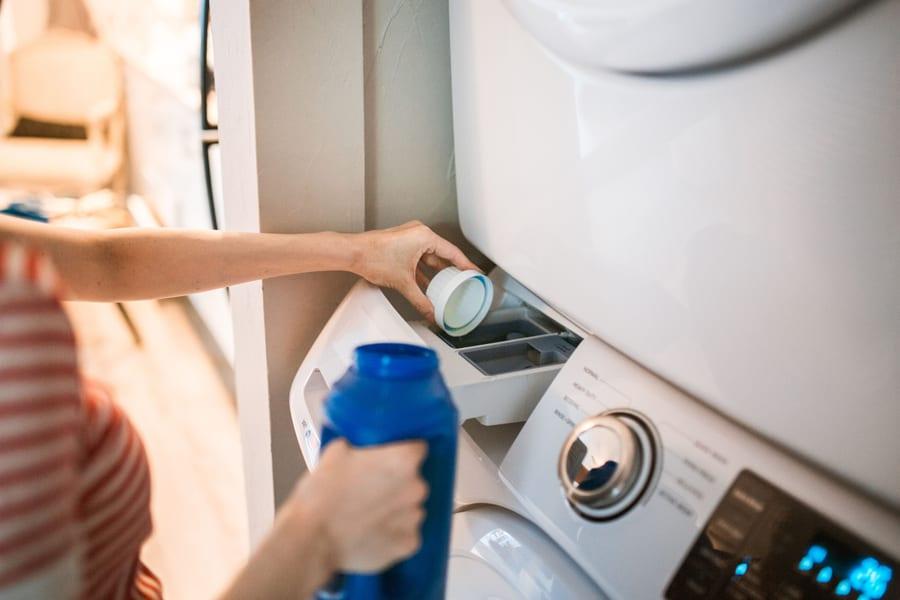
Alkaline, non-caustic, and formulated to lift protein and yeast residue off stainless, plastic and glass without scrubbing. Roughly 1 oz per gallon in warm water, 20 to 30 minutes of contact. This is the product the whole routine below is built around.
Spec sheet
- Type
- Alkaline, non-caustic powdered wash
- Dose
- ~1 oz per gal for heavy soil
- Temperature
- Works best warm (120-150 F)
- Contact
- 20-30 min soak, or recirculate
- Safe on
- Stainless, PET, glass, silicone
- Not a sanitizer
- Clean first, then sanitize separately
Who it is for
The soak that does the actual work
Entry tier
Five Star Star San Sanitizer
Five Star Chemicals
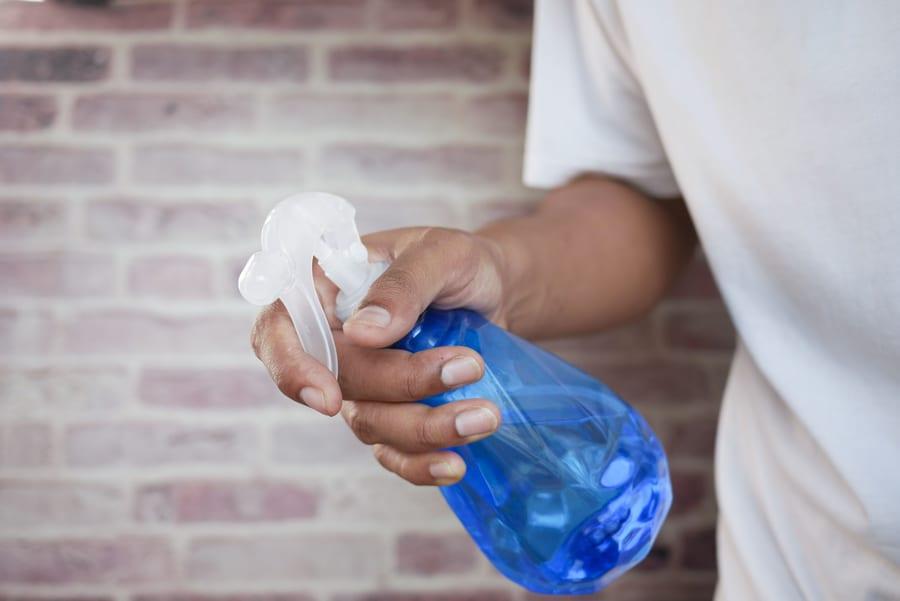
Acid-anionic, no-rinse, about 1 oz per 5 gallons with one to two minutes of contact. Sanitizing is a separate step from cleaning and it happens last, immediately before the wort goes in -- not the night before, and never instead of cleaning.
Spec sheet
- Type
- Acid-anionic, no-rinse
- Contact time
- 1-2 minutes
- Dilution
- 1 oz per 5 gal
Who it is for
The two minutes before you fill it again
Mid tier
Mark II Keg and Carboy Washer
Mark II
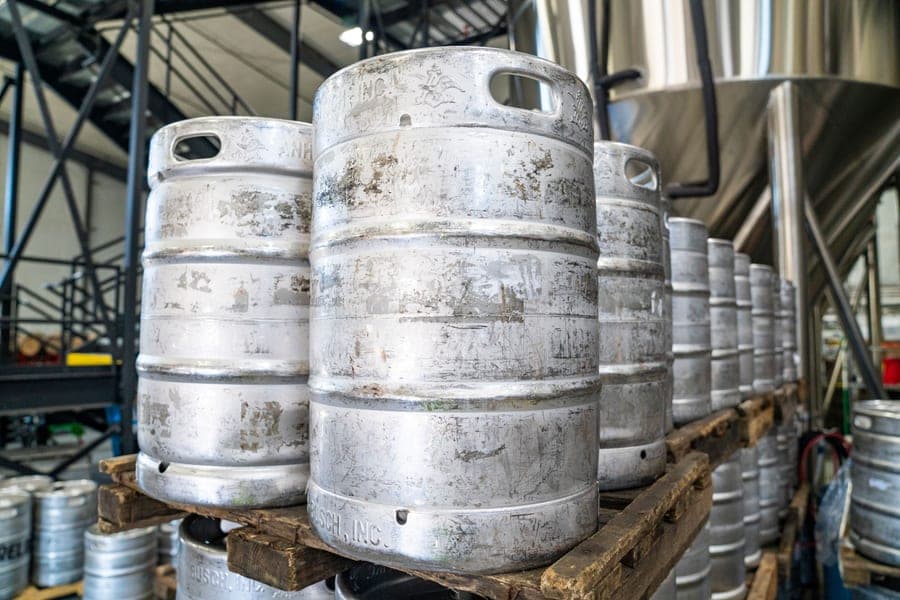
A recirculating jet washer turns the worst job -- getting solution onto the inside of a carboy or keg you cannot reach -- into something you set up and walk away from. It runs cleaner, line cleaner or sanitizer through the same basin.
Spec sheet
- Basin
- One-piece high-density polyethylene reservoir
- Pump
- Submersible, 500 gallons per hour
- Method
- Vertical jet nozzle, solution recirculates
- Fits
- Corny kegs, glass and PET carboys, buckets
- Included
- Two tube barbs and a T adapter for hoses
- Use with
- Alkaline wash, line cleaner or sanitizer
Who it is for
Anyone cleaning more than one vessel a month
FAQ
Questions brewers actually ask
How do you clean a fermenter after use?
Dump and rinse it the same day with hot water, then remove every detachable part -- valve, racking arm, gaskets, thermowell, airlock -- and soak the vessel and parts in warm alkaline brewery wash at about 1 oz per gallon for 20 to 30 minutes. Rinse thoroughly, then dry and store it open. Sanitize later, immediately before you fill it again.
Can I use bleach to clean a fermenter?
Not on stainless. Chlorine attacks the passive oxide film that gives stainless its corrosion resistance, and prolonged contact with bleach solutions -- especially warm ones -- can pit the surface, typically right at the line where the solution meets the air. Use an alkaline brewery wash for cleaning and an acid-anionic sanitizer afterwards instead.
How do I get beer stone out of a fermenter?
With an acid cleaner, not more alkaline wash. Beer stone is a mineral and protein deposit that alkaline cleaners leave behind; phosphoric acid cleaners remove it effectively. Keep to the stated concentration and contact time, because excessive concentration or dwell time can damage a stainless surface finish.
Do I need to sanitize a fermenter that has been stored clean?
Yes, but you do not need to clean it again. A vessel that was cleaned properly and stored dry and open only needs the sanitizing step -- one to two minutes of contact with an acid-anionic no-rinse sanitizer at about 1 oz per 5 gallons -- immediately before you fill it. Dust carries organisms even into a clean vessel.
Can I scrub a plastic fermenter?
Avoid it. PET and plastic scratch easily, and scratches are permanent shelters for soil that sanitizer cannot reach. Soak in warm alkaline wash and use a soft cloth or a plastic-bristle brush at most. A plastic fermenter with visible internal scratching is better retired from beer duty than kept in the rotation.
How long should a fermenter soak in PBW?
20 to 30 minutes in warm water at roughly 1 oz per gallon, at 120 to 150 F where you can manage it. Cold water works but takes longer. Longer soaks are not a problem for stainless or glass, but they are unnecessary -- if the residue is still there after half an hour, the solution is not reaching it rather than needing more time.
Sources
- Stainless Steel 101: the passive oxide layer, chlorine pitting, acid cleaners and passivation (MoreBeer)
- Cleaning and sanitation reference: chemistry types, contact times and material compatibility (Brewfather)
- Five Star PBW and Star San product range and published usage (MoreBeer)
- Mark II keg and carboy washer: recirculating jet cleaning for vessels (Midwest Supplies)
Read next
More on fermenters
Roundup
The Best Homebrew Cleaners and Sanitizers
The two chemicals that do the work, plus the low-foam and draft-line gear worth adding.
Comparison
Stainless vs Plastic Fermenters
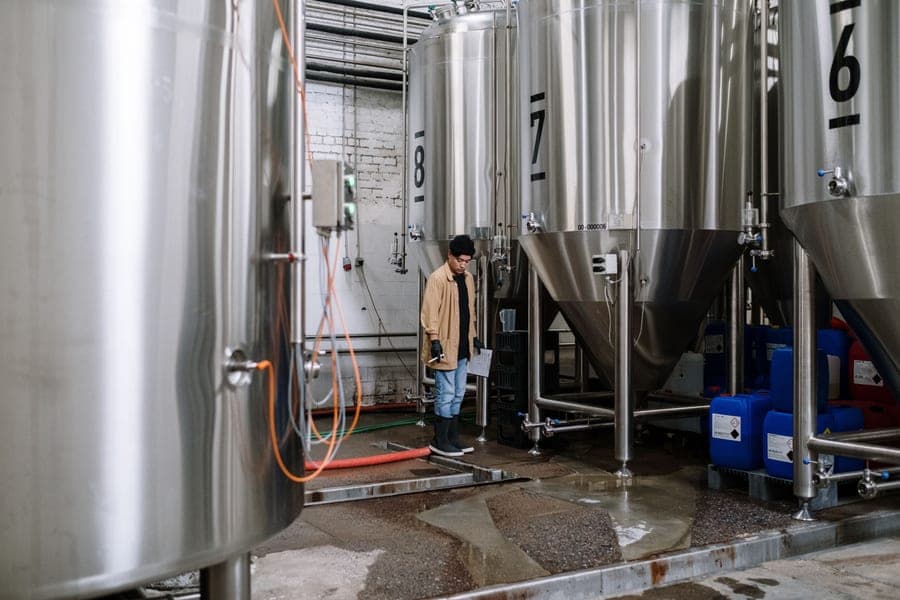
Durability, sanitation and real cost per year, honestly compared.
Guide
How to Use a Conical Fermenter
Fill, dump, harvest, crash, transfer -- with the timings that matter.
Guide
How to Harvest Yeast From a Conical
Dump the trub, collect the clean crop, store it properly -- how to repitch from a cone without propagating a problem.
Guide
How to Clean a Keg
The full corny keg teardown, soak and sanitize routine, including the parts people never remove.
Roundup
The Best Conical Fermenters
Stainless, plastic and pressure-capable conicals compared, with chamber-fit warnings.