Guide
How to Use a Conical Fermenter
The sequence from filling to transfer, with the timings that decide whether the cone actually earns its keep.
The short answer
Fill to 75-80 percent of capacity, pitch, and dump the first trub fraction 24 to 48 hours into vigorous fermentation. Harvest clean yeast from the valve once fermentation finishes, cold crash for 48 hours, then transfer -- under CO2 if the vessel is pressure rated, otherwise via the racking arm.
DisclosureWe earn a commission on qualifying purchases made through links on this page, at no extra cost to you. It does not change what we recommend or how we rank it -- here is how we pick and here is the full disclosure.
Step 1
Fill to 75-80 percent, not to the brim
Krausen needs room. Fill a conical to roughly three quarters of its total capacity -- 5 to 5.5 gallons in a 7 gallon vessel -- and you have the headspace a vigorous fermentation needs. Fill it higher and the krausen goes into the airlock, which blocks it, which pressurizes the vessel, which is a mess at best.
If you must fill higher, fit a blow-off tube into a jar of sanitizer rather than an airlock, and expect to clean it.
Step 2
Dump the first trub fraction at 24-48 hours
This is the step people skip, and it is where the cone starts earning its price. Within the first day or two of active fermentation, cold break, hop particulate and the first dead cells have settled into the cone. Open the dump valve briefly and let that fraction out -- usually a cup or so, until what comes out stops looking like sludge.
- Sanitize the valve first. Spray it, inside and out. You are opening a path into the vessel mid-fermentation.
- Open briefly and close. You are removing sediment, not beer. Stop as soon as the flow turns from sludge to liquid.
- Do not dump during the first 12 hours. The yeast is still distributing; let it get going first.
Step 3
Harvest yeast at the end of fermentation
Once gravity has been stable for 48 hours, the yeast has flocculated into the cone and the second fraction is clean, viable slurry.
- Sanitize a jar with a sealing lid, and sanitize the valve.
- Draw off a small amount first and discard it -- that clears the valve body and any remaining trub.
- Collect the slurry into the jar. You want a creamy, uniform layer rather than anything dark or granular.
- Seal loosely (it will still off-gas), refrigerate immediately, and pitch within two weeks. Viability falls off after that.
Full reasoning on why harvested slurry often outperforms a fresh pack is in why use a conical fermenter.
Step 4
Cold crash for 48 hours
Dropping the beer to 32-38°F for a couple of days pulls remaining yeast and protein out of suspension, which gives you a visibly clearer beer in the keg. On a conical the sediment collects in the cone where it is out of the way.
Step 5
Transfer: under CO2 if you can
Pressure-rated vessel
Purge the receiving keg with CO2 (fill it with sanitizer and push the sanitizer out with gas, or flush several times). Connect the fermenter’s liquid post to the keg’s liquid post, apply a few psi to the fermenter, and vent the keg’s gas post. The beer moves across without meeting air at all. See how to pressure ferment.
Non-pressure vessel with a racking arm
Rotate the arm to just above the sediment line, sanitize the valve and tubing, and run the beer into a purged keg. Keep the tubing full and the outlet below the liquid surface in the keg to minimize splashing. You will pick up some oxygen -- that is unavoidable -- but a short, gentle transfer picks up far less than a long splashing one.
Step 6
Clean immediately, not tomorrow
The single biggest determinant of how long a fermenter lasts is how soon you clean it. A krausen ring rinsed off while fresh takes two minutes; the same ring dried on for a day takes scrubbing, and scrubbing is what destroys plastic vessels and scratches polished stainless.
- Rinse with warm water immediately after transfer.
- Soak with a non-caustic alkaline brewery wash, warm, 20-30 minutes. Stainless tolerates caustic; PET does not.
- Dismantle the fittings. The valve, the racking arm and the lid gasket are where soil hides. Flushing is not cleaning.
- Rinse, dry, and store with the lid off so it does not go stale.
What we recommend
The products on this page
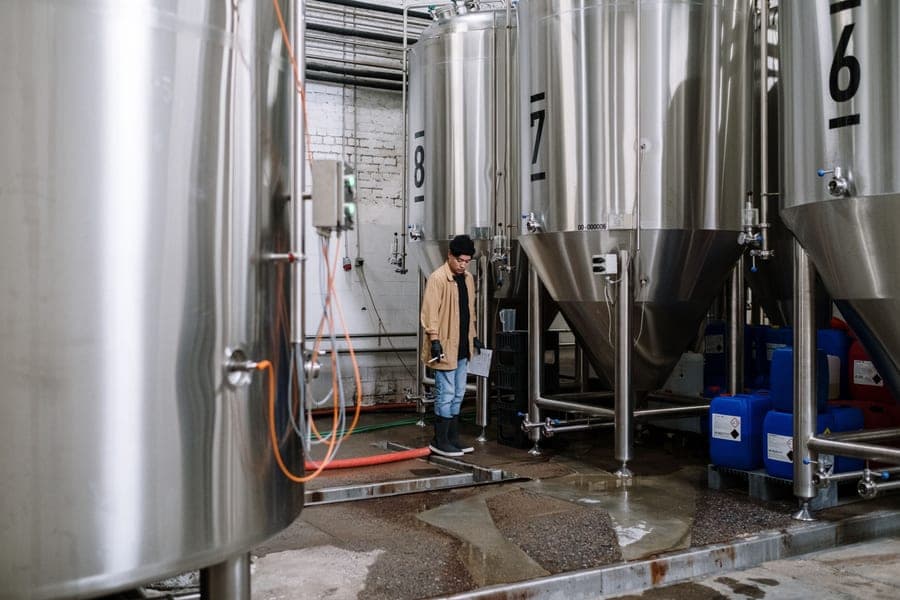
The vessel this guide assumes
Prosumer tier
Spike Brewing CF5 Conical Fermenter
Spike Brewing
Full cone with a dump valve, tri-clamp ports and a pressure rating, so every step in this guide including closed transfer is available.
Spec sheet
- Capacity
- 8 gal / 30 L (5 gal batch)
- Material
- Welded 304 stainless, no crevices
- Pressure
- Rated for pressure transfer and spunding
- Ports
- Tri-clamp throughout
- Cone
- Full cone with a dump valve
- Options
- Cooling coil, thermowell, CIP arm
What it is not good at
Too tall with a stand for most chest freezers, so plan glycol or a tall upright chamber.
Who it is for
Brewers with a welded pressure-rated conical
What every step needs
Entry tier
Five Star Star San Sanitizer
Five Star Chemicals
A conical has more fittings than a bucket, and every one is a place an infection can enter. No-rinse acid sanitizer at an ounce per five gallons, one to two minutes contact.
Spec sheet
- Type
- Acid-anionic, no-rinse
- Contact time
- 1-2 minutes
- Dilution
- 1 oz per 5 gal
What it is not good at
Needs low-alkalinity water to stay in its effective pH range. Clean first -- sanitizer does not work through soil.
Who it is for
Every fitting you open and every jar you harvest into
FAQ
Questions brewers actually ask
When should I dump trub from a conical fermenter?
Twenty-four to forty-eight hours into vigorous fermentation. By then cold break, hop particulate and the first dead cells have settled into the cone, and dumping them leaves the beer on a cleaner bed for the rest of fermentation. Sanitize the valve first, open it briefly, and stop as soon as the flow turns from sludge to liquid.
How full should I fill a conical fermenter?
To roughly 75 to 80 percent of total capacity, which means 5 to 5.5 gallons in a 7 gallon vessel. Krausen needs that headspace, and a vessel filled higher will push foam into the airlock, block it and pressurize the vessel. If you must fill higher, use a blow-off tube into a jar of sanitizer rather than an airlock.
How do I cold crash without sucking air into the fermenter?
Keep the vessel sealed under positive pressure if it is rated for it, which is the cleanest solution. On an unrated vessel, fit a CO2 blanket or a balloon over the airlock port so the contracting beer draws inert gas rather than room air. Without one of those the vessel pulls oxygen and airlock sanitizer into your finished beer exactly when it is most vulnerable.
How long does harvested yeast last in the fridge?
Pitch within two weeks for best results. Viability falls steadily after collection, and slurry older than a month needs a starter to be reliable. Collect into a sanitized jar, seal it loosely because it will continue to off-gas, and refrigerate immediately rather than leaving it at room temperature.
Do I need to take apart the valve to clean a conical fermenter?
Yes. Valves, racking arms and lid gaskets are where soil accumulates, and running cleaner through a closed valve does not reach the inside of the valve body. Dismantle them after every batch, clean the components individually, and inspect the gaskets. This is the one genuine maintenance cost a conical has over a bucket.
Read next
More on fermenters
Roundup
The Best Conical Fermenters
Stainless, plastic and pressure-capable conicals compared, with chamber-fit warnings.
Guide
Fermentation Temperature Control
Target temperatures, probe placement and the first 48 hours that decide flavor.
Guide
Homebrew Kegging Setup, Step by Step
The setup order, plus the three day-one failures and how to avoid them.
Roundup
The Best Stainless Conical Fermenters
Welded against formed stainless, and which vessels justify the price.