Guide
Hydrometer vs Refractometer
A refractometer needs three drops and is wrong after fermentation starts. A hydrometer needs a cupful and is always right. Use both.
The short answer
Use a refractometer before fermentation, where a 2-3 drop sample reads accurately, and a hydrometer afterwards, because alcohol changes how light refracts and post-fermentation refractometer readings need a correction formula. Most brewers who own both use the refractometer on brew day and the hydrometer to confirm final gravity.
DisclosureWe earn a commission on qualifying purchases made through links on this page, at no extra cost to you. It does not change what we recommend or how we rank it -- here is how we pick and here is the full disclosure.
The two instruments compared
| Hydrometer | Refractometer | |
|---|---|---|
| Sample size | ~100 ml test jar | 2-3 drops |
| Reading time | Minute or two to settle | Seconds |
| Accurate pre-fermentation | Yes | Yes |
| Accurate post-fermentation | Yes | No -- needs correction |
| Temperature sensitivity | Needs correction | ATC models compensate |
| Fragility | Glass, breaks easily | Robust |
| Sample wasted | A cupful per reading | Negligible |
| Oxygen exposure per reading | Real | Minimal |
| Cost | Very low | Low |
An orange rule marks the better of the two on that row.
How each works
Buoyancy against light
A hydrometer is a weighted glass float. Denser liquid is more buoyant, so the float sits higher, and a scale on the stem reads specific gravity. It measures density directly, which means it is agnostic about what is dissolved -- sugar, alcohol, anything.
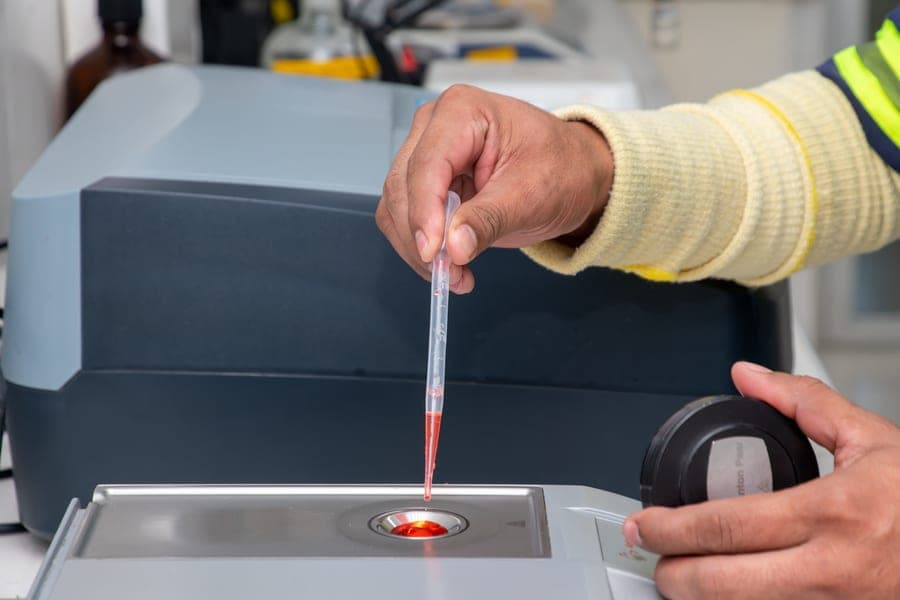
A refractometer measures how much a liquid bends light. Sugar solutions bend light in proportion to their concentration, so a scale calibrated in Brix (or dual-scaled to specific gravity) reads off a couple of drops on a prism.
That difference in mechanism is the entire source of the post-fermentation problem.
The alcohol problem
Why a refractometer lies after fermentation starts
Ethanol refracts light differently from water, and it refracts it in a way that makes a solution look more concentrated than it is. So once fermentation has produced alcohol, a refractometer reads a gravity that is too high -- often substantially so.
The reading is not useless; it is correctable. There are published correction formulas that take the original Brix reading and the current Brix reading and estimate the true final gravity, and most brewing apps and calculators include one. But a correction is an approximation layered on a measurement, and it relies on your original reading being right.
A hydrometer has no equivalent problem because it measures density, and density is density regardless of what produced it.
The practical division of labor
Use each where it is strong
- Brew day: refractometer. Checking first runnings, pre-boil gravity and post-boil gravity costs two or three drops each and takes seconds. That makes mid-process checks practical, which matters because pre-boil gravity is actionable -- you can still adjust the boil length or add extract. A hydrometer reading costs a cupful and a minute, so people skip them.
- Original gravity: either. Both are accurate before fermentation starts. Take it with whichever is to hand.
- Final gravity: hydrometer. No correction formula, no approximation. This is the number your ABV calculation depends on, so measure it directly.
- Fermentation progress: a floating sensor, if you have one. Two hydrometer readings 48 hours apart is the classic test and requires you to draw two samples two days apart. A floating bluetooth hydrometer gives you the same evidence as a continuous curve with no samples drawn.
Getting good readings
Four things that go wrong
- Hydrometer temperature correction. Hydrometers are calibrated at a specific temperature, usually 60°F. A reading taken on a hot wort sample without correcting reads low. Cool the sample or apply the correction.
- Refractometer calibration. Zero it on distilled water at the start of every session. It drifts, and an uncalibrated refractometer is confidently wrong.
- Hot refractometer samples. Even with automatic temperature compensation, a drop of boiling wort on the prism reads unreliably until it cools. Let the sample reach roughly room temperature on the glass.
- Bubbles on a hydrometer. CO2 bubbles clinging to the float add buoyancy and read high. Spin it gently in the jar to shed them before reading.
Related: holding the right fermentation temperature is what makes any of these readings meaningful -- fermentation temperature control. And a stalled fermentation shows up as a gravity that stops falling, which is exactly what these instruments are for.
What we recommend
The products on this page
Best for brew day
Entry tier
Brix / Wort Refractometer with ATC
Various
Two or three drops, a reading in seconds, with automatic temperature compensation. Lets you check gravity mid-mash and adjust while you still can.
Spec sheet
- Scale
- Brix 0-32, usually with a dual SG scale
- Sample size
- 2-3 drops
- ATC
- Automatic temperature compensation
- Pre-fermentation
- Accurate as read
- Post-fermentation
- Needs an alcohol correction formula
- Calibration
- Zero on distilled water before each session
What it is not good at
Readings after fermentation starts need an alcohol correction formula, because ethanol changes how light refracts. Calibrate on distilled water each session.
Who it is for
Pre-boil and pre-fermentation gravity on a couple of drops
Best for the whole fermentation
Mid tier
Tilt Bluetooth Hydrometer and Thermometer
Tilt
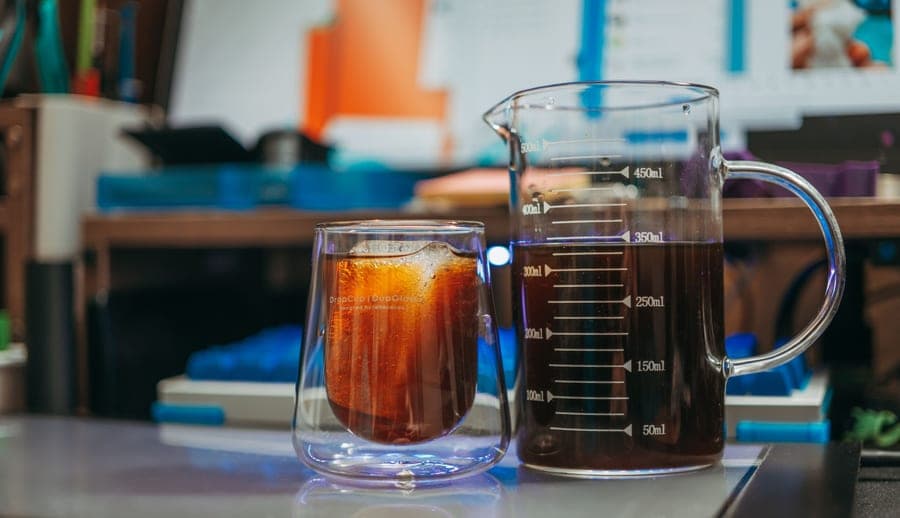
Reports gravity and temperature continuously from inside the beer, so you get a curve rather than a reading. A flat line for 48 hours is the only reliable finish signal.
Spec sheet
- Measures
- Specific gravity and temperature
- Method
- Floating inclinometer
- Link
- Bluetooth LE
- Logging
- Phone app, cloud, Google Sheets
- Battery
- User-replaceable coin cell
- Pro version
- Tilt Pro adds resolution and a longer body
What it is not good at
Far more expensive than either glass instrument, and krausen or hop debris stuck to it skews readings.
Who it is for
Knowing when fermentation actually finished
What the hydrometer sample needs
Entry tier
Five Star Star San Sanitizer
Five Star Chemicals
A hydrometer needs a cupful of beer drawn from the fermenter, which means a sanitized test jar and a sanitized means of getting it out.
Spec sheet
- Type
- Acid-anionic, no-rinse
- Contact time
- 1-2 minutes
- Dilution
- 1 oz per 5 gal
What it is not good at
Every sample is an oxygen and contamination opportunity, which is the hidden cost of hydrometer readings.
Who it is for
Every sample you draw
FAQ
Questions brewers actually ask
Can you use a refractometer after fermentation?
Only with a correction formula. Ethanol refracts light differently from water in a way that makes the solution appear more concentrated than it is, so a raw post-fermentation refractometer reading is too high. Published correction formulas take the original and current Brix readings and estimate true final gravity, and most brewing calculators include one -- but it is an approximation.
Is a hydrometer or refractometer more accurate?
A hydrometer, for final gravity, because it measures density directly and density is unaffected by what produced it. A refractometer is equally accurate before fermentation starts and much more convenient, needing two or three drops rather than a full test jar. The sensible arrangement is a refractometer on brew day and a hydrometer at the end.
Do I need both a hydrometer and a refractometer?
Not strictly, but both are cheap and they cover different jobs. A refractometer makes mid-brew-day checks practical because it costs two or three drops, which means you actually take pre-boil readings while you can still act on them. A hydrometer gives you an uncorrected final gravity for an accurate ABV calculation.
Why does my hydrometer reading seem wrong?
Three usual causes. The sample is hotter than the hydrometer's calibration temperature, usually 60 degrees Fahrenheit, which reads low. CO2 bubbles are clinging to the float and adding buoyancy, which reads high -- spin it gently to shed them. Or you are reading the meniscus from the wrong angle; read at the liquid surface, not the top of the curve.
How do you calibrate a refractometer?
Put a few drops of distilled water on the prism, close the plate, and adjust the calibration screw until it reads zero Brix. Do it at the start of every session rather than occasionally, because refractometers drift and an uncalibrated one gives confidently wrong readings with no indication that anything is amiss.
Read next
More on temperature control
Review
Tilt Hydrometer Review
Continuous gravity logging reviewed -- what it tells you and what it does not.
Guide
Fermentation Temperature Control
Target temperatures, probe placement and the first 48 hours that decide flavor.
Guide
Homebrewing for Beginners: Your First Batch
The five stages of a first batch, and the two mistakes that ruin most of them.
Guide
All-Grain Brewing Equipment List
The full list in three tiers, with the sizes that matter and the things to skip.
Roundup
The Best Glycol Chillers for Homebrewing
Glycol chillers sized for homebrewing, and when a freezer is the better buy.