Guide
How to Calculate ABV From Your Gravity Readings
Two numbers and one multiplier gives you a figure accurate enough for any homebrew. The errors come from the readings, not the arithmetic.
The short answer
ABV equals original gravity minus final gravity, multiplied by 131.25. An OG of 1.055 and an FG of 1.012 gives 0.043 times 131.25, or 5.6 percent ABV. Use 131.25 for ordinary beer and a higher multiplier for strong beer, and remember a refractometer reading after fermentation needs an alcohol correction first.
DisclosureWe earn a commission on qualifying purchases made through links on this page, at no extra cost to you. It does not change what we recommend or how we rank it -- here is how we pick and here is the full disclosure.
Worked ABV examples
| Beer | OG | FG | ABV (x 131.25) |
|---|---|---|---|
| Session pale ale | 1.042 | 1.010 | 4.2% |
| American pale ale | 1.055 | 1.012 | 5.6% |
| IPA | 1.065 | 1.012 | 7.0% |
| Imperial stout | 1.090 | 1.022 | 8.9% |
| Dry mead | 1.110 | 1.000 | 14.4% |
The formula
OG minus FG, times 131.25
Alcohol by volume for a homebrew is calculated from the difference between the gravity before fermentation and the gravity after it. Sugar is denser than water; alcohol is less dense. The drop in specific gravity is therefore a proxy for how much sugar the yeast converted.
The standard formula is: ABV equals original gravity minus final gravity, multiplied by 131.25. An ale starting at 1.055 and finishing at 1.012 has dropped 0.043, which multiplied by 131.25 gives 5.6 percent. That is it. The multiplier is an empirical constant derived from the density relationship between sugar, water and ethanol.
For session beers through ordinary IPAs, 131.25 is accurate to within a couple of tenths of a percent, which is far better precision than the readings themselves justify. There is no reason to use anything more complicated for everyday brewing.
The exception
Strong beer and mead need a bigger multiplier
The 131.25 constant assumes a modest alcohol content. As ethanol concentration rises the relationship between gravity drop and alcohol produced stops being linear, and the simple formula starts to underestimate. For a 5 percent ale that error is negligible. For a 14 percent mead it is not.
Above roughly 8 percent, use one of the published alternative formulas that account for the non-linearity -- most brewing calculators offer an option labeled for high gravity or for a cubic correction. The practical effect is that strong beers and meads come out a few tenths of a percent to a full percent higher than the simple formula suggests.
This matters most for mead, where a dry finish from a high starting gravity routinely lands in the teens. A traditional mead at 1.110 finishing at 1.000 is listed above as 14.4 percent by the simple formula; the high-gravity formulas put it meaningfully above that.
Error source one
Temperature, and the correction you forget
A glass hydrometer is calibrated at a specific temperature, usually 60 or 68 F depending on the instrument. Read a sample at 100 F straight out of the kettle and the figure is wrong, because warm liquid is less dense, and the hydrometer floats lower.
The error is not trivial. A reading taken 30 degrees above calibration temperature can be off by several thousandths of specific gravity, which on a 0.043 gravity drop is a meaningful fraction of your ABV. Either cool the sample to calibration temperature, or apply the temperature correction printed on the hydrometer's paper insert.
This is one of the quiet advantages of a floating Bluetooth hydrometer or a refractometer with automatic temperature compensation: the correction happens without you remembering to do it. The broader instrument comparison is in hydrometer vs refractometer.
Error source two
A refractometer after fermentation reads high
This is the single most common way homebrewers end up with a wrong ABV, and it is worth stating plainly: a refractometer is accurate on wort and inaccurate on beer.
A refractometer measures how much a liquid bends light, which correlates tightly with sugar concentration in a sugar-and-water solution. Ethanol bends light differently from both water and sugar, so once alcohol is present the instrument is reading a mixture it was not calibrated for. The result reads high, often by a large enough margin to suggest a fermentation has stalled when it has finished perfectly.
- Use the refractometer before fermentation. Mash gravity, pre-boil gravity and original gravity are exactly what it is good for, and two or three drops is a far nicer sample than a hydrometer cylinder full.
- Use a hydrometer for final gravity, or apply a published alcohol correction formula to the refractometer reading, which needs the original Brix as an input.
- Zero the refractometer on distilled water before each session. It drifts, and a zero offset propagates into every reading you take afterwards.
Doing it properly
A sequence that gives a trustworthy number
- Take OG after cooling, from a well-mixed wort. Wort stratifies, and a sample drawn from the top of an unmixed kettle reads differently from one drawn after the transfer. Stir, then sample.
- Record the temperature with every reading. Not the corrected value, the actual temperature. It lets you re-check your arithmetic later.
- Confirm FG is terminal, not just low. Two readings the same across two or three days means fermentation has finished. One low reading means one low reading.
- Apply the right multiplier for the strength. 131.25 below about 8 percent, a high-gravity formula above it.
Where this came from
The basis for this
The 131.25 multiplier and the limitations of the simple formula at high gravity are standard brewing-science practice. Instrument behavior -- hydrometer temperature calibration, refractometer response to ethanol, automatic temperature compensation -- reflects the manufacturers' published specifications for the instruments named above. See how we pick.
What we recommend
The products on this page
Best for continuous readings
Mid tier
Tilt Bluetooth Hydrometer and Thermometer
Tilt
A floating inclinometer that reports specific gravity and temperature over Bluetooth and logs to a phone app or a spreadsheet, so terminal gravity is a flat line on a chart rather than a guess.
Spec sheet
- Measures
- Specific gravity and temperature
- Method
- Floating inclinometer
- Link
- Bluetooth LE
- Logging
- Phone app, cloud, Google Sheets
- Battery
- User-replaceable coin cell
- Pro version
- Tilt Pro adds resolution and a longer body
What it is not good at
It lives in the beer, so it is one more thing to sanitize, and the coin cell needs replacing. Glass hydrometer accuracy is still the reference.
Who it is for
Knowing when fermentation has actually finished
Best for pre-boil and mash readings
Entry tier
Brix / Wort Refractometer with ATC
Various
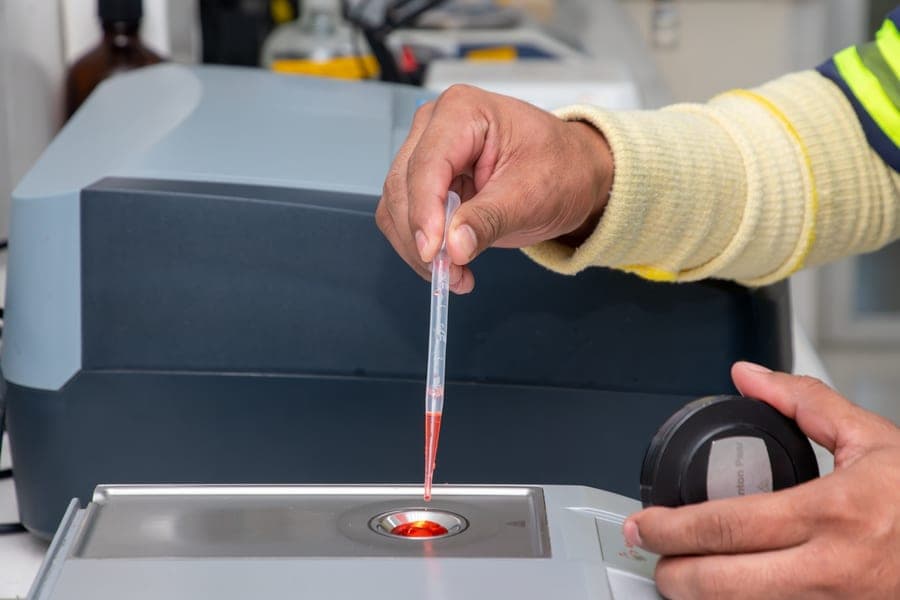
Two or three drops of wort and an automatic temperature compensation scale give a reading in seconds, which makes pre-boil gravity checks practical instead of annoying.
Spec sheet
- Scale
- Brix 0-32, usually with a dual SG scale
- Sample size
- 2-3 drops
- ATC
- Automatic temperature compensation
- Pre-fermentation
- Accurate as read
- Post-fermentation
- Needs an alcohol correction formula
- Calibration
- Zero on distilled water before each session
What it is not good at
Accurate as read only before fermentation. After alcohol is present the reading needs a correction formula, which is the single most common source of wrong ABV figures.
Who it is for
Checking gravity without sacrificing a sample
FAQ
Questions brewers actually ask
What is the formula for ABV in homebrewing?
ABV equals original gravity minus final gravity, multiplied by 131.25. For example an original gravity of 1.055 and a final gravity of 1.012 gives a drop of 0.043, which multiplied by 131.25 is 5.6 percent ABV. That multiplier is accurate to within a couple of tenths for ordinary-strength beer.
Why do ABV calculators give different answers?
Because they use different multipliers. Some use 131.25, some use 132, and some use a cubic polynomial that accounts for the non-linear relationship at higher alcohol levels. On a 5 percent ale the difference is a rounding error; on a 14 percent mead it is substantial. Pick one method and stay consistent.
Can I use a refractometer for final gravity?
Not directly. Ethanol refracts light differently from sugar, so once alcohol is present the refractometer reads high -- often high enough to make a finished fermentation look stalled. Either take final gravity with a hydrometer, or apply a published alcohol correction formula that uses your original Brix as an input.
Do I need to temperature correct a hydrometer reading?
Yes, unless the sample is at the hydrometer's calibration temperature. Warm liquid is less dense so the hydrometer floats lower and reads low, and a sample 30 degrees above calibration can be off by several thousandths of gravity. Either cool the sample or use the correction printed on the hydrometer's insert.
How do I know fermentation has really finished?
Two gravity readings that match, taken two or three days apart. A single low reading tells you the gravity on that day, not that the yeast has stopped. A continuously logging hydrometer makes this obvious because terminal gravity appears as a flat line rather than a data point.
Read next
More on temperature control
Guide
Hydrometer vs Refractometer
Sample size against accuracy, plus the alcohol correction problem explained.
Review
Tilt Hydrometer Review
Continuous gravity logging reviewed -- what it tells you and what it does not.
Guide
Fermentation Temperature Control
Target temperatures, probe placement and the first 48 hours that decide flavor.
Guide
Your First Mead, Step by Step
A one gallon recipe with the staggered nutrient schedule that changes everything.
Guide
Homebrewing for Beginners: Your First Batch
The five stages of a first batch, and the two mistakes that ruin most of them.
Roundup
The Best Glycol Chillers for Homebrewing
Glycol chillers sized for homebrewing, and when a freezer is the better buy.