Comparison
FermZilla vs Corny Keg for Pressure Fermentation
One is a purpose-built pressure fermenter. The other is a keg you may already own. The deciding factor is headspace, not price.
The short answer
A FermZilla All Rounder is the better pressure fermenter: 30 L of volume gives a 5 gallon batch the krausen headspace a 19 L corny keg does not, and you can see the fermentation. Ferment in a corny keg only for 2.5 to 3 gallon batches, where the headspace works and the keg you already own costs nothing.
DisclosureWe earn a commission on qualifying purchases made through links on this page, at no extra cost to you. It does not change what we recommend or how we rank it -- here is how we pick and here is the full disclosure.
FermZilla All Rounder vs a 5 gallon corny keg
| Spec | FermZilla All Rounder 30 L | 5 Gal Ball Lock Corny |
|---|---|---|
| Total volume | 30 L / 7.9 gal | 19 L / 5 gal |
| Comfortable batch | 5 gal with headspace | 2.5-3 gal |
| Material | Clear PET | 304 stainless |
| See the krausen | Yes | No |
| Working pressure | Up to 35 psi with the kit | 55 psi working, 130 psi burst |
| Yeast harvesting | Not without the conical body | No -- flat bottom |
| Opening for cleaning | Wide lid, reach inside | Oval lid only |
| Already in your garage | No | Often yes |
An orange rule marks the better of the two on that row.
The deciding factor
Headspace, and why 19 liters is not enough
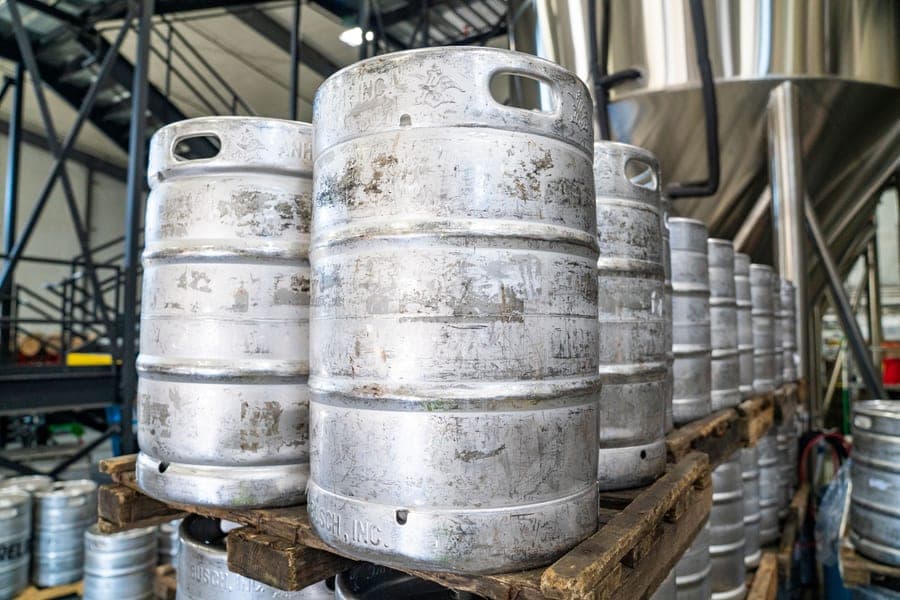
Fermenting in a corny keg looks like the obvious move. You may already own two or three, they are stainless, they hold more pressure than any plastic fermenter sold, and the ball lock posts mean a closed transfer is trivial. The reason it still is not the default answer is a single number: a 5 gallon corny keg holds 19 liters, and a 5 gallon batch of beer is 19 liters.
Krausen needs somewhere to go. In an open fermentation the foam rises, peaks and falls back. In a keg filled to capacity it rises into the headspace that is not there, finds the gas dip tube, and pushes yeast and protein into your spunding valve or PRV. At best you spend a week clearing a blocked valve. At worst the valve stops venting and the vessel holds pressure it was not meant to hold.
The fix is to under-fill: 2.5 to 3 gallons into a 5 gallon keg leaves real headspace and works reliably. That is a legitimate way to brew, and for split batches or experimental beers it is a good one. It is just not a 5 gallon batch. The practical detail of doing it properly is in fermenting in a keg.
The purpose-built answer
30 liters exists for exactly this reason
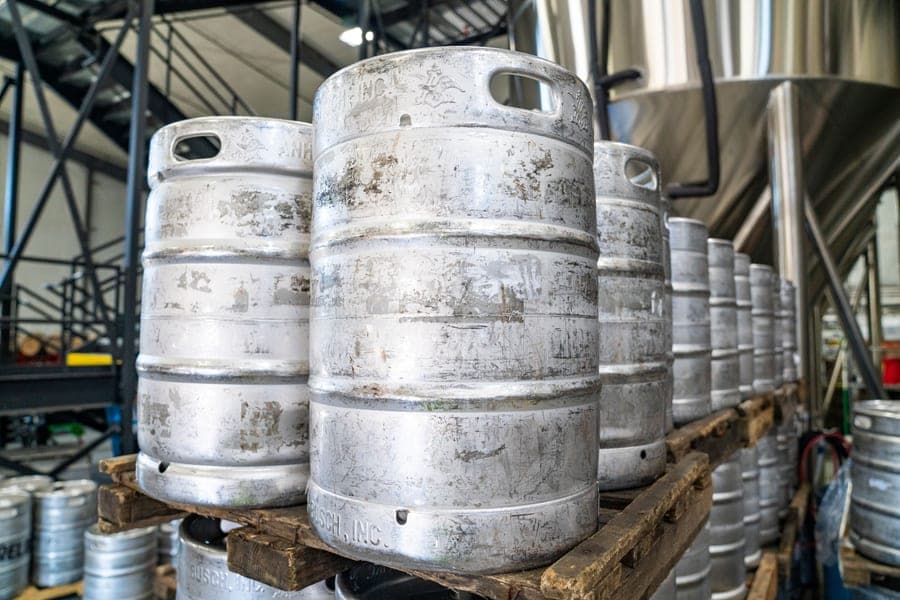
The FermZilla All Rounder is 30 liters, and that is not a coincidence. Thirty liters holds a 19 liter batch with around 11 liters of headspace above it, which is enough for a vigorous krausen on a hefeweizen without anything reaching the lid. The same logic sizes the stainless KegMenter at 30 L rather than at keg volume.
The All Rounder is also transparent, which is a bigger deal than it sounds for pressure fermentation. Under pressure you cannot open the lid to look, and a sealed opaque vessel gives you nothing but a pressure gauge. Being able to see krausen form, peak and drop tells you where fermentation actually is without a sample draw.
Pressure headroom
Where the keg genuinely wins
A corny keg is rated for roughly 130 psi burst and around 55 psi working. The FermZilla pressure kit tops out near 35 psi. In normal pressure fermentation you work somewhere between 10 and 20 psi, so both are comfortable -- but the margin is different, and margin is what you want when a spunding valve sticks.
Stainless also does not care about scratches, UV, or a strong caustic cleaner. PET does. A FermZilla is a consumable on a long timescale: it will serve you for years and then it will be crazed and cloudy and you will replace it. A corny keg bought reconditioned in 2026 will still be a corny keg in 2046.
That durability argument is the one that makes the KegMenter interesting: stainless, keg-style, but sized at 30 L so the headspace problem never arises. You lose visibility and gain decades.
What neither does
No trub cone, either way
- Both have a flat or near-flat bottom. A corny keg is flat. The All Rounder is cylindrical with no cone. Neither lets you dump trub or harvest a clean slurry from underneath.
- A floating dip tube is the workaround. It draws from the top of the liquid rather than the bottom, so you can transfer clear beer off the yeast cake without a cone. It is the single best accessory for either vessel.
- If yeast harvesting is the goal, neither is the answer. You want a true cone with a dump valve. The conical roundup covers that properly, and the FermZilla Tri-Conical is the cheap way in.
Cost, honestly
The keg is only free if you already own it
The argument for keg fermentation is almost always that the keg costs nothing because it is already in the garage. That is true, and it is a good argument. But count the additions: a spunding valve, a floating dip tube, and ideally a second lid you are willing to drill. Those are real purchases, and once they are made the gap to a FermZilla body plus pressure kit is smaller than the headline comparison suggests.
There is also an opportunity cost that nobody mentions. A keg fermenting beer is a keg not serving beer. If you have two kegs and one kegerator, dedicating one to a three-week fermentation halves your draft capacity. Brewers who ferment in kegs long-term tend to end up buying more kegs, which is the expensive version of buying a fermenter.
Our verdict
Which one should you buy?
Full 5 gallon batches
FermZilla All Rounder 30 L
- 30 L gives a 19 L batch real krausen headspace
- Clear body, so you can see where fermentation is
- Ball lock posts for closed transfer into a keg
- Add the pressure kit -- the rating depends on it
Small batches and spare kegs
5 Gallon Ball Lock Corny Keg
- Fill to 2.5-3 gallons and the headspace works
- 55 psi working pressure, far more margin than plastic
- Stainless that outlasts any plastic fermenter
- Add a spunding valve and a floating dip tube
How we compared these
The basis for this
Compared on published manufacturer figures for volume, material, pressure rating and fittings, plus the documented homebrew consensus on krausen headspace requirements for a 5 gallon batch. We have not instrumented krausen height across both vessels and do not claim to. See how we pick.
What we recommend
The products on this page
Best overall
Mid tier
FermZilla All Rounder 30 L
KegLand
30 L of clear PET with ball lock posts, so a 5 gallon batch has real krausen headspace and you can watch the fermentation instead of guessing at it.
Spec sheet
- Capacity
- 30 L / 7.9 gal
- Shape
- Cylindrical (no cone)
- Pressure rating
- Rated for pressure fermentation with the pressure kit
- Material
- Clear PET
- Ports
- Ball lock posts, 4 in tri-clover lid option
- Weight
- Light enough to lift full-handed
What it is not good at
PET scratches and will not last like stainless, and the pressure kit is a separate purchase that the rating depends on.
Who it is for
Full 5 gallon batches under pressure
Cheapest if you own one
Entry tier
5 Gallon Ball Lock Corny Keg
AMCYL / NSI
5 gallons at ~25 inches tall with a 130 psi burst and a 55 psi working rating, which is far more pressure headroom than any plastic fermenter and often already in the garage.
Spec sheet
- Capacity
- 5 gal / 19 L
- Height
- ~25 in (26 in with posts)
- Diameter
- ~8.5 in
- Connection
- Ball lock gas and liquid posts
- Pressure rating
- 130 psi typical, 55 psi working
- Lid
- Oval pry-out lid with a PRV
What it is not good at
19 L total volume leaves almost no krausen space for a 5 gallon batch, you cannot see inside, and a flat bottom means no yeast cone.
Who it is for
2.5 to 3 gallon batches, or a spare keg earning its keep
Best stainless option
Mid tier
KegLand KegMenter Fermenter 30 L
KegLand
A 304 stainless keg-style body in 30 L, so it is a corny keg that was actually designed as a fermenter -- the right volume with the durability of steel.
Spec sheet
- Capacity
- 30 L / 7.9 gal (also 40 L and 58 L)
- Material
- 304 stainless, keg-style body
- Pressure
- Rated for pressure fermentation and transfer
- Shape
- Flat bottom -- no trub cone
- Ports
- Ball lock posts, floating dip tube option
- Opacity
- Opaque -- you cannot see the krausen
What it is not good at
Opaque, so no visual on the krausen, and the flat bottom still gives you no trub cone.
Who it is for
Brewers who want keg-style stainless sized for a full batch
FAQ
Questions brewers actually ask
Can you ferment 5 gallons of beer in a 5 gallon corny keg?
Not safely or cleanly. A 5 gallon corny holds 19 L and a 5 gallon batch is 19 L, so there is no room for krausen. The foam reaches the gas dip tube and pushes yeast into the spunding valve, which blocks it. Fill a corny to 2.5 to 3 gallons instead, or use a 30 L vessel like the FermZilla All Rounder or a KegMenter for a full batch.
Is a FermZilla strong enough for pressure fermentation?
Yes, with the pressure kit fitted. The All Rounder is rated up to around 35 psi that way, and normal pressure fermentation runs between 10 and 20 psi. Without the pressure kit the body is not a pressure vessel and should not be pressurized at all.
Do I need a spunding valve to ferment in a keg?
Yes. A spunding valve is an adjustable pressure relief valve that lets the fermentation hold a set pressure and vent the excess. Without one you either vent everything, which defeats the purpose, or you let pressure climb uncontrolled. It is the first accessory to buy for keg fermentation.
Can I harvest yeast from a FermZilla All Rounder or a corny keg?
Not cleanly from either. The All Rounder is cylindrical and a corny keg is flat-bottomed, so neither concentrates yeast into a cone you can dump. If harvesting matters, look at a true conical with a bottom dump valve, such as the FermZilla Tri-Conical at the cheaper end or a welded stainless conical higher up.
Which lasts longer, a FermZilla or a corny keg?
The keg, by a wide margin. PET crazes, scratches and clouds over years of cleaning and UV exposure, so a plastic fermenter is a long-term consumable. A reconditioned stainless corny keg will outlast several plastic fermenters. The stainless KegMenter is the way to get keg durability at a 30 L fermenting volume.
Read next
More on fermenters
Guide
Fermenting in a Keg
The headspace maths, the floating dip tube, and when a real pressure fermenter wins.
Roundup
The Best Pressure Fermenters
Genuinely rated pressure vessels, and what the working kit really costs.
Guide
What Size Conical Fermenter Do You Need?
Why a 5 gallon batch needs a 7 gallon conical, and how to check it fits your chamber.
Roundup
The Best Conical Fermenters
Stainless, plastic and pressure-capable conicals compared, with chamber-fit warnings.