Guide
What Size Glycol Chiller Do You Need?
Chiller sizing is not about the beer you have. It is about the beer you will have, and how fast you want it cold.
The short answer
A quarter-horsepower glycol chiller handles one 5 to 10 gallon jacketed or coiled fermenter comfortably, including crash cooling. Step up to a half horsepower or larger if you will run two vessels, ferment half-barrel batches, or crash cool every batch -- capacity is the one spec people under-buy and then replace.
DisclosureWe earn a commission on qualifying purchases made through links on this page, at no extra cost to you. It does not change what we recommend or how we rank it -- here is how we pick and here is the full disclosure.
What drives the size you need
| Factor | Pushes size up when | Notes |
|---|---|---|
| Batch volume | Half-barrel or larger | More beer, more heat to remove |
| Vessel count | Two or more on one loop | Loads add, they do not share |
| Crash cooling | Every batch, in hours | The single biggest peak load |
| Ambient temperature | Garage, uninsulated, summer | The chiller fights the room too |
| Jacket vs coil | Coil is slightly less efficient | Both work; jacket responds faster |
| Line length | Long runs, poorly insulated | Heat gain in the lines is real |
| Reservoir volume | Larger buffers peak demand | Bigger reservoir, steadier setpoint |
Start here
What the chiller is actually fighting
A glycol chiller is sized against heat, not volume, and the heat comes from three places. The beer itself, which during active fermentation generates real warmth as the yeast works. The room, which leaks heat into the vessel and into every foot of line. And whatever you ask the chiller to do in a hurry, which is almost always the crash cool.
Of those three, the crash cool is what decides whether a chiller feels right or feels undersized. Holding a vessel at 66°F is a modest continuous load that almost any unit manages. Pulling that same vessel from 66°F to 34°F in a few hours is a large peak load, and a chiller sized only for the steady state will take a day and a half to do it -- how glycol chillers work explains the mechanism.
The practical sizes
Three brackets that cover homebrewing
- One 5 to 10 gallon vessel: a quarter-horsepower class unit. It holds a setpoint easily and crash cools in hours rather than a day. This is where most homebrew glycol setups start and many of them stay.
- Two vessels, or a half barrel: half horsepower or larger. Two fermenters is not one and a half fermenters -- the loads add, and both of them can be in active fermentation at once, which is exactly when each wants the most cooling.
- Three or more vessels, or frequent hard crashes: larger again, and at that point reservoir volume and pump capacity start to matter as much as compressor size.
Reservoir volume
The spec that makes a small unit feel big
The reservoir is a thermal battery. A chiller with a large reservoir of cold glycol can meet a sudden demand -- the start of a crash cool -- out of stored cold rather than out of compressor capacity, and recover afterwards while nothing is asking for anything.
That is why reservoir size turns up in chiller specs and why two units with the same compressor can behave quite differently. If your usage is spiky -- hold steady for two weeks, then crash hard -- reservoir volume buys you more useful performance per dollar than compressor size does.
It also means a modest chiller plus a well-insulated reservoir and short, insulated lines can outperform a larger one plumbed carelessly across a warm garage.
The glycol itself
Ratio, and why not pure glycol
Homebrew loops run propylene glycol -- the food-safe one -- mixed with water, typically in the region of 25 to 30 percent glycol. The glycol is there to stop the mix freezing in the chiller and to inhibit growth in the reservoir, and that is all.
More is not better. Water carries heat far better than glycol does, so a richer mix actively reduces your cooling capacity while adding viscosity the pump has to push. Brewers who fill a reservoir with neat glycol and then complain the chiller is weak have usually built that problem themselves.
Follow the manufacturer’s stated ratio for the unit you buy, and top up with the same mix rather than with plain water -- DIY glycol chiller goes through the loop build.
Capacity vs control
Two vessels, two setpoints
One thing sizing does not give you: independent temperatures. A chiller with capacity for three vessels still supplies one temperature of glycol to a manifold. Independent setpoints come from a solenoid valve and a temperature controller on each vessel, which opens that vessel’s valve only when its beer needs cooling.
So the shopping list for two vessels is: enough compressor capacity for both loads, a manifold, two solenoids, two controllers and two thermowells. Price all of it at once -- glycol chiller installation has the full parts chain, and best temperature controllers covers the control end.
Before you size anything
Check whether you need glycol at all
Glycol exists in a homebrewery for three reasons: the vessel is too tall for any chamber you can fit, you need several setpoints at once, or you crash cool constantly and want it in hours. If none of those is true, the correct answer to “what size glycol chiller” is “a chest freezer and a dual-stage controller”.
That is not a cop-out; it is the cheapest cooling per degree available to a homebrewer, and it doubles as a kegerator later -- glycol chiller vs fermentation fridge makes the comparison properly, and best glycol chillers covers the units worth buying once you have decided.
What we recommend
The products on this page
Prosumer tier
Penguin Chillers Glycol Chiller
Penguin Chillers
Sold in 1/4 HP and larger, which is the decision this page is about. The larger units are the ones with headroom for a second vessel, and that headroom is the difference between adding a fermenter and replacing a chiller.
Spec sheet
- Capacity
- 1/4 HP and larger units sold
- Medium
- Propylene glycol / water mix
- Pump
- Submersible pump in the reservoir
- Control
- Digital setpoint on the chiller
- Vessels served
- Typically 1-2 jacketed or coiled fermenters
- Ambient
- Needs airflow and a warm-air escape path
What it is not good at
Lines, glycol, manifold, solenoids and controllers are all separate purchases.
Who it is for
Sizing up front for the setup you will have in two years
Prosumer tier
KegLand IceMaster Glycol Chiller
KegLand
Integrated reservoir, sized around compact single-vessel setups and the KegLand fermenters built to pair with it. The right size when one vessel is genuinely the plan.
Spec sheet
- Loop
- Recirculating glycol
- Reservoir
- Integrated
- Pairing
- FermZilla / KegMenter cooling
What it is not good at
Not the unit for a half-barrel jacketed tank or for two vessels at once.
Who it is for
A single FermZilla or KegMenter vessel
Prosumer tier
Spike Brewing CF5 Conical Fermenter
Spike Brewing
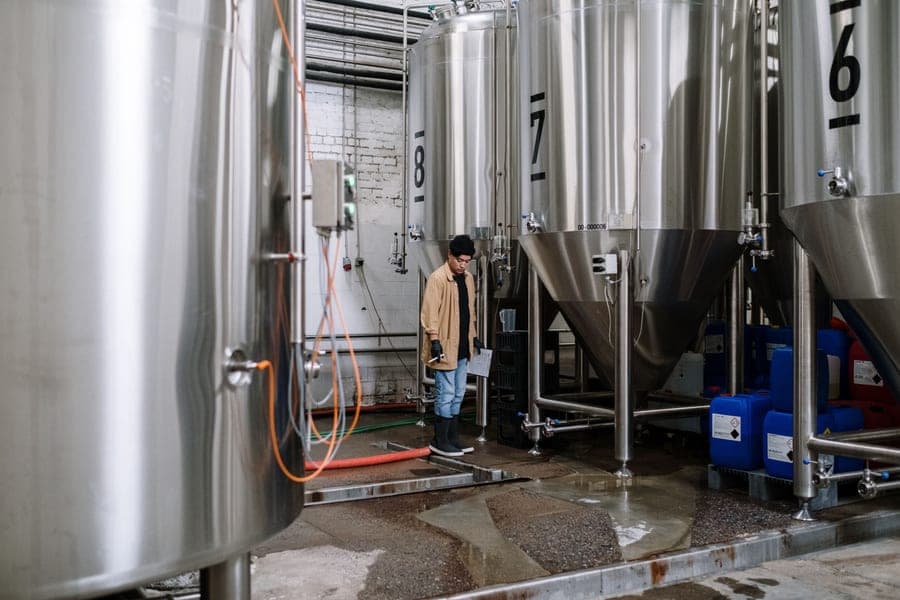
The vessel sets the load. An 8 gallon welded conical with the factory cooling coil is the most common thing a homebrew chiller is asked to cool, and it sits comfortably inside a quarter-horsepower budget.
Spec sheet
- Capacity
- 8 gal / 30 L (5 gal batch)
- Material
- Welded 304 stainless, no crevices
- Pressure
- Rated for pressure transfer and spunding
- Ports
- Tri-clamp throughout
- Cone
- Full cone with a dump valve
- Options
- Cooling coil, thermowell, CIP arm
What it is not good at
The coil or jacket must be ordered with the vessel; retrofitting is not practical.
Who it is for
Working out what your actual heat load is
Mid tier
Chest Freezer Fermentation Chamber (with controller)
Chest freezer + Inkbird
The sizing question that comes before all the others. If your vessel fits in a chest freezer, a freezer and a controller hold the same setpoint for a fraction of the purchase and running cost.
Spec sheet
- Approach
- Chest freezer with an external dual-stage controller
- Capacity
- 5-7 cu ft fits one or two 5 gal fermenters
- Range
- Lager temps through a 32 F cold crash
- Heat side
- Pair with a wrap heater for winter ale temps
- Energy
- Cheapest running cost per degree of any method
- Limitation
- Vessel height is the binding constraint
What it is not good at
One temperature for everything inside, and vessel height is a hard wall.
Who it is for
Anyone whose fermenter has not yet outgrown a chamber
FAQ
Questions brewers actually ask
What size glycol chiller do I need for homebrewing?
A quarter-horsepower class unit handles one 5 to 10 gallon jacketed or coiled fermenter, including crash cooling, which covers most homebrew setups. Move to half horsepower or larger for two vessels, half-barrel batches, or if you crash cool hard on every batch.
Can one glycol chiller cool two fermenters?
Yes, if it has capacity for both loads and you add the control hardware. Two fermenters is not one and a half -- the loads add, and both can be in active fermentation at once. You also need a manifold plus a solenoid valve and controller per vessel for independent setpoints.
How much glycol should I mix with water?
Typically 25 to 30 percent propylene glycol, or whatever ratio the chiller manufacturer specifies. The glycol stops the mix freezing and inhibits growth; it does not improve cooling. Water carries heat better than glycol, so a richer mix actually reduces capacity and makes the pump work harder.
Does reservoir size matter on a glycol chiller?
Yes, more than people expect. A larger reservoir of cold glycol is a thermal battery that meets sudden demand -- the start of a crash cool -- from stored cold rather than compressor capacity, then recovers afterwards. Two units with the same compressor can behave very differently because of it.
Why is my glycol chiller struggling in summer?
Because it is fighting the room as well as the beer. A chiller rejects heat into the space it stands in, so in a closed garage that heat accumulates and the unit works against its own exhaust. Give the condenser clearance, provide a path for warm air to leave, and insulate the lines.
Do I need glycol at all for homebrewing?
Only for three reasons: your vessel is too tall for any chamber you can fit, you need several setpoints at once, or you crash cool constantly and want it done in hours. If none applies, a chest freezer and a dual-stage controller hold the same setpoint far more cheaply.
Read next
More on temperature control
Roundup
The Best Glycol Chillers for Homebrewing
Glycol chillers sized for homebrewing, and when a freezer is the better buy.
Guide
How Glycol Chillers Work
The loop explained, why propylene glycol, and the three installation mistakes.
Guide
Glycol Chiller Installation, Step by Step
Siting, plumbing, glycol mixing and per-vessel control for a homebrew glycol loop.
Comparison
Penguin vs IceMaster Glycol Chiller
Two homebrew glycol chillers compared on capacity, vessel pairing and what else you have to buy.
Comparison
Glycol Chiller vs Fermentation Fridge
Air cooling against direct wall cooling, and when the upgrade is justified.
Roundup
The Best Wort Chillers
Immersion, counterflow and plate chillers compared on the trades that matter.