Comparison
Penguin vs IceMaster Glycol Chiller
One is a chiller you plumb into whatever you own. The other is a chiller built around a specific family of fermenters.
The short answer
Choose the Penguin Chillers unit if you run a jacketed or coiled stainless conical and want capacity to add a second vessel later. Choose the KegLand IceMaster if your fermenters are FermZilla or KegMenter vessels, because it is sized and fitted for that ecosystem and costs less to get running.

DisclosureWe earn a commission on qualifying purchases made through links on this page, at no extra cost to you. It does not change what we recommend or how we rank it -- here is how we pick and here is the full disclosure.
Two homebrew glycol units, side by side
| Penguin Chillers | KegLand IceMaster | |
|---|---|---|
| Design intent | General-purpose brewery glycol | Built around KegLand vessels |
| Reservoir | Reservoir with submersible pump | Integrated |
| Capacity | 1/4 HP and larger units sold | Sized for compact setups |
| Vessels served | Typically 1-2 jacketed or coiled | Pairs with FermZilla / KegMenter |
| Fitting match out of the box | Generic -- you plumb it | Matched to the ecosystem |
| Half-barrel unitank duty | Yes, with the right capacity | No |
| Extra hardware to buy | Lines, glycol, manifold, solenoids | Fewer adapters needed |
| Room for a second vessel | Yes on the larger units | Limited |
| Needs airflow and an exhaust path | Yes | Yes |
| Cost to get running | Higher | Lower |
An orange rule marks the better of the two on that row.
The real question
What are you cooling?
Glycol chillers are not graded like kettles, where bigger is simply better. A chiller is matched to a heat load, and the heat load is set by your vessel: how much beer, how much surface area the jacket or coil offers, and how cold you want to pull it. Pick the chiller before the vessel and you will guess wrong in one direction or the other.
The Penguin unit is a general-purpose brewery chiller. It arrives as a refrigeration unit, a reservoir and a pump, and it expects you to plumb it to something -- a jacketed unitank, a conical with a factory cooling coil, two vessels on a manifold. That generality is the point, and it is why it is the one brewers with a welded conical end up buying.
The IceMaster comes from the other direction. It is designed inside an ecosystem of KegLand fermenters that already have a cooling-coil path, so the connections match and the sizing assumes that kind of vessel. If your fermenters are a FermZilla or a KegMenter, that matching saves you a parts order and an evening.
Capacity, honestly
One vessel now, two later?
The single most common glycol regret is buying a chiller that exactly covers today’s one fermenter. Add a second vessel eighteen months later and the unit runs continuously and still loses ground during active fermentation, when a 5 gallon batch throws off real heat.
Penguin sells 1/4 HP and larger, and the larger units are the ones with headroom for a second vessel. That headroom is not free -- it costs money now and a little more electricity forever -- but it is the difference between adding a fermenter and replacing a chiller.
What is not in the box
The parts order neither unit includes
Both chillers need the same supporting cast, and the bill surprises people. You need propylene glycol and water in the right ratio, insulated lines in a length that reaches without a long warm run, a manifold if you are feeding more than one vessel, a solenoid and controller per vessel if you want independent temperatures, and a thermowell in the vessel so the controller reads beer rather than glycol.
The IceMaster needs less of this because the ecosystem it serves already provides the connection path. The Penguin needs more of it because it assumes nothing about your vessel. That is the whole trade in one sentence, and it is worth pricing both ways before you commit -- how glycol chillers work explains what each part is doing.
Where both units sit
Airflow, noise and a warm room
A glycol chiller is a refrigeration unit, which means it moves heat out of the glycol and into the room it stands in. In a closed garage in August that heat accumulates and the chiller works harder against its own exhaust. Both units want clearance on the condenser side and a path for warm air to leave.
They are also not quiet. A chiller cycling in a basement under a bedroom is a real consideration that no spec sheet mentions. Brewers who have lived with both tend to put the chiller where the fermenters are and insulate the lines generously rather than siting the unit for convenience.
And before either one: measure. If your fermenter fits in a chest freezer, a freezer plus a controller holds the same setpoint for far less money -- best glycol chillers and a DIY glycol build both start from the same honesty.
Our verdict
Which one should you buy?
Buy the Penguin if
Penguin Chillers Glycol Chiller
- You run a jacketed or coiled stainless conical
- You expect to add a second vessel
- Your vessel is half-barrel scale
- You are comfortable plumbing a loop yourself
Buy the IceMaster if
KegLand IceMaster Glycol Chiller
- Your fermenters are FermZilla or KegMenter vessels
- You want the shortest path from box to cold beer
- One vessel is the plan for now
- Lower cost to get running matters more than headroom
What we recommend
The products on this page
Best for stainless conicals
Prosumer tier
Penguin Chillers Glycol Chiller
Penguin Chillers
A 1/4 HP and larger refrigeration unit with a reservoir and submersible pump, plumbed to whatever vessel you own. Capacity to run one or two fermenters is the reason brewers with a welded conical land here.
Spec sheet
- Capacity
- 1/4 HP and larger units sold
- Medium
- Propylene glycol / water mix
- Pump
- Submersible pump in the reservoir
- Control
- Digital setpoint on the chiller
- Vessels served
- Typically 1-2 jacketed or coiled fermenters
- Ambient
- Needs airflow and a warm-air escape path
What it is not good at
You supply the insulated lines, the glycol, the manifold and usually the per-vessel solenoid and controller. The chiller is the start of the bill, not the end.
Who it is for
Jacketed or coiled welded conicals, and setups that will grow

Best for FermZilla and KegMenter setups
Prosumer tier
KegLand IceMaster Glycol Chiller
KegLand
Integrated reservoir and a product family designed to connect to it, so the path from box to cold beer is short and the fittings match without adapters.
Spec sheet
- Loop
- Recirculating glycol
- Reservoir
- Integrated
- Pairing
- FermZilla / KegMenter cooling
What it is not good at
Sized around that ecosystem. If you are cooling a half-barrel jacketed unitank, this is not the unit.
Who it is for
KegLand vessels already fitted for a cooling coil
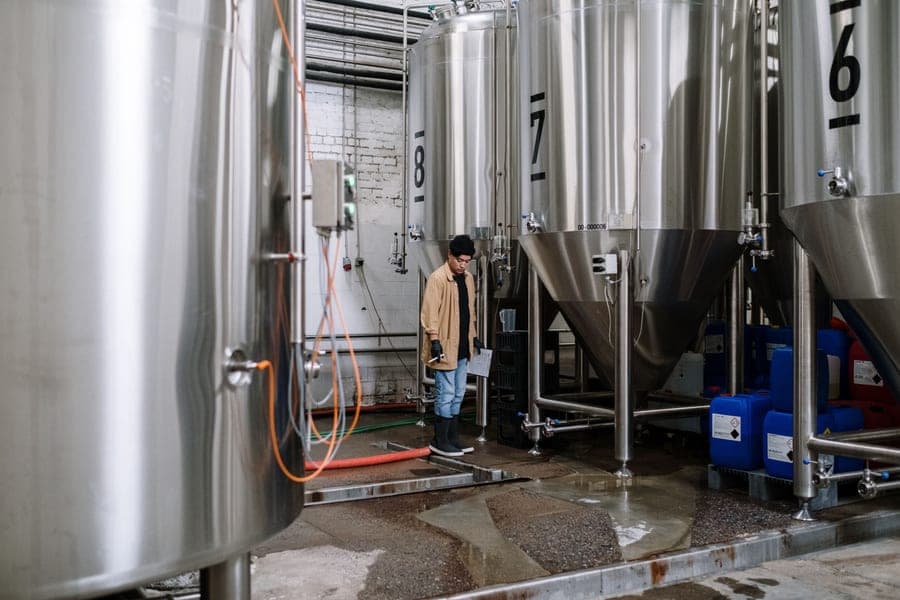
The vessel that makes glycol worth it
Prosumer tier
Spike Brewing CF5 Conical Fermenter
Spike Brewing
A welded conical with the cooling-coil option is the usual reason a homebrewer needs glycol at all: it is taller than any chamber that fits in a garage.
Spec sheet
- Capacity
- 8 gal / 30 L (5 gal batch)
- Material
- Welded 304 stainless, no crevices
- Pressure
- Rated for pressure transfer and spunding
- Ports
- Tri-clamp throughout
- Cone
- Full cone with a dump valve
- Options
- Cooling coil, thermowell, CIP arm
What it is not good at
The coil or jacket is an option you have to order, and retrofitting it later is not practical.
Who it is for
Brewers upgrading past the height limit of a chest freezer
The cheaper answer, if it fits
Mid tier
Chest Freezer Fermentation Chamber (with controller)
Chest freezer + Inkbird
Before either chiller, check the height. A freezer plus a dual-stage controller holds the same setpoint for a fraction of the purchase and running cost.
Spec sheet
- Approach
- Chest freezer with an external dual-stage controller
- Capacity
- 5-7 cu ft fits one or two 5 gal fermenters
- Range
- Lager temps through a 32 F cold crash
- Heat side
- Pair with a wrap heater for winter ale temps
- Energy
- Cheapest running cost per degree of any method
- Limitation
- Vessel height is the binding constraint
What it is not good at
One temperature for everything inside it, and vessel height is a hard wall.
Who it is for
Anyone whose fermenter still fits in a chest freezer
FAQ
Questions brewers actually ask
Which glycol chiller is better for homebrewing?
Neither is better in the abstract, because a chiller is matched to a vessel. The Penguin unit is general-purpose and plumbs to any jacketed or coiled conical, with capacity options that leave room for a second fermenter. The KegLand IceMaster is built around FermZilla and KegMenter vessels and gets running faster and cheaper inside that ecosystem.
What size glycol chiller do I need for one fermenter?
For a single 5 gallon batch in a jacketed or coiled conical, a quarter-horsepower class unit is the usual starting point. The load rises with batch volume, with how fast you want to crash cool, and with how warm the room is. Buy for the vessel you expect to own in two years, not just the one on the stand today.
Do I need a jacketed fermenter to use a glycol chiller?
No. A stainless cooling coil dropped into a regular conical, fed from the same glycol loop, cools the beer through the same mechanism for a fraction of a unitank's price. Several conicals offer the coil as a factory option, and ordering it with the vessel is far easier than retrofitting later.
What else do I have to buy besides the chiller?
Propylene glycol and water, insulated lines long enough to reach without a warm run, a manifold if more than one vessel is fed, a solenoid valve and controller per vessel for independent temperatures, and a thermowell so the controller reads beer rather than glycol. The chiller is the start of the bill rather than the end of it.
Can one glycol chiller run two fermenters at different temperatures?
Yes, if it has the capacity and you add the control hardware. The chiller supplies cold glycol to a manifold; each vessel then gets its own solenoid valve and temperature controller, which opens the valve only when that beer needs cooling. Capacity alone does not give you independence -- the per-vessel valves do.
Is a glycol chiller noisy?
Yes, and no spec sheet mentions it. These are refrigeration units that cycle on and off, and one running in a basement under a bedroom is something you will notice. Put the chiller where the fermenters are, give the condenser clearance, and insulate the lines well rather than siting the unit somewhere quiet and running long warm runs.
Read next
More on temperature control
Roundup
The Best Glycol Chillers for Homebrewing
Glycol chillers sized for homebrewing, and when a freezer is the better buy.
Guide
How Glycol Chillers Work
The loop explained, why propylene glycol, and the three installation mistakes.
Guide
Glycol Chiller Installation, Step by Step
Siting, plumbing, glycol mixing and per-vessel control for a homebrew glycol loop.
Guide
DIY Glycol Chiller: How to Build One, and Whether You Should
The freezer-and-reservoir build, the parts list, and the honest case for buying instead.
Comparison
Glycol Chiller vs Fermentation Fridge
Air cooling against direct wall cooling, and when the upgrade is justified.
Roundup
The Best Wort Chillers
Immersion, counterflow and plate chillers compared on the trades that matter.