Guide
How to Use a Wort Chiller Properly
The chiller is rarely the bottleneck. Stirring, water flow direction and whether you own a pump decide how fast a batch actually drops.
The short answer
Put an immersion chiller in the kettle for the last 15 minutes of the boil so it sanitizes itself, then run cold water through it while gently stirring the wort -- stirring roughly halves the chill time. A counterflow or plate chiller needs a pump and a hop filter, and should be run slowly enough to hit pitching temperature in one pass.
DisclosureWe earn a commission on qualifying purchases made through links on this page, at no extra cost to you. It does not change what we recommend or how we rank it -- here is how we pick and here is the full disclosure.
How to run each chiller type
| Type | Sanitizing | Needs a pump | Hop filter needed |
|---|---|---|---|
| Immersion coil | Boil it in the wort 15 min | No | No |
| Counterflow | Recirculate boiling wort or caustic | Yes | Recommended |
| Plate chiller | Recirculate boiling wort or caustic | Yes | Essential |
Why it matters
The chill is a contamination window
From flameout until the yeast is pitched, the wort is the most hospitable thing in your kitchen for every organism that is not the one you want. It is full of sugar, it is no longer hot enough to sterilise itself, and nothing is competing for it. Speed matters because the window is open.
A fast chill also drops cold break -- the proteins and polyphenols that precipitate out as wort cools -- more completely, which gives clearer beer and reduces chill haze. And for hop-forward beer, getting from flameout to below about 170 F quickly is what stops you continuing to isomerize hop compounds you did not intend to.
Twenty to thirty minutes for a 5 gallon batch is a good target with an immersion coil. If yours is taking an hour, the problem is almost certainly in this guide rather than in the chiller.
Immersion
Sanitize it in the boil, then stir
- Drop the coil into the kettle with 15 minutes of boil left. Fifteen minutes in boiling wort sanitizes it completely, which means no chemical sanitizer step and nothing to rinse. It also preheats the coil, which costs you nothing.
- Connect cold water in at the bottom, out at the top. Counter-current beats co-current: the coldest water should meet the coolest wort. In practice the difference is modest for a coil, but it is free.
- Stir, gently and continuously. This is the step that matters most. Without stirring, a thin layer of chilled wort hugs the coil and insulates it from the rest of the kettle. Gentle movement brings warm wort to the metal and can roughly halve the chill time.
- Whirlpool for the last few minutes. A gentle rotation at the end piles trub in a cone at the center of the kettle, so you can draw clear wort off the side. Free clarity for no equipment.
Avoid splashing while stirring. Hot wort above about 80 F takes up oxygen in a way that produces stale, papery flavours later -- hot-side aeration is debated in its severity but there is no upside to it.
Counterflow and plate
The pump is not optional
Both counterflow and plate chillers work by moving wort through them, so something has to do the moving. Gravity can work for a counterflow chiller if the kettle is high enough and the fermenter low enough, but the flow rate is slow and uncontrolled. In practice both types assume a pump.
The important technique is flow rate. These chillers chill in a single pass, so the wort arrives at the fermenter at whatever temperature the exchange achieved. Run it too fast and the wort comes out warm, which means you either recirculate back to the kettle or pitch warm. Throttle the wort side -- never the water side -- until the output hits pitching temperature, then let it run.
- Sanitize by recirculating. Pump boiling wort through the chiller and back to the kettle for ten to fifteen minutes before you start the real transfer. That sanitizes every internal surface including the hoses.
- Filter hops upstream. Essential on a plate chiller, strongly recommended on a counterflow. A hop spider or a bag keeps pellet debris out of a channel you cannot see into.
- Backflush after every use. Run water backwards through the chiller to dislodge whatever settled in it, then recirculate hot alkaline cleaner. A plate chiller that is never backflushed becomes a sealed box of old protein.
Troubleshooting
Why your chill is slow
- You are not stirring. The most common cause by a wide margin on immersion chillers, and the easiest to fix.
- Groundwater is warm. In summer, mains water can be well above pitching temperature in some regions. No chiller can cool wort below its coolant temperature, so an ice-water final stage is the only answer.
- The batch is bigger than the coil. Coil surface area does not scale with batch volume, so a 25 ft coil that handles 5 gallons in 25 minutes takes roughly twice as long on 10 gallons. A 50 ft coil, or a counterflow chiller, is the fix.
- The chiller is fouled. On plate and counterflow chillers, partial blockage reduces flow and exchange at the same time. If performance has degraded gradually, clean it properly before concluding anything else.
Where this came from
The basis for this
Chiller specifications, clog risk and cleaning requirements are the manufacturers' published figures for the models named above. The technique -- boil-sanitizing an immersion coil, stirring, counter-current flow, recirculated sanitizing for closed chillers -- reflects long-standing documented homebrew practice rather than our own instrumented chill trials. See how we pick.
What we recommend
The products on this page
Easiest to use correctly
Entry tier
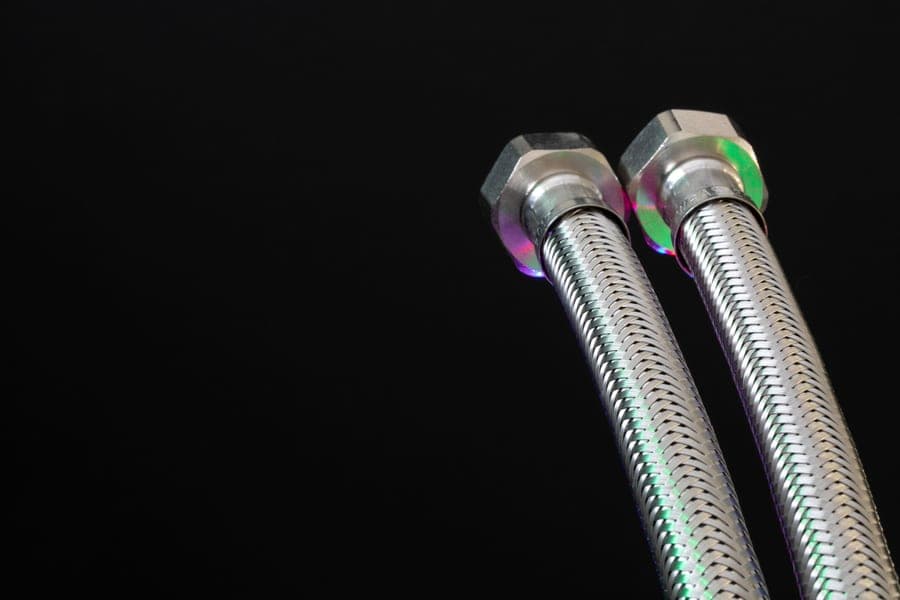
Stainless Immersion Wort Chiller 25 ft
NY Brew Supply / Coldbreak
A 25 ft half-inch coil with water inside and wort outside, so it cannot clog, needs no pump, and sanitizes itself in the last fifteen minutes of the boil.
Spec sheet
- Length
- 25 ft (50 ft available)
- Tubing
- 1/2 in OD
- Material
- 304 stainless or copper
- Batch size
- 5-10 gal
- Cleaning
- Exterior only -- easiest of the three types
- Clog risk
- None (water inside, wort outside)
What it is not good at
Uses a lot of tap water, and chill time roughly doubles at 10 gallon batch sizes because coil surface area does not scale with volume.
Who it is for
5 gallon batches, and anyone without a pump
Best with a pump
Mid tier
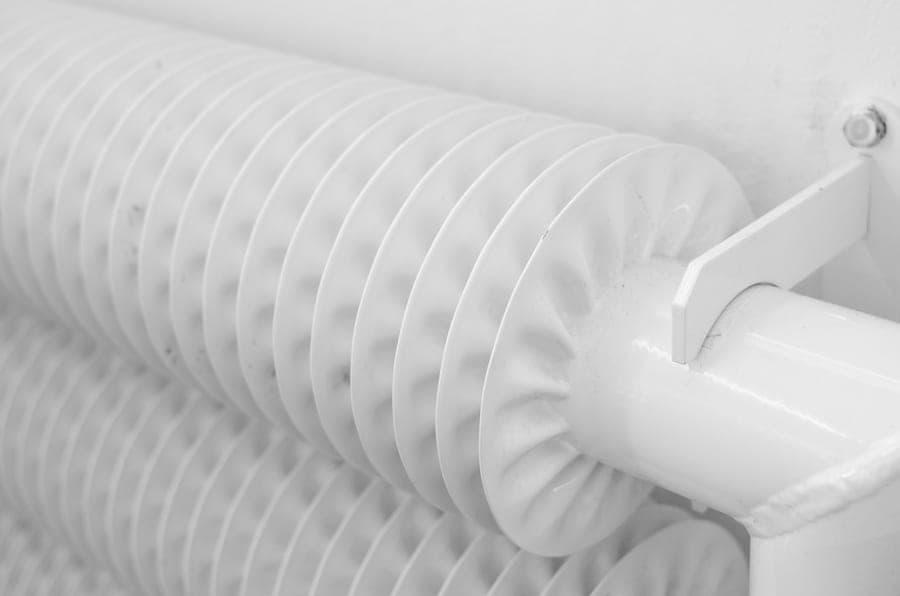
Counterflow Wort Chiller
Coldbreak / Blichmann
Tube-in-tube counter-current flow chills in a single pass as you transfer, so the time depends on flow rate rather than batch volume, and water use is lower than immersion for the same drop.
Spec sheet
- Type
- Tube-in-tube counterflow
- Flow
- Single pass, kettle to fermenter
- Water use
- Lower than immersion for the same drop
- Clog risk
- Moderate -- wider channel than a plate chiller
- Cleaning
- Recirculate hot caustic, then rinse and sanitize
- Size
- Bulkier than a plate chiller, tidier than a coil
What it is not good at
Needs a pump, and cleaning means recirculating hot caustic through a channel you cannot inspect.
Who it is for
10 gallon batches transferred under power
Fastest, least forgiving
Mid tier
Brazed Plate Wort Chiller (20-30 plate)
Duda / Blichmann
A 20 to 30 plate brazed heat exchanger is the most efficient of the three per gallon of coolant and much the smallest to store.
Spec sheet
- Type
- Brazed plate heat exchanger, 20-30 plates
- Flow
- Counter-current, single pass
- Footprint
- Smallest of the three chiller types
- Speed
- Fastest per gallon of coolant
- Clog risk
- High -- requires a hop filter upstream
- Cleaning
- Backflush and recirculate; cannot be inspected
What it is not good at
High clog risk -- it will block solid on a heavily hopped beer without a filter upstream, and you cannot see inside to confirm cleaning worked.
Who it is for
Brewers who filter hops properly
FAQ
Questions brewers actually ask
When should I put my immersion chiller in the kettle?
With about 15 minutes of boil remaining. Fifteen minutes submerged in boiling wort sanitizes the coil completely, so there is no chemical sanitizing step and nothing to rinse off. It also preheats the coil, which costs nothing and avoids a thermal shock.
Does stirring really speed up chilling?
Substantially -- it can roughly halve the time. Without movement, a layer of already-chilled wort sits against the coil and insulates it from the rest of the kettle. Gentle continuous stirring keeps bringing warm wort to the metal. Stir gently though, because splashing hot wort introduces oxygen you do not want.
Do I need a pump for a plate chiller?
Effectively yes. Plate and counterflow chillers work by moving wort through them in a single pass, and while gravity can drive a counterflow chiller if the height difference is large, the flow is slow and uncontrolled. A pump also lets you recirculate boiling wort through the chiller to sanitize it.
Why can't my chiller get the wort cold enough?
No chiller can cool wort below the temperature of its coolant. If your mains water is 75 F in summer, that is your floor. The fix is a two-stage chill: mains water down to about 100 F, then switch to a submersible pump in a cooler of ice water for the final drop to pitching temperature.
How do I clean a counterflow or plate chiller?
Backflush with water immediately after use to dislodge debris, then recirculate a hot alkaline brewery wash through it and rinse thoroughly. You cannot inspect the inside, so the discipline has to substitute for the inspection. Filtering hops upstream with a spider or a bag is what keeps the cleaning manageable.
Read next
More on temperature control
Roundup
The Best Wort Chillers
Immersion, counterflow and plate chillers compared on the trades that matter.
Comparison
Immersion vs Plate vs Counterflow Chiller
Three chiller types compared on speed, clog risk and cleaning confidence.
Guide
What Size Brew Kettle Do You Need?
The 1.5x rule for kettle sizing, and why 8 gallons is the size people regret buying.
Guide
How to Clean a Brew Kettle
Alkaline for protein, acid for scale, and why the valve must come apart.

Roundup
The Best Glycol Chillers for Homebrewing
Glycol chillers sized for homebrewing, and when a freezer is the better buy.