Guide
What Size Brew Kettle Do You Need?
A 5 gallon batch does not fit in a 5 gallon kettle, or a 7 gallon one. The number you want is roughly 1.5 times your finished volume.
The short answer
Buy a 10 gallon kettle for 5 gallon batches and a 15 or 20 gallon kettle for 10 gallon batches -- roughly 1.5 to 2 times the finished volume. A 5 gallon batch starts as 6.5 to 7 gallons of pre-boil wort and needs several inches of boilover headroom above that, which is why 8 gallon kettles feel permanently full.
DisclosureWe earn a commission on qualifying purchases made through links on this page, at no extra cost to you. It does not change what we recommend or how we rank it -- here is how we pick and here is the full disclosure.
Kettle size by batch volume
| Finished batch | Pre-boil volume | Minimum kettle | Comfortable kettle |
|---|---|---|---|
| 2.5 gal | 3.5 gal | 5 gal | 6-8 gal |
| 5 gal | 6.5-7 gal | 8 gal | 10 gal |
| 6 gal | 7.5-8 gal | 10 gal | 10-15 gal |
| 10 gal | 12.5-13 gal | 15 gal | 15-20 gal |
The rule
One and a half times your finished volume
The short version: multiply your finished batch volume by about 1.5 and buy the next kettle size up from the answer. For a 5 gallon batch that is 7.5 gallons, so you buy a 10 gallon kettle. For a 10 gallon batch it is 15 gallons, so you buy a 15 and look longingly at a 20.
That multiplier looks generous until you break it down. A 5 gallon finished batch is not 5 gallons in the kettle. You start with 6.5 to 7 gallons of pre-boil wort, because a 60 minute boil evaporates somewhere between 1 and 1.5 gallons and you lose more to trub and to whatever stays behind in the kettle and the chiller. Then you need physical space above the liquid so that hot break foam does not go over the side.
That headroom is the part people underestimate. A rolling boil in a kettle filled to within two inches of the rim will boil over, usually at the exact moment the hot break forms in the first ten minutes. Several inches of freeboard is not luxury, it is the difference between brewing and cleaning a stovetop.
The regret size
Why 8 gallons disappoints people
An 8 gallon kettle is the single most commonly regretted purchase in this category, and it is worth understanding why, because on paper it looks like exactly the right size for a 5 gallon batch.
Seven gallons of pre-boil wort in an 8 gallon kettle leaves about an inch of freeboard. It works, in the sense that a careful brewer who watches the first fifteen minutes and keeps a spray bottle to hand will get through it. But it works at the edge, every single time, and it takes any ambition off the table: no 6 gallon batches, no high-gravity beer needing a longer boil, no full-volume no-sparge mash.
A 10 gallon kettle costs modestly more and removes all of that. It is the size that brews a 5 gallon batch comfortably and a 6 gallon batch at all, which is why it is the de facto homebrew standard. Buy it once. The same logic drives the rest of the brew day upgrade order.
Diameter vs height
Two kettles of the same volume are not the same
Volume is one number; shape is another. A wide, shallow kettle has more surface area, so it boils off faster and reaches a boil quicker on a wide burner. A tall, narrow kettle boils off more slowly, fits a smaller burner, and gives you more depth for an immersion chiller to sit in.
- Gas burner: wider is better. A propane burner spreads heat across the base, and a narrow kettle wastes flame up the sides.
- Induction: the hob diameter sets the useful kettle diameter, and the base must be clad or magnetic stainless. A clad base is a specification to check, not an assumption.
- Immersion chilling: depth helps. A 25 ft coil needs to be submerged to work, and in a wide shallow kettle it may not be -- see how to use a wort chiller.
Fittings
Valve, thermometer and the welded question
A kettle without a valve means pouring boiling wort, which is both unpleasant and a burn risk. A valve is not optional on anything above a small batch, and whether it comes fitted changes the real price of a cheap kettle considerably -- drilling and bulkheading a kettle yourself needs a step bit, a gasket and some confidence.
Welded ferrules versus stamped fittings is the quality line in this category. A welded tri-clamp ferrule has no thread to trap soil and no gasket inside the vessel to perish, and tri-clamp is an open standard so accessories come from anywhere. Stamped fittings work, and they are the reason budget kettles are affordable, but they are where a cheap kettle eventually fails.
An etched internal volume scale is the underrated feature. Knowing your pre-boil volume to within half a gallon without a dipstick removes a whole category of recipe error, and it is the thing you notice every brew day. Full comparisons are in best brew kettles.
How we sized these
The basis for this
Capacity figures are the manufacturers' published specifications. The pre-boil volumes and boil-off ranges reflect standard homebrew practice for a 60 minute boil rather than measurements from our own kettles, which is why the guide tells you to measure your own rate. See how we pick.
What we recommend
The products on this page
Best value for a first 10 gallon kettle
Entry tier
Bayou Classic Stainless Brew Kettle
Bayou Classic
Eight to sixteen gallon sizes in stainless with clad-base options, and some SKUs ship with a valve and thermometer already fitted, which saves drilling a bulkhead.
Spec sheet
- Capacity
- 8, 10, 16 and larger
- Material
- Stainless; tri-clad base on some models
- Ports
- Some SKUs ship with a valve and thermometer
- Heat source
- Gas burner or induction with a clad base
- Weld quality
- Stamped fittings, not welded ferrules
- Best for
- A first 10 gal kettle without the Spike price
What it is not good at
Stamped fittings rather than welded ferrules, so the fittings are the weak point over a decade of use.
Who it is for
5 to 6 gallon batches on a gas burner or clad-base induction
Best for 10 gallon batches
Prosumer tier
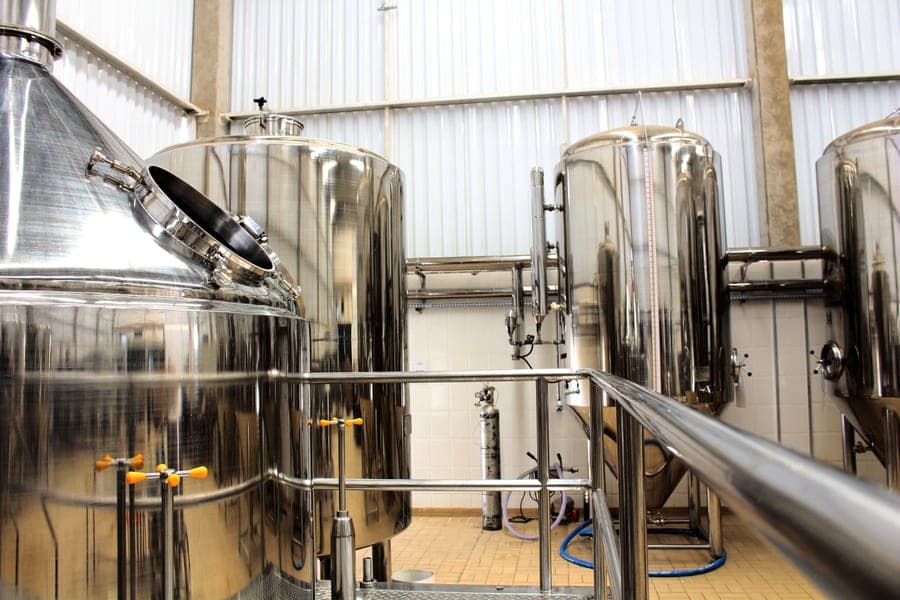
Spike Brewing Kettle (10 or 15 Gallon)
Spike Brewing
Ten or fifteen gallons with welded tri-clamp ferrules, a tri-clad base for gas or induction and an etched internal volume scale, plus a lifetime warranty on the vessel.
Spec sheet
- Capacity
- 10 or 15 gal (20 and 30 also sold)
- Fittings
- Welded tri-clamp ferrules
- Base
- Tri-clad for induction and gas
- Markings
- Etched internal volume scale
- Lid
- Vented and hinged options
- Warranty
- Lifetime on the vessel
What it is not good at
Substantially more expensive than a budget kettle for the same volume. Tri-clamp fittings mean buying tri-clamp accessories.
Who it is for
Brewers sizing up permanently
What the kettle does not do
Mid tier
Insulated Mash Tun with False Bottom
Igloo conversion / Spike
Included because kettle sizing and mash sizing are different calculations. Ten gallons of insulated vessel handles the mash while the kettle handles sparge water and the boil.
Spec sheet
- Capacity
- 10 gal (fits a 5-6 gal batch comfortably)
- Insulation
- Holds mash temp within 1-2 F over 60 min
- Manifold
- Domed false bottom, braid or slotted manifold
- Valve
- Ball valve bulkhead through the wall
- Heat
- No direct heat -- infusion steps only
- Best for
- Batch sparging without an electric system
What it is not good at
No direct heat, so step mashing means infusions rather than a dial.
Who it is for
Holding a mash temperature while the kettle boils
FAQ
Questions brewers actually ask
What size brew kettle for a 5 gallon batch?
Ten gallons. A 5 gallon finished batch starts as 6.5 to 7 gallons of pre-boil wort because a 60 minute boil evaporates 1 to 1.5 gallons, and you then need several inches of headroom above the liquid so the hot break does not boil over. An 8 gallon kettle technically works but leaves about an inch of freeboard.
Is an 8 gallon kettle big enough for 5 gallons of beer?
Barely, and most people who buy one wish they had bought 10. Seven gallons of pre-boil wort in an 8 gallon kettle leaves roughly an inch of freeboard, so every boil is managed at the edge and a 6 gallon batch or a longer high-gravity boil is off the table.
What size kettle do I need for 10 gallon batches?
Fifteen gallons minimum, twenty if you can. A 10 gallon batch is 12.5 to 13 gallons pre-boil, and the boilover risk scales with the batch because there is simply more hot break foam. Fifteen gallons is the working standard and twenty gives you room for a full-volume no-sparge mash.
Does kettle shape matter or just volume?
It matters. A wide, shallow kettle boils off faster and suits a gas burner that spreads heat across the base. A tall, narrow kettle boils off more slowly and gives an immersion chiller enough depth to submerge properly. For induction, the base must be clad or magnetic and the diameter should match the hob.
How much wort boils off in an hour?
Typically 1 to 1.5 gallons in a 60 minute boil, but it varies a lot with kettle diameter, burner output and humidity, so treat any published number as a starting point. Measure your own rate once by noting the volume before and after a boil, then use your figure in every recipe.
Read next
More on brew day gear
Roundup
The Best Mash Tuns for Homebrewing
Insulated cooler tuns against kettle tuns, decided on heat retention and sparge method.
Guide
How to Clean a Brew Kettle
Alkaline for protein, acid for scale, and why the valve must come apart.
Roundup
The Best Wort Chillers
Immersion, counterflow and plate chillers compared on the trades that matter.
Roundup
The Best Grain Mills for Homebrewing
Grain mills compared on rollers, gap adjustment and build quality.