Comparison
Kegco vs KOMOS Kegerator
Both hold four cornies. One of them will also ferment your next batch, and that is what the price difference buys.
The short answer
Buy the Kegco if you want a dependable serving kegerator at the lower price and will add your own forward-sealing faucets. Buy the KOMOS if you want its wide 26-82 degree range, because that is what lets the same cabinet serve beer in winter and ferment a batch in summer instead of buying two appliances.
DisclosureWe earn a commission on qualifying purchases made through links on this page, at no extra cost to you. It does not change what we recommend or how we rank it -- here is how we pick and here is the full disclosure.
The two cabinets, side by side
| Kegco full-size | KOMOS | |
|---|---|---|
| Keg capacity | 1 half barrel or 4 cornies | 1 half barrel or 4 cornies |
| Temperature range | Draft serving range | 26-82 F extended |
| Doubles as a fermentation chamber | No | Yes |
| Stock faucets | Usually rear-sealing | Stainless Intertap on most SKUs |
| Regulator included | On most SKUs | Yes |
| Control | Digital thermostat | Extended-range digital |
| Casters | Yes | Yes |
| Tap configurations sold | Single, dual and triple | Single and dual common |
| Lagering duty | No | Yes, down to 26 F |
| Cost | Lower | Higher |
An orange rule marks the better of the two on that row.
The spec that separates them
Temperature range, not keg count
Both cabinets swallow a half barrel or four ball-lock cornies, which is the number the marketing leads with and the number least likely to decide anything. The spec that actually separates them is the range the thermostat can reach.
A conventional kegerator like the Kegco is built to hold draft serving temperature. That is all a serving appliance needs to do, and it does it on a digital thermostat without drama. The KOMOS controller reaches roughly 26°F at the cold end and 82°F at the warm end, and those two numbers change what the appliance is.
At 26°F it will lager. At 68°F it will hold an ale fermentation. At 38°F it pours beer like any other kegerator. One cabinet, three jobs -- which is why the price gap is narrower than it looks once you price a separate fermentation chamber alongside the cheaper kegerator.
Faucets
Forward sealing, and who ships it
A rear-sealing faucet leaves beer standing in the shaft between pours. In a warm kitchen that beer sours, and the first pint on Saturday tastes of it. A forward-sealing faucet seals at the spout, so there is nothing left in the body to go wrong.
KOMOS tends to ship stainless Intertap faucets on its cabinets. Kegco tends to ship conventional chrome rear-sealing faucets, which work and which most homebrewers replace within the first year. Price the swap in: two forward-sealing faucets plus a faucet wrench narrows the gap between these two appliances considerably.
The height trap
A corny is taller than you think
A 5 gallon ball-lock corny is about 25 inches tall, and roughly 27 inches once posts and disconnects are on top of it. Cabinets rated for a half barrel generally clear that, but the usable internal height is what matters, not the keg rating -- and a tower-mounted gas line can eat an inch of it.
Both of these cabinets handle four cornies in practice. Measure anyway, because the failure mode is discovering it after the appliance is in the kitchen -- corny keg sizes and parts lists the real dimensions.
Serving several beers
Where both need the same part
Neither cabinet gives you independent carbonation pressures out of the box. A single regulator feeds every keg at one pressure, so a stout at 8 psi beside a saison at 14 psi needs a secondary manifold inside the cabinet with a body per keg.
That is a cheap addition relative to the appliance and it is the single upgrade that makes a four-keg kegerator behave like four taps rather than one -- CO2 regulator settings has the pressures, and best dual tap kegerators covers the multi-tap case.
If you already own a chamber
The case for the cheaper cabinet
The KOMOS argument rests entirely on dual use. If your fermentation temperature is already handled -- a chest freezer with a dual-stage controller, or a glycol loop on a jacketed conical -- then the extended range is a feature you will never set, and the Kegco is simply the cheaper way to pour beer.
That is a real and common situation for the upgrading brewer, and it is the one case where the less expensive cabinet is straightforwardly the better buy. Compare it against building a keezer too, which is cheaper still per tap -- kegerator vs keezer.
Our verdict
Which one should you buy?
Buy the KOMOS if
KOMOS Kegerator
- You want one cabinet to serve and to ferment
- You brew lagers and want 26 F available
- Stainless forward-sealing faucets out of the box matter
- You do not already own a fermentation chamber
Buy the Kegco if
Kegco Full-Size Digital Kegerator
- Fermentation temperature control is already solved
- You want the lowest price per tap
- You want a triple-tap configuration
- You are happy to swap the faucets yourself
What we recommend
The products on this page
Best for homebrewers
Prosumer tier
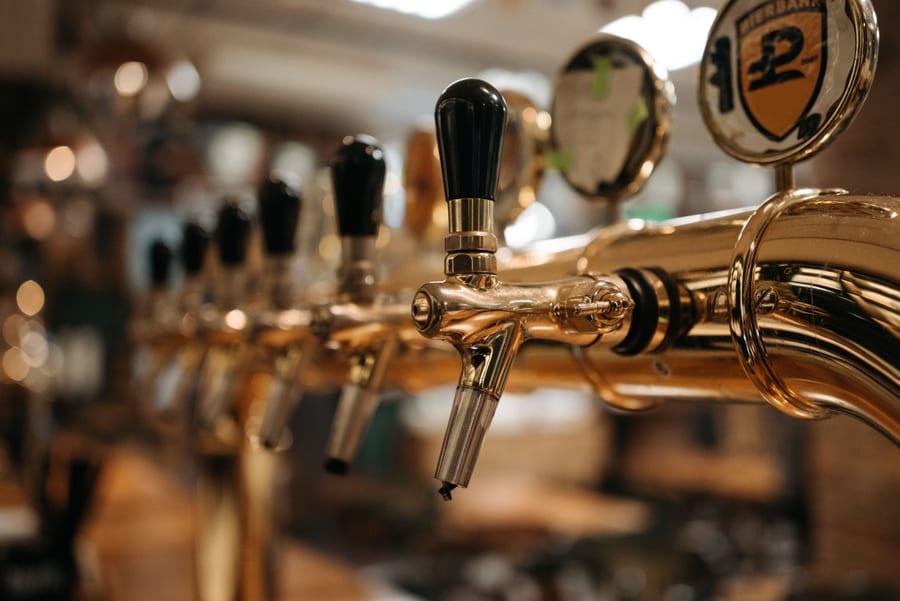
KOMOS Kegerator
KOMOS
The 26-82 degree extended range is the feature that matters here. It serves at 38, lagers at 34, and holds 68 for an ale fermentation, so one purchase covers two jobs most brewers otherwise buy twice.
Spec sheet
- Keg capacity
- 1 half barrel or 4 ball-lock corny kegs
- Temperature range
- 26-82 F -- unusually wide
- Secondary use
- Doubles as a fermentation chamber
- Control
- Extended-range digital controller
- Taps
- Stainless Intertap faucets on most SKUs
- Mobility
- Casters, regulator included
What it is not good at
Costs more, and the wide range is wasted money if you already own a fermentation chamber you are happy with.
Who it is for
Anyone who wants one cabinet to serve and ferment
Best value for serving only
Mid tier
Kegco Full-Size Digital Kegerator
Kegco
A full-size digital kegerator that holds a half barrel or four ball-lock cornies, with a regulator included on most SKUs and casters so it can move. For pouring beer it does the job at the lower price.
Spec sheet
- Keg capacity
- 1 half barrel, or 4 ball-lock corny kegs
- Control
- Digital thermostat
- Temperature range
- Draft serving range
- Taps
- Single, dual and triple configurations sold
- Gas
- CO2 regulator included on most SKUs
- Mobility
- Casters
What it is not good at
Draft serving range only, so it will not double as a fermentation chamber, and the stock faucets are usually rear-sealing.
Who it is for
Brewers whose fermentation temperature control is already solved
The first upgrade on either
Mid tier
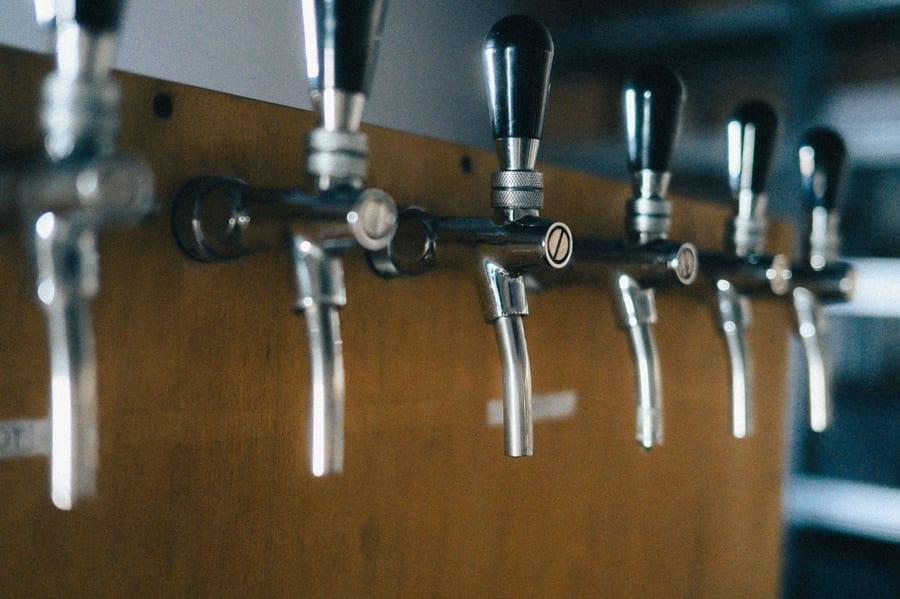
Intertap Stainless Forward-Sealing Faucet
Intertap
A forward-sealing stainless faucet keeps beer out of the shaft between pours, which is the difference between a clean first pint and a sour-smelling one on Saturday.
Spec sheet
- Seal type
- Forward sealing
- Material
- 304 stainless
- Spout
- Interchangeable (stout, growler)
What it is not good at
Needs a faucet wrench and the right shank thread, and interchangeable spouts are an extra purchase.
Who it is for
Any kegerator shipped with a rear-sealing faucet
FAQ
Questions brewers actually ask
What is the difference between a Kegco and a KOMOS kegerator?
Both hold a half barrel or four ball-lock corny kegs. The difference is temperature range: the Kegco is built for draft serving temperature, while the KOMOS reaches roughly 26 to 82 degrees, which lets it lager, serve, or hold an ale fermentation. KOMOS also tends to ship stainless forward-sealing faucets where Kegco ships conventional chrome ones.
Can a KOMOS kegerator be used as a fermentation chamber?
Yes, and that is the main reason homebrewers pay the difference. The extended range reaches ale fermentation temperatures at the warm end, so the same cabinet can ferment a batch in summer and serve it in winter. A standard serving kegerator cannot go that warm under its own control.
Is a Kegco kegerator good for homebrew?
Yes, for serving. It holds four cornies, includes a regulator on most SKUs, runs on a digital thermostat and moves on casters. Its limits are that it only reaches draft serving temperature and that the stock faucets are usually rear-sealing, which most homebrewers replace with forward-sealing stainless.
How many corny kegs fit in a full-size kegerator?
Four ball-lock cornies in both of these cabinets. Watch internal height rather than keg rating: a corny is about 25 inches tall and roughly 27 inches with posts and disconnects fitted, and a tower-mounted gas line can take an inch off the clearance you thought you had.
Do I need a secondary regulator in a kegerator?
If you want different carbonation pressures on different kegs, yes. A single regulator feeds every keg at one pressure, so a stout at 8 psi next to a saison at 14 psi needs a secondary manifold with one body per keg. It is an inexpensive addition that makes a four-keg cabinet behave like four independent taps.
Should I replace the faucets on a new kegerator?
If it came with rear-sealing faucets, yes, early. A rear-sealing faucet leaves beer standing in the shaft between pours and that beer sours, which is what people are tasting when the first pint of the weekend is off. Forward-sealing stainless faucets seal at the spout and leave nothing behind.
Read next
More on kegging
Roundup
The Best Kegerators for Homebrew
Kegerators compared on corny capacity, internal height and temperature range.
Review
KOMOS Kegerator and Kegging Kit Review
The wide temperature range that makes one cabinet do two jobs.
Comparison
Kegerator vs Keezer: Which Should You Build?
Kegs per dollar, insulation and build effort, compared properly.
Roundup
The Best Homebrew Keg Systems
What a kegging kit includes, what it omits, and the complete cost.