Guide
How to Find a CO2 Leak
An empty tank with full kegs means gas went somewhere. There are six places it usually goes, and a ten minute test that finds them.
The short answer
Pressurise the system, close the cylinder valve and watch the high pressure gauge overnight. If it drops, there is a leak. Spray every joint with soapy water or sanitizer solution and look for growing bubbles -- posts, lid gasket, regulator connection, gas line clamps and the valve itself.
DisclosureWe earn a commission on qualifying purchases made through links on this page, at no extra cost to you. It does not change what we recommend or how we rank it -- here is how we pick and here is the full disclosure.
The symptom
An empty cylinder is the only warning you get
CO2 leaks are silent, invisible and odourless. Nothing hisses, nothing smells, the beer keeps pouring -- right up to the morning the tank is empty and the taps go flat. That is why a leak often costs a full cylinder before it is noticed, and why the overnight test below is worth running as a routine rather than a reaction.
The telltale pattern is a cylinder that empties far faster than the beer disappears. If you are refilling every few weeks while pouring modestly, you do not have a dispensing problem, you have a leak -- and buying a bigger cylinder simply makes the leak more expensive to feed.
Test one
The overnight gauge test
This tells you whether a leak exists at all, before you start hunting for it. You need a regulator with a high pressure gauge, which is the one reading cylinder contents rather than output.
- Pressurise the system as normal. Kegs connected, regulator set, everything as it is when you are serving.
- Note both gauge readings. Photograph them if you are likely to misremember.
- Close the cylinder valve. The system is now sealed with a known amount of gas in it.
- Leave it overnight and pour nothing.
- Read the gauges in the morning. Unchanged means a tight system. A drop means gas left the system, and the only exit is a leak.
Test two
Soapy water, and where to spray it
With the system pressurised, spray every joint with soapy water or sanitizer solution and watch. A leak produces bubbles that keep growing; a single bubble that forms and pops is spray, not gas. Work methodically in this order, because this is roughly the order of how often each one is guilty.
- Keg post o-rings. The most common leak on a used corny keg, and a consumable. Both gas and liquid posts.
- Lid gasket. Spray around the whole lid seam. An old, flattened gasket seals under pressure from a surge and not otherwise -- a short burst of gas to seat the lid is a diagnosis, not a fix.
- Disconnect bodies. Where the gas quick disconnect meets the post, and where the line enters the disconnect.
- Regulator to cylinder. The CGA-320 connection, and the washer inside it. A missing or hardened nylon washer here leaks steadily and is frequently the whole answer.
- Hose clamps. Every barb where gas line is clamped, including inside the cabinet where you cannot see them.
- Relief valve and poppets. The keg pressure relief valve, and the poppet inside each post.
The fixes
Nearly all of it is seals and tightening
The good news about CO2 leaks is that the repairs are cheap. Post o-rings, lid gaskets, poppets and regulator washers are consumables that cost a few dollars and perish on a schedule, and a full set of fresh seals on a keg usually ends the problem outright. Lubricating new o-rings lightly with keg lube helps them seat.
Two pieces of technique worth knowing. First, do not overtighten the regulator onto the cylinder to stop a leak there -- the seal is the washer, not the thread, and crushing the connection damages both. Replace the washer instead. Second, when a lid will not seal, a brief burst of higher pressure seats it; if it only holds while the gas is flowing, the gasket is done.
If a leak survives all of that, suspect the gas line itself. Vinyl line hardens and cracks with age, especially where it passes over an edge or sits against the cabinet wall, and a hairline split is nearly invisible until it is sprayed.
Prevention
Make it a routine, not an emergency
Close the cylinder valve when the system will sit unused for a while -- a leak with the valve shut costs you the gas in the lines rather than the gas in the tank. Replace keg seals on a schedule instead of when they fail, which is cheaper than it sounds and spares you a hunt. And run the overnight test after any change: a new keg, a new disconnect, a moved cylinder.
The same leak logic applies to fermenters, incidentally. A pressure fermenter that will not build pressure is almost always leaking at a gasket or post rather than suffering a stalled fermentation, and the test is identical -- see spunding valve explained for that version of the problem.
What we recommend
The products on this page
Mid tier
Taprite Dual-Gauge CO2 Regulator
Taprite
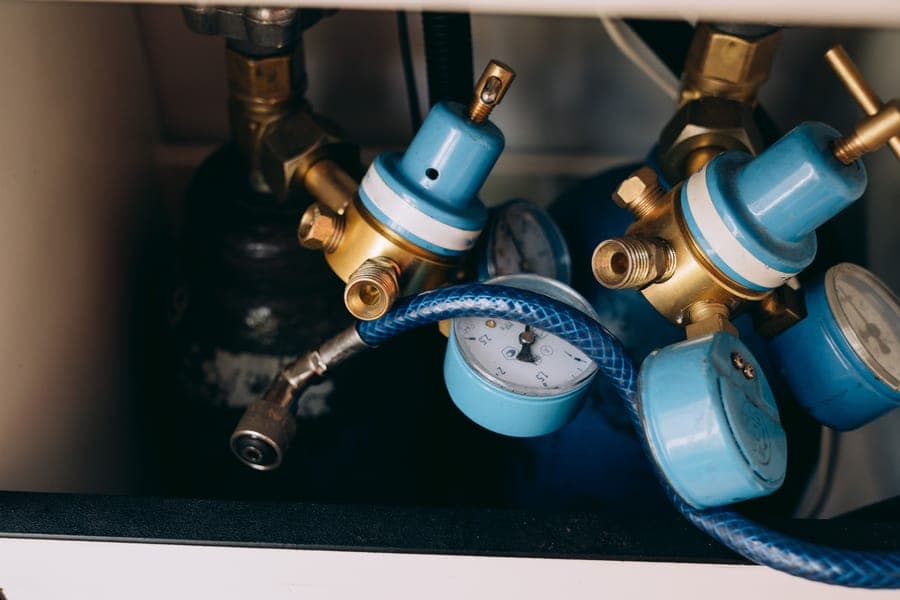
A dual gauge regulator shows cylinder pressure and output pressure separately, which is what makes the overnight test possible: the high pressure gauge is the one that tells you whether gas is leaving the cylinder when nothing is being poured.
Spec sheet
- Gauges
- Dual -- output pressure and tank contents
- Output range
- 0-60 psi
- Inlet
- CGA-320 CO2 tank thread
- Outlet
- 1/4 in MFL or barb
- Body
- Forged brass
- Serviceable
- Rebuild kits widely available
Who it is for
Seeing a leak before it empties the tank
Entry tier
5 Gallon Ball Lock Corny Keg
AMCYL / NSI
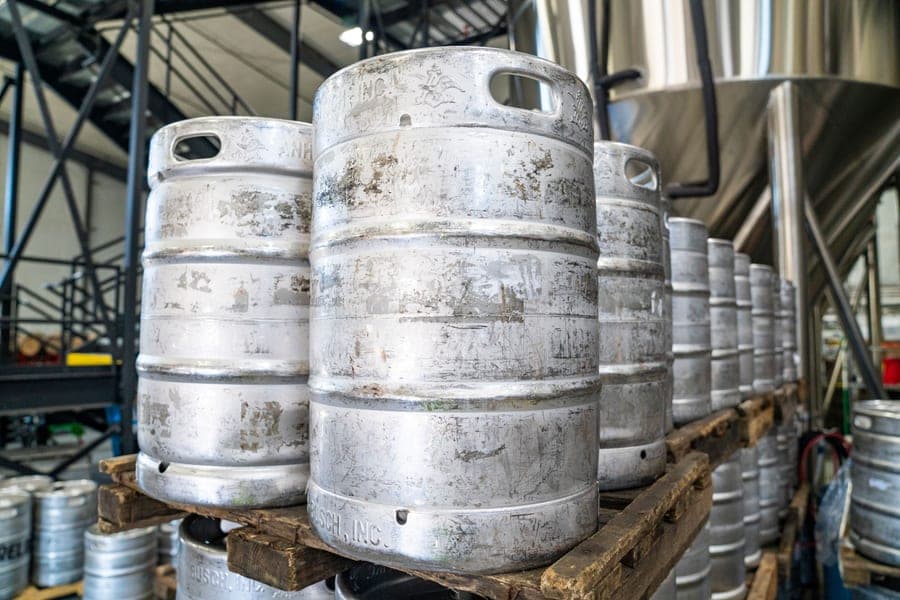
Post o-rings, poppets and the lid gasket are the usual culprits on a used keg, and they are cheap consumables rather than repairs. A keg with fresh seals throughout is the fastest way to end a leak hunt that keeps circling back.
Spec sheet
- Capacity
- 5 gal / 19 L
- Height
- ~25 in (26 in with posts)
- Diameter
- ~8.5 in
- Connection
- Ball lock gas and liquid posts
- Pressure rating
- 130 psi typical, 55 psi working
- Lid
- Oval pry-out lid with a PRV
Who it is for
Replacing the posts and o-rings leaks hide in
Entry tier
Five Star Star San Sanitizer
Five Star Chemicals
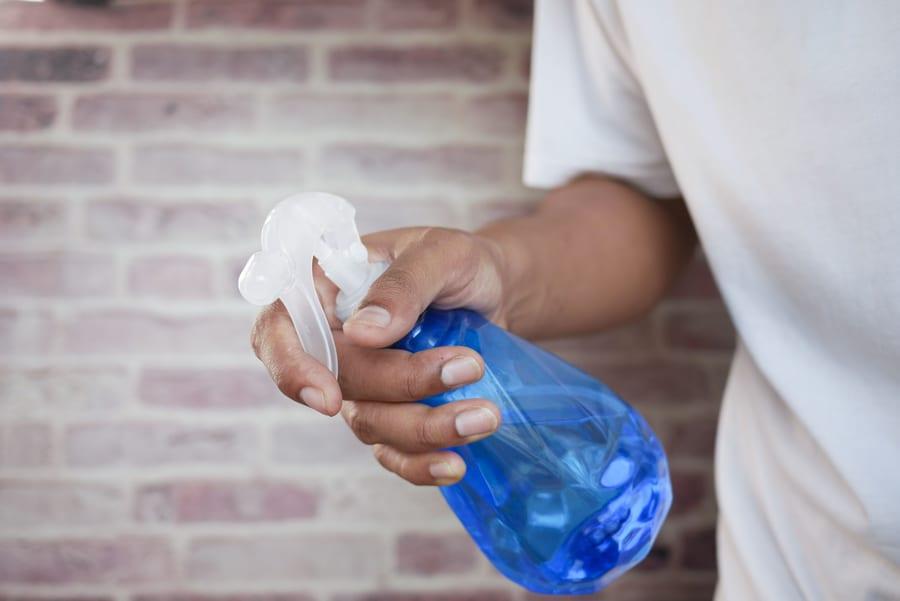
A spray bottle of sanitizer solution does the same job as soapy water and leaves nothing on your kegging hardware you would not want there. Spray the joint, watch for bubbles that grow rather than pop.
Spec sheet
- Type
- Acid-anionic, no-rinse
- Contact time
- 1-2 minutes
- Dilution
- 1 oz per 5 gal
Who it is for
The bubble test itself
FAQ
Questions brewers actually ask
How do I know if my kegerator has a CO2 leak?
Pressurise the system, close the cylinder valve and leave it overnight without pouring. If the high pressure gauge has dropped by morning, gas left the system and the only way out is a leak. A cylinder that empties far faster than you are pouring beer is the other clear sign.
Where do CO2 leaks usually happen on a kegerator?
In rough order of likelihood: keg post o-rings, the lid gasket, the gas disconnect, the regulator-to-cylinder washer, hose clamps at the barbs, and the keg pressure relief valve or poppets. Nearly all of them are cheap seals rather than real repairs.
What do you spray on a CO2 system to find a leak?
Soapy water or sanitizer solution in a spray bottle. Spray the joint with the system pressurised and watch: a leak produces bubbles that keep growing, while bubbles that form and pop are just the spray itself.
Why does my CO2 tank empty so fast?
Almost always a leak rather than consumption. A tight system serves a great deal of beer from a 5 lb cylinder. If you are refilling every few weeks while pouring modestly, run the overnight gauge test before buying a larger tank, which would only feed the leak for longer.
Should I tighten the regulator harder to stop a leak at the tank?
No. The seal at a CGA-320 connection is the nylon washer, not the thread, so overtightening damages the connection without fixing anything. Replace the washer -- a missing or hardened one is a frequent cause of a steady, invisible leak.
Sources
Read next
More on kegging
Guide
CO2 Regulator Settings: PSI by Temperature and Style
PSI by temperature and style, with the line-balancing numbers.
Guide
How to Fill a CO2 Tank
Where to get a CO2 cylinder filled, the difference between exchange and refill, and the test date that decides whether they will take it.
Roundup
The Best CO2 Regulators for Homebrew
Primary regulators and secondary manifolds, and what to check before buying.
Roundup
The Best Kegerators for Homebrew
Kegerators compared on corny capacity, internal height and temperature range.
Roundup
The Best Homebrew Keg Systems
What a kegging kit includes, what it omits, and the complete cost.