Guide
How to Fill a CO2 Tank
You do not fill it yourself. The useful knowledge is who fills it, what they check, and why swapping your cylinder may not be what you want.
The short answer
Take the cylinder to a gas supplier, welding supply, fire equipment company or homebrew shop that fills by weight. Bring it empty with the valve closed. They check the hydrostatic test date -- cylinders need retesting every five years -- and either refill your tank or exchange it for another.
DisclosureWe earn a commission on qualifying purchases made through links on this page, at no extra cost to you. It does not change what we recommend or how we rank it -- here is how we pick and here is the full disclosure.
First
You do not fill a CO2 cylinder at home
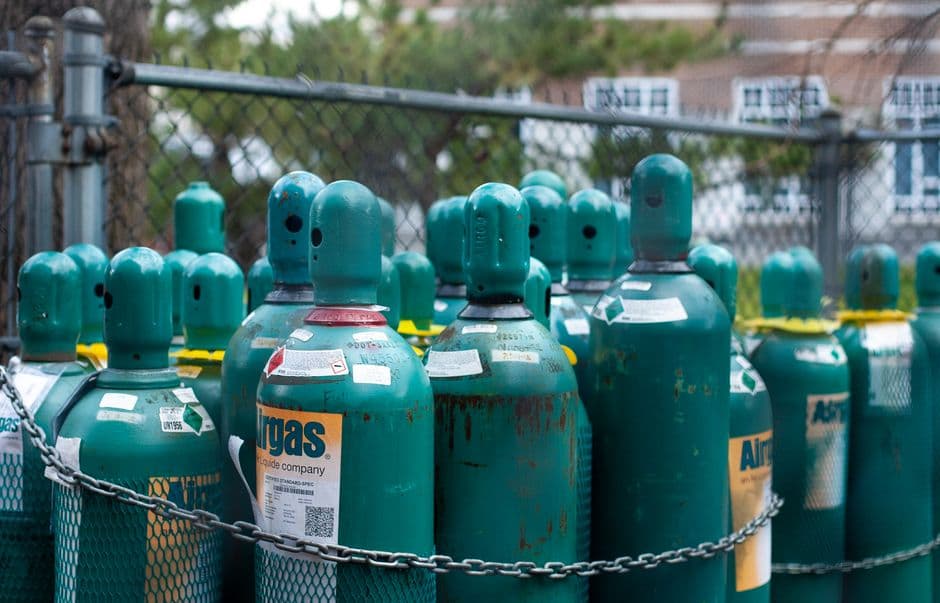
Filling a CO2 cylinder means transferring liquid carbon dioxide under high pressure into a vessel that has to be weighed as it fills, because a CO2 tank is filled by weight rather than by pressure. Overfilling one is dangerous. This is work for a facility with the right equipment and the authorisation to do it, and the adapters sold for cross-filling small cylinders are not a substitute for that.
So the practical question is not how to fill a tank, it is where to take it and what to expect when you get there. Four kinds of business commonly fill homebrew cylinders: beverage gas suppliers, welding and industrial gas suppliers, licensed fire equipment companies, and some homebrew shops.
A fire equipment company with a DOT-authorised facility is the most thorough of those -- they fill by weight to the manufacturer’s specification, check valve integrity, verify the hydrostatic test date and leak test the cylinder before handing it back. A homebrew shop that fills small tanks is the most convenient if one is nearby.
Exchange vs refill
The difference that catches people out
Many suppliers operate an exchange programme: you hand over your empty cylinder and walk out with a different, full one of the same size. It is fast and it is usually cheaper. What you give up is your own cylinder -- and if yours is nearly new, freshly hydro tested, or a specific brand you chose deliberately, you may get back one that is none of those things.
A refill returns your cylinder to you. It takes longer, sometimes meaning you leave it and come back, and it may cost a little more. It is the right choice if you care which tank you own: a cylinder with four years left on its test date is worth more to you than one with four months.
The test date
Five years, stamped on the shoulder
Every CO2 cylinder carries a hydrostatic test date stamped into the metal near the neck, and cylinders require retesting every five years. A filler will check it, and a cylinder outside its test window will not be filled until it has been retested -- that is a legal requirement, not a shop policy, and arguing about it will not help.
Read your own stamp before you drive anywhere. The date is normally given as month and year, and it is the date of the last test rather than an expiry. Add five years to it and you have the date the cylinder stops being fillable. If you buy a used tank, read that stamp before money changes hands: a cheap cylinder with an expired test is a cylinder plus a test fee.
This is also the strongest argument for the refill route. Each exchange resets your relationship with the test date to whatever the swapped cylinder happens to carry -- which may be a year old, or four years and eleven months old.
The trip
What to do before, during and after
- Run it properly empty. Close the cylinder valve, bleed the regulator and disconnect it. Fillers charge the same for a nearly empty tank as an empty one.
- Take the regulator off. The cylinder goes to the shop bare. Leaving the regulator attached risks damaging it in the car and slows the counter down.
- Check the stamp. Hydro test date near the neck. Inside five years or it comes back unfilled.
- Say whether you want your tank back. Refill or exchange -- decide before you hand it over.
- Secure it in the car. Upright and restrained, not rolling around a boot. A cylinder is a heavy object with a valve on one end.
- Leak check when you get home. Refit the regulator, open the valve, then spray the connections with sanitizer solution and watch for bubbles -- the same method as finding a CO2 leak. A new fill lost to a loose fitting is a wasted trip.
Sizing
How often you will be making this trip
How long a fill lasts depends on how much you dispense and -- far more than people expect -- on whether your system leaks. A tight system on a 5 lb cylinder serves a lot of beer; the same cylinder on a system with a slow leak at a keg post can empty itself in days while you are not looking.
If fills are inconvenient, the answer is usually a bigger cylinder rather than more trips -- what size CO2 tank for a kegerator works through the sizing properly. If fills are frequent and the cylinder is already large, the answer is a leak hunt, not a bigger tank.
What we recommend
The products on this page
Entry tier
5 lb Aluminum CO2 Tank
KOMOS / Kegco
Big enough that fills are infrequent, small enough to carry to the shop in one hand and to stand inside or beside a kegerator. The default homebrew cylinder, with the standard CGA-320 valve every beverage regulator expects.
Spec sheet
- Capacity
- 5 lb of liquid CO2
- Material
- Aluminum, US DOT approved
- Valve
- CGA-320 (standard beverage CO2 thread)
- Footprint
- ~5.5 in diameter x ~18.25 in tall (Kegco 5 lb)
- Dispenses
- ~8-9 five gallon corny kegs per fill (MoreBeer)
- Ships
- Empty -- fill or exchange locally
Who it is for
The size most homebrewers settle on
Mid tier
10 lb Aluminum CO2 Tank
KOMOS / MoreBeer
Roughly twice the gas per trip, which matters if your filler is a drive away or only open on weekdays. It is also twice the weight to lift into a car and back.
Spec sheet
- Capacity
- 10 lb of liquid CO2
- Material
- Aluminum, US DOT approved
- Valve
- CGA-320
- Fits
- Beside most kegerators, inside some full-size cabinets
- Refill
- Costs far less than two 5 lb fills
- Ships
- Empty
Who it is for
Fewer trips, at the cost of carrying it
Entry tier
2.5 lb Aluminum CO2 Tank
KOMOS
Light enough to carry anywhere and small enough to live inside a compact kegerator. Most useful as the second cylinder that keeps beer pouring while the main tank is away being filled.
Spec sheet
- Capacity
- 2.5 lb of liquid CO2
- Material
- Aluminum, US DOT approved
- Valve
- CGA-320 -- takes a standard homebrew regulator
- Fits
- Inside compact kegerators and keezer collars
- Trade-off
- Worst cost per pound of gas of any size
- Ships
- Empty
Who it is for
Small cabinets and keeping a spare in reserve
FAQ
Questions brewers actually ask
Where can I get a CO2 tank filled?
Beverage gas suppliers, welding and industrial gas suppliers, licensed fire equipment companies and some homebrew shops all fill small CO2 cylinders. A DOT-authorised fire equipment facility is the most thorough: it fills by weight, checks the valve and verifies the hydrostatic test date.
Can you fill a CO2 tank yourself at home?
No. CO2 cylinders are filled by weight with liquid CO2 under high pressure, and overfilling is dangerous. Cross-fill adapters sold for small cartridges are not a substitute for a properly equipped filling facility.
What is the difference between a CO2 exchange and a refill?
An exchange swaps your empty cylinder for a different full one -- fast and usually cheaper, but you do not get your own tank back. A refill returns your cylinder to you, which matters if yours is new or recently hydro tested. Say which you want before handing it over.
How often do CO2 tanks need hydrostatic testing?
Every five years. The date of the last test is stamped into the metal near the neck of the cylinder. A filler will refuse a cylinder that is outside that window until it has been retested, so check the stamp before making the trip.
Should I take the regulator off before getting a CO2 tank filled?
Yes. Close the valve, bleed and remove the regulator, and take the bare cylinder in. It protects the regulator in transit and saves time at the counter. Carry the cylinder upright and secured rather than loose in the back of a car.
Sources
Read next
More on kegging
Roundup
The Best CO2 Tanks for Homebrew
CO2 tank sizes compared on cost per fill, cabinet fit and how often you refill.
Guide
What Size CO2 Tank for a Kegerator?
Tank sizing for a kegerator, how long a fill lasts, and the refill economics nobody mentions.
Guide
How to Find a CO2 Leak
The overnight gauge test, the bubble test, and the six places a kegerator CO2 leak is most likely to be hiding.
Guide
CO2 Regulator Settings: PSI by Temperature and Style
PSI by temperature and style, with the line-balancing numbers.
Roundup
The Best Kegerators for Homebrew
Kegerators compared on corny capacity, internal height and temperature range.
Roundup
The Best Homebrew Keg Systems
What a kegging kit includes, what it omits, and the complete cost.