Comparison
Ball Lock vs Pin Lock Kegs
Same vessel, two incompatible connection standards. One is the default for good reasons, the other is three inches shorter -- which occasionally decides the whole argument.
The short answer
Buy ball lock. It is the standard almost every homebrew retailer stocks, so disconnects, posts, carbonation caps and replacement lids are everywhere. Pin lock is worth choosing only when its shorter, wider body is what fits your fridge or keezer, because new pin lock supply is thin and parts are a special order.
DisclosureWe earn a commission on qualifying purchases made through links on this page, at no extra cost to you. It does not change what we recommend or how we rank it -- here is how we pick and here is the full disclosure.
Ball lock vs pin lock, head to head
| Ball lock | Pin lock | |
|---|---|---|
| Origin | Pepsi-style | Coke-style |
| Approx. height | ~25 in | ~22 in |
| Approx. diameter | ~8.5 in | ~9 in |
| Connection | Ball bearing collar | Bayonet pins |
| Keyed by | Post size (13/16 vs 11/16 in) | Pin count (2 vs 3) |
| New kegs available | Widely | Limited |
| Parts and accessories | Everywhere | Special order |
| Carbonation caps | Common | Available, fewer options |
| Best when | You want parts on demand | Three inches decides it |
An orange rule marks the better of the two on that row.
The actual difference
Two ways to hold a disconnect on
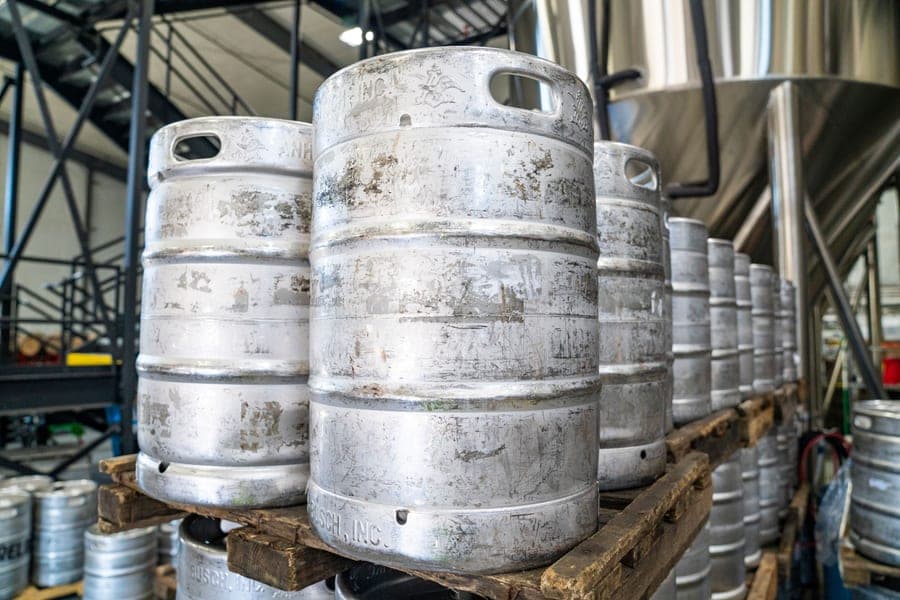
Underneath the fittings these are the same vessel: a stainless Cornelius keg built for soft drink syrup, repurposed by homebrewers because it holds five gallons, takes CO2 and fits in a fridge. The only meaningful difference is how the disconnect attaches to the post.
Ball lock uses a collar of ball bearings. You pull the collar up, push the disconnect down over the post, release, and the bearings drop into a groove to lock it. Pin lock uses a bayonet mount: radial pins stick out of the post, L-shaped notches in the disconnect engage them, and you push down and twist a quarter turn to lock.
Both standards are keyed so a gas disconnect cannot end up on a liquid post. Pin lock does it by pin count -- two pins on the gas post, three on the liquid post. Ball lock does it by post size, which on most kegs means a 13/16 inch gas post and an 11/16 inch liquid post. The difference is that pin lock keying is visible from across the room while ball lock keying is not, so the mistake ball lock owners actually make is grabbing the wrong disconnect, or putting the wrong line on the right disconnect, in a dark cabinet. That is pin lock's one legitimate technical point, and it is a real one.
Everything else -- the body, the lid gasket, the dip tubes, the pressure rating, the way it carbonates -- is the same discussion covered in corny keg sizes and parts.
Dimensions
Three inches, and when it decides everything
A ball lock keg runs about 25 inches tall and 8.5 inches in diameter. A pin lock is about 22 inches tall and 9 inches in diameter. Same volume, different proportions: pin lock is the short fat one, ball lock is the tall thin one.
That difference is irrelevant until it is the only thing that matters. In a chest freezer you are usually fighting depth and the collar height, so three inches of keg height can decide whether a lid closes without a collar at all. In a converted fridge the enemy is a molded shelf or a compressor hump, and the shorter keg sometimes sits where the taller one cannot. Diameter cuts the other way: the extra half inch of pin lock width is what stops a fourth keg going into a footprint that takes four ball locks.
So the honest sequence is: measure the cold space first, then pick the standard, then buy kegs. Not the reverse. The height-and-footprint arithmetic for both routes is worked through in kegerator vs keezer, and the internal-height comparison across commercial units is in best kegerators for homebrew.
Availability
The supply picture, and why it points one way
Both styles started life as commercial soft drink kegs, and for years homebrewing ran almost entirely on that used supply. That pool has been shrinking, and it has hit pin lock hardest -- reseller-quantity used pin lock kegs have become genuinely hard to source, while refurbished ball lock kegs, usually sold as Pepsi-style with fresh o-rings and a manual pull-ring relief valve, remain easy to buy in quantity.
New production has followed the same split. Several manufacturers now make new ball lock kegs for the homebrew market, and at least one new pin lock option exists, but the choice is narrow and the discounted refurbished deals that do appear sell through. Pricing between the two is broadly comparable on the refurbished market, so cost is not the deciding factor -- supply is.
This matters more than it sounds. A keg collection is a ten-year purchase, and over ten years you will replace o-rings, poppets, posts and at least one lid. Being on the standard your retailer keeps in stock is the difference between a five-minute fix and waiting a week for a part.
Parts
What you will actually be buying again
The consumables are the same for both: lid gaskets, post o-rings, dip tube o-rings, poppet valves. For ball lock, every homebrew shop stocks all of them and most sell a cheap rebuild kit covering an entire keg. For pin lock, post sets and disconnects are made and sold, but by fewer suppliers and in fewer variants, so expect to order rather than pick them up.
Accessories are the bigger gap. Carbonation caps -- the lid that turns a soda bottle into a pressure vessel, and one of the genuinely useful cheap tools in kegging -- exist in both standards but with far more choice in ball lock. Floating dip tubes, keg jumpers for closed transfer, and fermenting-in-a-keg hardware are all developed ball lock first. If closed transfer or fermenting in a keg is on your roadmap, ball lock removes friction you would otherwise spend evenings researching.
One thing both standards share: the keg has to be cleaned properly, and that is a chemical problem rather than a fitting problem. Posts come off, dip tubes come out, and everything gets soaked -- the routine is in best homebrew cleaners and sanitizers.
Running both
The hidden cost of a mixed collection
Plenty of brewers end up with both, usually because a cheap used keg turned up in the wrong standard. It works, and it costs you three things. You need two sets of disconnects, which means two sets of spares. Your gas manifold runs lines terminating in different fittings, so a line swap is no longer plug-and-play. And every accessory decision doubles.
None of that is fatal, and a free pin lock keg is still a free keg. But do not plan a mixed collection deliberately. Pick the standard that fits your cold space, buy a complete set of disconnects for it, and treat off-standard kegs as opportunistic additions rather than the plan. The full build order, including how many kegs is actually enough, is in best homebrew keg systems.
Our verdict
Which one should you buy?
Buy this unless height stops you
5 Gallon Ball Lock Corny Keg
- Parts, lids, poppets and o-rings on the shelf at every retailer
- Carbonation caps, floating dip tubes and closed-transfer gear are ball lock first
- New and refurbished supply is still healthy
- About 25 in tall and 8.5 in across -- measure your cold space before ordering
Buy this for a first setup
Complete Homebrew Kegging Starter Kit
- Keg, disconnects and lines arrive matched, so nothing is incompatible
- Removes the fitting-selection problem for a first-time kegger
- Built around ball lock, which is the standard to be on anyway
- Still needs a CO2 tank and a regulator sized for your keg count
The verdict
Where this lands
Ball lock, in almost every case. The pin arrangement that makes pin lock impossible to cross-connect is a real advantage, and it is not enough to outweigh a decade of easier parts, more accessories and better supply. Label your ball lock disconnects gray for gas and black for liquid, as they are already sold, and you have solved the one problem pin lock solves mechanically.
The exception is specific and worth taking seriously: if you have measured your fridge or freezer and a 25-inch keg does not fit while a 22-inch one does, buy pin lock and accept the parts friction. A keg that fits the cold space you own beats a keg on the popular standard that does not.
What we recommend
The products on this page
Entry tier
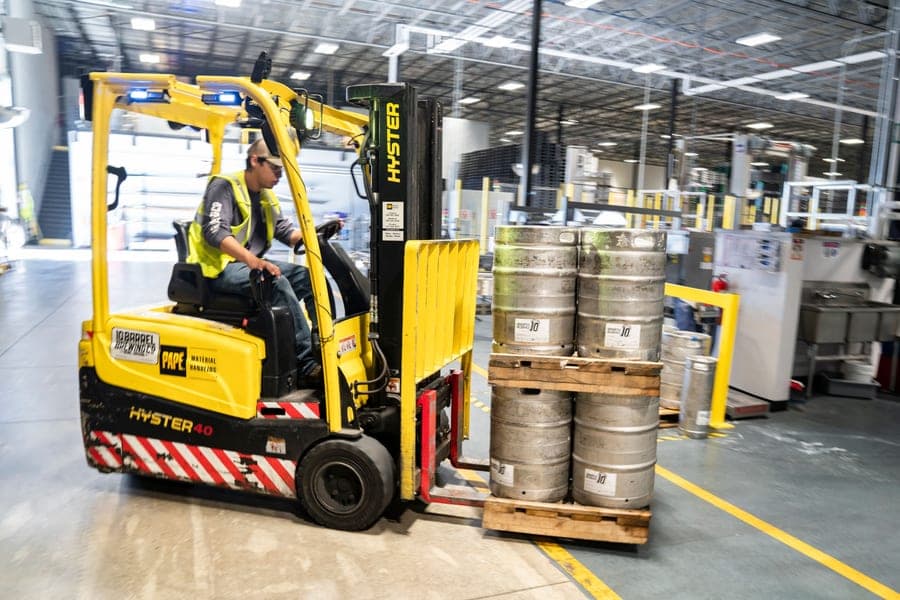
5 Gallon Ball Lock Corny Keg
AMCYL / NSI
The default standard. Taller and narrower than a pin lock, and the one every homebrew retailer stocks parts for, which is the whole argument in one sentence.
Spec sheet
- Capacity
- 5 gal / 19 L
- Height
- ~25 in (26 in with posts)
- Diameter
- ~8.5 in
- Connection
- Ball lock gas and liquid posts
- Pressure rating
- 130 psi typical, 55 psi working
- Lid
- Oval pry-out lid with a PRV
What it is not good at
At roughly 25 inches tall it is the version most likely to foul a kegerator shelf or a keezer collar, and the gas and liquid posts look similar enough that people do cross-connect them.
Who it is for
Almost everyone starting or expanding a keg collection
Mid tier
Complete Homebrew Kegging Starter Kit
Kegco / KOMOS / MoreBeer
Kit buying removes the fitting-compatibility problem entirely, because the disconnects, lines and keg all arrive matched to the same standard.
Spec sheet
- Keg
- One 5 gal ball-lock corny (new or reconditioned)
- Gas
- 5 lb CO2 cylinder (usually empty on arrival)
- Regulator
- Single-body dual-gauge
- Lines
- Gas line, beverage line, disconnects
- Dispense
- Picnic (party) tap on most kits
- Not included
- Cooling -- that is the kegerator decision
What it is not good at
Kits are built around ball lock, so if you have inherited pin lock kegs you will be buying disconnects separately anyway.
Who it is for
A first keg setup bought as one piece
Mid tier
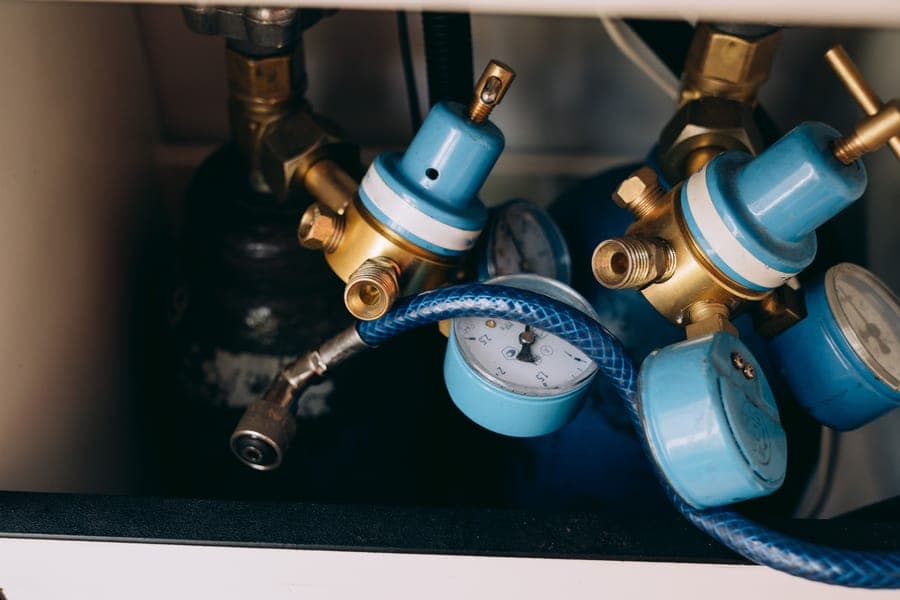
Taprite Dual-Gauge CO2 Regulator
Taprite
The regulator is standard-agnostic -- it sees only gas pressure, so it works identically with ball lock and pin lock kegs and survives any future switch.
Spec sheet
- Gauges
- Dual -- output pressure and tank contents
- Output range
- 0-60 psi
- Inlet
- CGA-320 CO2 tank thread
- Outlet
- 1/4 in MFL or barb
- Body
- Forged brass
- Serviceable
- Rebuild kits widely available
What it is not good at
A dual-body regulator is more than a one-keg setup needs, and it cannot fix a cross-connected keg or a wrongly sized gas line.
Who it is for
Running two kegs at different pressures

Mid tier
Kegco Full-Size Digital Kegerator
Kegco
This is where the height difference becomes a purchase decision: internal height and shelf position determine whether a 25-inch ball lock clears, and the published internal dimensions are what you compare against.
Spec sheet
- Keg capacity
- 1 half barrel, or 4 ball-lock corny kegs
- Control
- Digital thermostat
- Temperature range
- Draft serving range
- Taps
- Single, dual and triple configurations sold
- Gas
- CO2 regulator included on most SKUs
- Mobility
- Casters
What it is not good at
Stated keg capacity assumes a specific keg geometry, so always compare internal height against your actual kegs rather than trusting the capacity claim.
Who it is for
Checking the fit question before you commit to a standard
FAQ
Questions brewers actually ask
Are ball lock and pin lock disconnects interchangeable?
No. They are entirely different attachment mechanisms: ball lock disconnects hold on with a collar of ball bearings in a groove, while pin lock disconnects engage radial pins with a push-and-twist bayonet action. A ball lock disconnect will not attach to a pin lock post or the other way around, so each standard needs its own set of gas and liquid disconnects.
Which is taller, a ball lock or a pin lock keg?
Ball lock. A ball lock corny keg is roughly 25 inches tall and 8.5 inches in diameter, while a pin lock is roughly 22 inches tall and 9 inches in diameter. Both hold about five gallons. The three inches of height is the difference that decides fit in a kegerator with a molded shelf or a chest freezer without a collar.
Why can't you mix up gas and liquid on a pin lock keg?
The posts carry a different number of pins. The gas-in post has two pins and the liquid-out post has three, and the matching disconnects only engage their own pin count, so the connection is physically impossible to reverse. Ball lock is keyed too, by post size rather than pins, so its disconnects will not cross-fit either -- the difference is that pin keying is obvious at a glance and a post size is not.
Is it harder to find pin lock kegs now?
Yes. The used commercial soft drink keg supply that homebrewing has relied on for decades has been thinning, and pin lock has been hit hardest -- used pin lock kegs in reseller quantities are genuinely hard to source. New pin lock options do exist and refurbished stock appears periodically, but the choice is narrow compared with ball lock.
Should I buy pin lock kegs if I already own some?
If you own several and they fit your cold space, staying on pin lock avoids buying a second set of disconnects and spares. Just plan on ordering parts rather than picking them up locally, and check availability before you commit to expanding. If you own one or two and are building out, it is usually cheaper long term to standardize on ball lock and treat the pin locks as spares.
Sources
Read next
More on kegging
Roundup
The Best Homebrew Keg Systems
What a kegging kit includes, what it omits, and the complete cost.
Comparison
Kegerator vs Keezer: Which Should You Build?
Kegs per dollar, insulation and build effort, compared properly.
Guide
Homebrew Kegging Setup, Step by Step
The setup order, plus the three day-one failures and how to avoid them.
Roundup
The Best Homebrew Cleaners and Sanitizers
The two chemicals that do the work, plus the low-foam and draft-line gear worth adding.
Roundup
The Best Kegerators for Homebrew
Kegerators compared on corny capacity, internal height and temperature range.