Roundup
The Best Mash Tuns for Homebrewing
An insulated cooler holds a mash temperature better than a stainless kettle does. That one fact decides most of this category.
The short answer
An insulated 10 gallon mash tun with a false bottom is the best mash tun for most homebrewers: the insulation holds mash temperature within a degree or two over a 60 minute rest with no heat applied, which is exactly what a single-infusion mash needs. Move to a stainless kettle tun only if you want to apply direct heat for step mashing.
DisclosureWe earn a commission on qualifying purchases made through links on this page, at no extra cost to you. It does not change what we recommend or how we rank it -- here is how we pick and here is the full disclosure.
At a glance
Quick picks
| # | Product | Best for | Price |
|---|---|---|---|
| 1 | Best overall Insulated Mash Tun with False Bottom Ten gallons of insulated vessel with a domed false bottom and a ball valve bulkhead, which holds mash temperature within a degree or two across a 60 minute rest and needs no heat input at all. | Batch sparging a 5 to 6 gallon batch without an electric system | |
| 2 |  Best upgrade to a kettle you own Stainless Domed False Bottom A perforated, domed 304 stainless plate sized to the vessel's internal diameter. The dome resists collapse under the weight of a full grain bed and traps less wort underneath than a flat plate. | Turning an existing stainless kettle into a mash tun | |
| 3 | 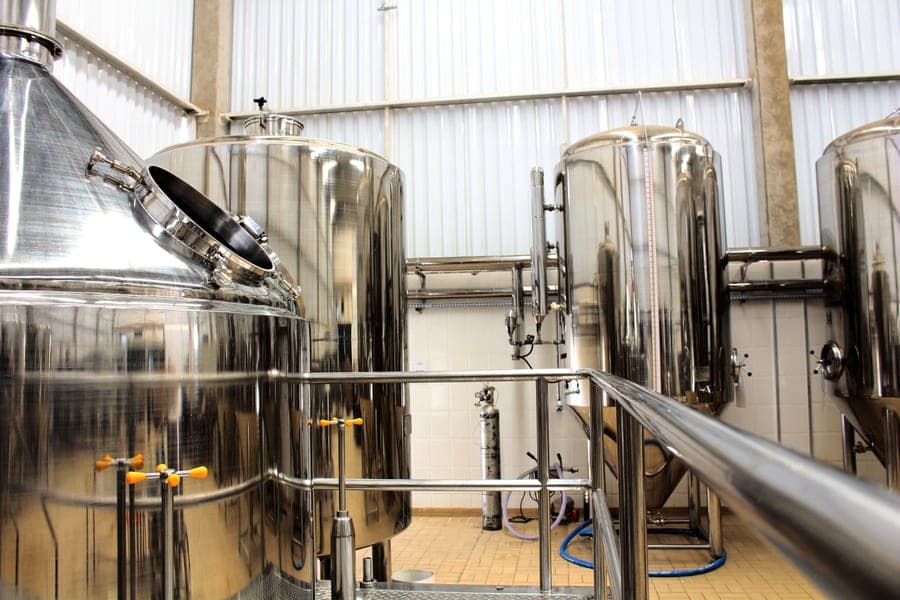 Best for step mashing Spike Brewing Kettle (10 or 15 Gallon) Welded tri-clamp ferrules, a tri-clad base that works on gas or induction, and an etched internal volume scale, so it takes direct heat and reads volume without a dipstick. | Brewers who want to apply heat and recirculate | |
| 4 |  Best budget base vessel Bayou Classic Stainless Brew Kettle Eight to sixteen gallon sizes in stainless with clad-base options, and valved SKUs that save you drilling a bulkhead yourself. | A first 10 gallon mash or boil vessel |
Prices are checked on Amazon when you click. We never print a number we cannot verify.
What each mash tun approach gives you
| Approach | Heat retention | Direct heat | Typical use |
|---|---|---|---|
| Insulated tun with false bottom | 1-2 F loss over 60 min | No | Batch sparge, single infusion |
| Kettle + false bottom | Several degrees over 60 min | Yes | Step mash, recirculated |
| Welded kettle tun | Several degrees over 60 min | Yes | Step mash with a pump |
| All-in-one system | Controlled | Yes | Everything in one vessel |
The decision
Insulation or heat: pick one
Every mash tun is solving the same problem -- hold a grain bed at a chosen temperature for an hour -- and there are only two ways to do it. Insulate the vessel so the heat cannot leave, or leave the vessel uninsulated and keep adding heat. Those two approaches lead to completely different purchases, and the rest of this category is detail.
An insulated tun wins the simple case decisively. Mash in at your strike temperature, close the lid, walk away for an hour and come back to a mash that has drifted a degree or two. No element, no pump, no controller, nothing to fail. For a single-infusion mash, which is what the overwhelming majority of homebrew recipes call for, there is nothing an electric system does better.
A heated tun wins when you want to change the temperature during the rest. Step mashing -- a protein rest, then a saccharification rest, then a mash-out -- requires raising the mash several times, and doing that in an insulated cooler means calculating and adding infusions of boiling water, which both works and is tedious. If step mashing is your reason for being here, the honest answer is often an electric all-in-one system rather than a mash tun at all.
The false bottom
The part that actually does the work
Whatever the vessel, the component that makes it a mash tun is the thing separating wort from grain. A domed, perforated stainless false bottom is the best version of it: the dome resists collapsing under the weight of a saturated grain bed, the perforations are fine enough to hold back husk, and the curve means less wort is trapped underneath as dead space than a flat plate leaves.
The one thing people get wrong is sizing. A false bottom has to match the vessel's internal diameter closely. Too small and grain escapes around the edge into your pickup. Too large and it does not seat. This is a measurement, not an estimate, and the full detail is in false bottom explained.
Sizing
Ten gallons for a 5 gallon batch
Mash tun capacity is set by grain volume plus strike water, not by batch volume. A 5 gallon batch of ordinary-gravity beer is around 10 to 11 pounds of grain, and grain occupies roughly 0.08 gallons per pound once saturated. Add the strike water at a typical 1.25 to 1.5 quarts per pound and a 5 gallon batch wants about 6 to 7 gallons of working volume.
Ten gallons is therefore the standard homebrew mash tun size, and it is standard because it also handles a 6 gallon batch, a high-gravity 5 gallon batch with a 15 pound grain bill, and a thicker mash if you want one. Eight gallons works for ordinary beer and runs out on anything ambitious. Fifteen gallons is for 10 gallon batches.
- 5 gallon batches, ordinary gravity: 8 gallons minimum, 10 gallons comfortable.
- 5 gallon batches, big beer: 10 gallons, because a barleywine grain bill is nearly double a pale ale's.
- 10 gallon batches: 15 gallons and up. This is usually the point at which an insulated cooler stops being practical and a kettle tun with a pump makes more sense.
Three mistakes
What goes wrong in practice
- Preheating is skipped. A cold vessel steals several degrees from your strike water on contact. Rinse the tun with hot water for a few minutes before mashing in, dump it, and your strike temperature calculation suddenly works.
- Dead space is not measured. Every tun holds some wort below the pickup that you will never recover. Measure it once by filling with water until liquid just appears at the valve, and then account for it in every recipe. Unmeasured dead space is the most common cause of coming up short in the kettle.
- The bed is compacted. Pulling wort too fast compresses the grain bed against the false bottom and sets a stuck sparge. Open the valve partially, accept a slower runoff, and the problem does not occur.
How we picked
The basis for these
Selected on published manufacturer specifications for capacity, insulation, fittings and false bottom geometry, plus long-standing homebrew practice on grain absorption and mash thickness. The heat retention figures are the manufacturers' and the homebrew community's documented range, not results from our own measured trials. See how we pick.
The picks, in order
Every pick in detail
#1
Best overall
Mid tier
Insulated Mash Tun with False Bottom
Igloo conversion / Spike
Ten gallons of insulated vessel with a domed false bottom and a ball valve bulkhead, which holds mash temperature within a degree or two across a 60 minute rest and needs no heat input at all.
Spec sheet
- Capacity
- 10 gal (fits a 5-6 gal batch comfortably)
- Insulation
- Holds mash temp within 1-2 F over 60 min
- Manifold
- Domed false bottom, braid or slotted manifold
- Valve
- Ball valve bulkhead through the wall
- Heat
- No direct heat -- infusion steps only
- Best for
- Batch sparging without an electric system
What it is not good at
No direct heat, so step mashing means infusions of boiling water rather than turning a dial. Plastic body limits how aggressive you can be with cleaners.
Who it is for
Batch sparging a 5 to 6 gallon batch without an electric system
#2
Best upgrade to a kettle you own
Entry tier
Stainless Domed False Bottom
Various
A perforated, domed 304 stainless plate sized to the vessel's internal diameter. The dome resists collapse under the weight of a full grain bed and traps less wort underneath than a flat plate.
Spec sheet
- Material
- Perforated 304 stainless
- Perforation
- Typically 1-2 mm holes
- Shape
- Domed -- resists collapse under grain weight
- Sizing
- Must match the vessel's internal diameter
- Connection
- Silicone tube to the pickup, or a center fitting
- Dead space
- Domed designs trap less wort than flat plates
What it is not good at
It must match your kettle's internal diameter exactly, and a bare stainless kettle still loses several degrees across a 60 minute rest without insulation.
Who it is for
Turning an existing stainless kettle into a mash tun
#3
Best for step mashing
Prosumer tier
Spike Brewing Kettle (10 or 15 Gallon)
Spike Brewing
Welded tri-clamp ferrules, a tri-clad base that works on gas or induction, and an etched internal volume scale, so it takes direct heat and reads volume without a dipstick.
Spec sheet
- Capacity
- 10 or 15 gal (20 and 30 also sold)
- Fittings
- Welded tri-clamp ferrules
- Base
- Tri-clad for induction and gas
- Markings
- Etched internal volume scale
- Lid
- Vented and hinged options
- Warranty
- Lifetime on the vessel
What it is not good at
Stainless with no insulation sheds heat steadily, so a 60 minute rest needs either a jacket or periodic heat. Considerably more expensive than a cooler conversion.
Who it is for
Brewers who want to apply heat and recirculate
#4
Best budget base vessel
Entry tier
Bayou Classic Stainless Brew Kettle
Bayou Classic
Eight to sixteen gallon sizes in stainless with clad-base options, and valved SKUs that save you drilling a bulkhead yourself.
Spec sheet
- Capacity
- 8, 10, 16 and larger
- Material
- Stainless; tri-clad base on some models
- Ports
- Some SKUs ship with a valve and thermometer
- Heat source
- Gas burner or induction with a clad base
- Weld quality
- Stamped fittings, not welded ferrules
- Best for
- A first 10 gal kettle without the Spike price
What it is not good at
Stamped fittings rather than welded ferrules, and no insulation. It is a vessel, not a finished mash tun.
Who it is for
A first 10 gallon mash or boil vessel
FAQ
Questions brewers actually ask
What size mash tun do I need for a 5 gallon batch?
Ten gallons is the comfortable answer and eight gallons is the minimum. A 5 gallon batch is around 10 to 11 pounds of grain, and once you add strike water at 1.25 to 1.5 quarts per pound you need 6 to 7 gallons of working volume. Ten gallons also covers a high-gravity recipe with a 15 pound grain bill.
Is an insulated cooler better than a stainless kettle as a mash tun?
For a single-infusion mash, yes. An insulated tun drifts only a degree or two across a 60 minute rest with nothing switched on, while a bare stainless kettle sheds several degrees. The kettle wins only if you want to apply direct heat for step mashing, which most homebrew recipes do not require.
Do I need a false bottom, or will a braid do?
A stainless braid is genuinely adequate for batch sparging and costs very little. A domed false bottom is better: it supports the grain bed without collapsing, filters more evenly, and is the only option that survives recirculation without channelling. If you fly sparge or recirculate, buy the false bottom.
How do I stop a stuck sparge?
Open the valve partially rather than fully. Pulling wort too quickly compacts the grain bed against the false bottom and seals it. A slower runoff takes a few extra minutes and prevents the problem entirely. A properly sized crush helps too -- shredded husk is the other common cause.
Should I preheat my mash tun?
Yes, always. A cold vessel absorbs several degrees from your strike water the moment it goes in, which is why strike temperature calculations so often come out low. Rinse the tun with hot water for a few minutes, dump it, then mash in.
Read next
More on brew day gear
Guide
False Bottoms Explained
What a false bottom does, domed versus flat, dead space, and the alternatives.
Comparison
Mash Tun vs Lauter Tun
What each vessel does, and why homebrewers combine the two functions.
Guide
What Size Brew Kettle Do You Need?
The 1.5x rule for kettle sizing, and why 8 gallons is the size people regret buying.
Roundup
The Best Grain Mills for Homebrewing
Grain mills compared on rollers, gap adjustment and build quality.