Roundup
The Best Conical Fermenters With Temperature Control
Integrated cooling means the vessel no longer has to fit in a box. Here is which conicals offer it, and when a chest freezer is still the smarter buy.
The short answer
The Ss Brewtech Unitank is the best conical with integrated temperature control: the glycol jacket is built into the wall, so it needs no chamber at all. A Spike CF5 with the cooling coil option is the cheaper route to the same idea, and a FermZilla Tri-Conical in a chest freezer beats both on cost if your vessel fits.
DisclosureWe earn a commission on qualifying purchases made through links on this page, at no extra cost to you. It does not change what we recommend or how we rank it -- here is how we pick and here is the full disclosure.
At a glance
Quick picks
| # | Product | Best for | Price |
|---|---|---|---|
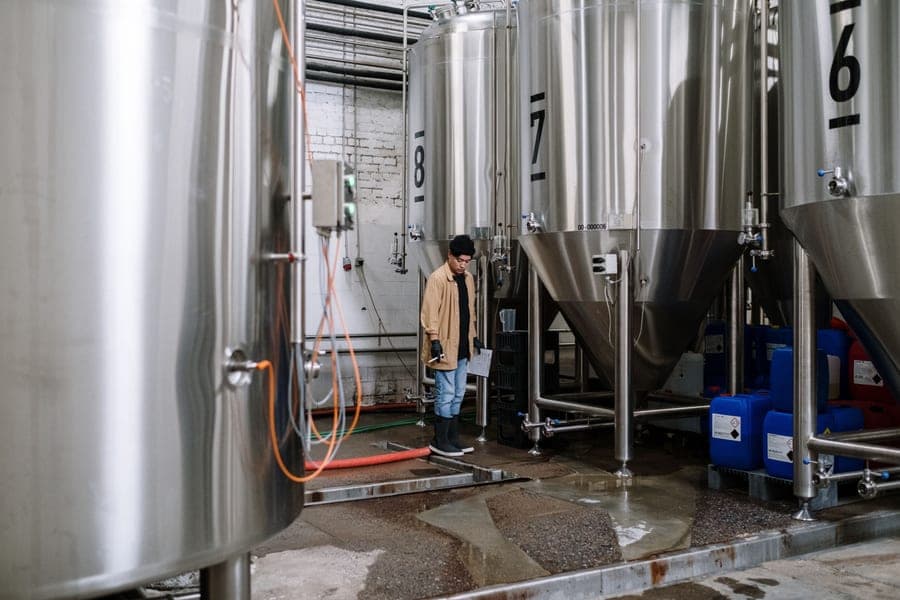
| 1 | Best overall Ss Brewtech Unitank The glycol jacket is part of the wall, so cooling happens through the steel rather than across an air gap. Pressure rated with a PRV, a thermowell port and a carb stone port, so it ferments, carbonates and serves without a transfer. | Brewers with a glycol loop who want one vessel to do everything | |
| 2 | 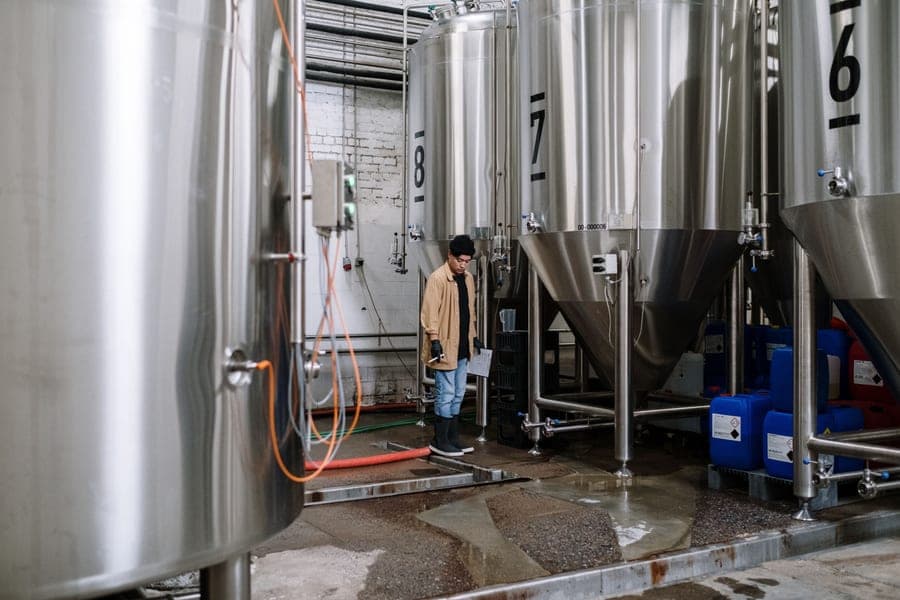 Best value route to integrated cooling Spike Brewing CF5 Conical Fermenter Welded 304 stainless with a cooling coil available as a factory option, which puts the cooling surface inside the beer. Tri-clamp throughout, a full cone with a dump valve, and rated for pressure transfer. | 5 gallon batches, with a chiller already in the plan | |
| 3 |  Best budget option FermZilla Tri-Conical 27 L 27 L with a detachable collection butt for yeast harvest and a molded tri-clover ferrule, at a fraction of welded stainless money. Short enough to sit in a 5 to 7 cubic foot chest freezer, which is where its temperature control comes from. | Brewers whose vessel fits in a chest freezer | |
| 4 |  The control layer, not a vessel Chest Freezer Fermentation Chamber (with controller) Included deliberately. A 5 to 7 cubic foot chest freezer with an external dual-stage controller holds lager temperatures through a cold crash for the cheapest running cost per degree of any method. | Anyone whose fermenter is short enough to fit inside |
Prices are checked on Amazon when you click. We never print a number we cannot verify.
How each one actually controls temperature
| Vessel | Cooling method | Needs a chiller | Needs a chamber |
|---|---|---|---|
| Ss Brewtech Unitank | Glycol jacket in the wall | Yes | No |
| Spike CF5 + coil | Stainless coil in the beer | Yes | No |
| FermZilla Tri-Conical | Ambient air around the vessel | No | Yes |
| Chest freezer chamber | Ambient air, compressor cooled | No | It is the chamber |
The question behind the question
You are buying a solution to height
Nobody searches for a temperature-controlled conical because they want an extra feature. They search for it because their fermenter does not fit in anything. A welded conical with a full cone and a stand is taller than a 5 cubic foot chest freezer is deep, and the moment that becomes true the normal homebrew answer -- a freezer and a dual-stage controller -- stops working.
Integrated cooling solves the geometry problem by moving the cooling surface onto or into the vessel. A glycol jacket is a channel in the wall. A cooling coil is a stainless loop inside the beer. Either way heat leaves through metal in contact with liquid rather than across an air gap, which is both faster and completely indifferent to how tall the vessel is.
So the first thing to establish is whether you have the height problem at all. Measure the inside depth of the chest freezer you can actually fit in the space, then measure the vessel with its stand and its lid fittings. If the vessel fits, buy the freezer and the dual-stage controller and stop reading.
Jacket vs coil
Two ways to put cooling on a vessel
The glycol jacket
A jacket is a sealed channel built into the vessel wall at the factory. Glycol flows through it, never touching the beer, and the whole wall becomes the heat exchanger. It is the commercial standard and it is the best version of this idea: large surface area, nothing inside the beer to clean, and nothing to retrofit or get wrong.
The cost is that a jacketed vessel is a jacketed vessel forever. You cannot buy one and use it without a chiller, so the glycol loop is part of the purchase, not a later upgrade. For the Ss Brewtech Unitank that also means the carbonation and serving features are available from the same vessel, which is a genuine process simplification -- see conical vs unitank.
The cooling coil
A coil is a stainless tube that hangs inside the fermenter with glycol running through it. It is cheaper to manufacture, it can be specified as an option on a conical that would otherwise be uncooled, and it chills quickly because it sits in the liquid rather than outside it.
The trades are real. A coil is a surface inside the beer, which means it has to be cleaned and sanitized like everything else, and it takes up a little volume. It also cools locally, so a coil without any circulation produces more stratification than a jacket does. In practice neither issue is severe, and a coil-equipped conical is the cheapest honest route to glycol cooling.
The cheaper truth
A short conical in a freezer beats both on cost
There is an uncomfortable fact in this category: for a 5 gallon batch, a plastic conical short enough to fit a chest freezer gives you the same temperature stability as a glycol-jacketed unitank for a small fraction of the money, and a much smaller electricity bill.
The FermZilla Tri-Conical is the vessel that makes this work. At 27 L with a detachable collection butt it does the thing people actually want from a conical -- harvest yeast from the bottom and dump trub -- in a package short enough to stand in a 5 to 7 cubic foot freezer. Pair it with a controller and the temperature control problem is solved.
What you give up is durability and scale. PET crazes over years, the chamber holds one temperature for everything inside it, and you cannot crash cool as fast through air as through steel. If none of those limits bites, this is the right answer and the expensive vessels are a want rather than a need. The full comparison sits in glycol chiller vs fermentation fridge.
Sizing the cooling
Three things to get right before you order
- Decide jacket, coil or neither before you buy the vessel. A jacket cannot be added later and a coil is awkward to retrofit. This is an order-time decision, and getting it wrong means buying a second fermenter.
- Buy the chiller one size up from today. A quarter horsepower unit handles one or two homebrew vessels. If a second fermenter is plausible within two years, the chiller is the part you keep when the vessels change.
- Add a thermowell, not a taped-on probe. A probe taped to the outside of a vessel under insulation is a reasonable approximation. A thermowell puts the sensor in the beer and turns an approximation into a measurement. Both the Unitank and the CF5 have a port for one.
How we picked
The basis for these
Selected from published manufacturer specifications for cooling method, pressure rating, ports and capacity, plus documented homebrewer consensus on chamber sizing and vessel height constraints. We have not measured crash-cool rates across these vessels side by side and do not claim to. See how we pick.
The picks, in order
Every pick in detail
#1
Best overall
Prosumer tier
Ss Brewtech Unitank
Ss Brewtech
The glycol jacket is part of the wall, so cooling happens through the steel rather than across an air gap. Pressure rated with a PRV, a thermowell port and a carb stone port, so it ferments, carbonates and serves without a transfer.
Spec sheet
- Capacity
- Half barrel (0.5 bbl) and larger
- Pressure
- Rated vessel with a pressure relief valve
- Cooling
- Glycol jacket, no chamber needed
- Ports
- Tri-clamp, thermowell, carb stone port
- Process
- Ferment, carbonate and serve from one vessel
- Footprint
- Needs floor space and a glycol loop
What it is not good at
Needs a glycol chiller to do anything, and it needs floor space rather than counter space. Half barrel is the entry size, which is more beer than many brewers want at once.
Who it is for
Brewers with a glycol loop who want one vessel to do everything
#2
Best value route to integrated cooling
Prosumer tier
Spike Brewing CF5 Conical Fermenter
Spike Brewing
Welded 304 stainless with a cooling coil available as a factory option, which puts the cooling surface inside the beer. Tri-clamp throughout, a full cone with a dump valve, and rated for pressure transfer.
Spec sheet
- Capacity
- 8 gal / 30 L (5 gal batch)
- Material
- Welded 304 stainless, no crevices
- Pressure
- Rated for pressure transfer and spunding
- Ports
- Tri-clamp throughout
- Cone
- Full cone with a dump valve
- Options
- Cooling coil, thermowell, CIP arm
What it is not good at
The coil is specified at order time, not retrofitted easily, and it still needs a chiller to feed it. A coil inside the beer is one more surface to clean.
Who it is for
5 gallon batches, with a chiller already in the plan
#3
Best budget option
Mid tier
FermZilla Tri-Conical 27 L
KegLand
27 L with a detachable collection butt for yeast harvest and a molded tri-clover ferrule, at a fraction of welded stainless money. Short enough to sit in a 5 to 7 cubic foot chest freezer, which is where its temperature control comes from.
Spec sheet
- Capacity
- 27 L / 7.1 gal (also 55 L)
- Cone
- Detachable collection butt for yeast harvest
- Fitting
- 3 in tri-clover ferrule molded into the tank
- Valve
- Redesigned tri-clover dump valve
- Material
- Clear PET body
- Pressure
- Yes, with the pressure kit
What it is not good at
No integrated jacket or coil, so it depends entirely on a chamber. PET body that scratches and will not last like steel.
Who it is for
Brewers whose vessel fits in a chest freezer
#4
The control layer, not a vessel
Mid tier
Chest Freezer Fermentation Chamber (with controller)
Chest freezer + Inkbird
Included deliberately. A 5 to 7 cubic foot chest freezer with an external dual-stage controller holds lager temperatures through a cold crash for the cheapest running cost per degree of any method.
Spec sheet
- Approach
- Chest freezer with an external dual-stage controller
- Capacity
- 5-7 cu ft fits one or two 5 gal fermenters
- Range
- Lager temps through a 32 F cold crash
- Heat side
- Pair with a wrap heater for winter ale temps
- Energy
- Cheapest running cost per degree of any method
- Limitation
- Vessel height is the binding constraint
What it is not good at
Vessel height is the binding constraint, and one chamber holds one temperature for everything inside it.
Who it is for
Anyone whose fermenter is short enough to fit inside
FAQ
Questions brewers actually ask
Do I need a conical with temperature control?
Only if your fermenter will not fit in a chamber you can actually fit in your space. For a 5 gallon batch in a vessel short enough for a chest freezer, a freezer plus a dual-stage controller holds the same temperature for far less money and far less running cost. Integrated cooling is the answer to a height problem, not a quality problem.
Glycol jacket or cooling coil: which is better?
A jacket is technically better. It is a channel in the vessel wall, so the whole wall becomes the heat exchanger, nothing sits inside the beer, and there is no extra surface to clean. A coil is cheaper and chills quickly because it sits in the liquid, but it adds a surface to sanitize and cools more locally. Both need a chiller.
Can I add a cooling coil to a conical later?
Not comfortably. On systems like the Spike CF5 the coil is specified at order time because it needs the right ports and clearances. Retrofitting usually means a vessel modification rather than an accessory purchase, so decide before you buy.
What size glycol chiller does one conical need?
A quarter horsepower unit handles one or two homebrew fermenters comfortably. Step up if you expect to run two vessels in vigorous fermentation plus a crash cool on a third. The chiller is the part of the system you keep when vessels change, so err one size up if you plan to grow.
Is a plastic conical in a freezer as good as a jacketed unitank?
For holding a fermentation temperature on a 5 gallon batch, close enough that the price difference is hard to justify. Where the jacketed vessel wins is crash-cooling speed, running multiple vessels at different temperatures, durability over decades, and not caring how tall the vessel is.
Read next
More on fermenters
Roundup
The Best Stainless Conical Fermenters
Welded against formed stainless, and which vessels justify the price.
Comparison
Conical Fermenter vs Unitank
What the glycol jacket and pressure rating add, and whether you need them.

Comparison
Glycol Chiller vs Fermentation Fridge
Air cooling against direct wall cooling, and when the upgrade is justified.

Roundup
The Best Glycol Chillers for Homebrewing
Glycol chillers sized for homebrewing, and when a freezer is the better buy.
Guide
What Size Conical Fermenter Do You Need?
Why a 5 gallon batch needs a 7 gallon conical, and how to check it fits your chamber.
Roundup
The Best Conical Fermenters
Stainless, plastic and pressure-capable conicals compared, with chamber-fit warnings.