Guide
Electric vs Propane Brewing
Propane boils harder and cheaper per BTU. Electric lets you brew indoors and hold a mash. That is the real trade.
The short answer
Propane delivers more raw heat per dollar and boils large volumes faster, but it must be used outdoors or with serious ventilation because of carbon monoxide. Electric brewing can run indoors, holds mash temperature precisely without supervision, and is quieter and more controllable -- at the cost of needing an adequate circuit.
DisclosureWe earn a commission on qualifying purchases made through links on this page, at no extra cost to you. It does not change what we recommend or how we rank it -- here is how we pick and here is the full disclosure.
The practical comparison
| Propane | Electric | |
|---|---|---|
| Raw heat available | Very high (tens of thousands of BTU) | Limited by the circuit |
| Running cost per batch | Low | Low, slightly higher typically |
| Indoor use | No -- carbon monoxide risk | Yes |
| Mash temperature holding | Manual, by infusion | Automatic, to within a degree |
| Step mashing | Difficult | Programmable on most systems |
| Weather dependence | High -- wind kills efficiency | None |
| Noise | Loud roar | Silent |
| Setup cost | Low if you have a burner | Higher |
| Electrical work needed | None | Often a new circuit |
An orange rule marks the better of the two on that row.
The safety line
Propane is outdoors only, and this is not negotiable
A propane burner produces carbon monoxide. Carbon monoxide is odorless and kills people in garages every year, and a partly open garage door is not adequate ventilation for a burner running for ninety minutes. Propane brewing happens outdoors, or in a space with genuine mechanical extraction designed for combustion appliances. There is no middle ground worth taking.
This single fact decides the question for a large number of brewers. If you have no outdoor space you can brew in, or you live somewhere with four months of weather that makes outdoor brewing miserable, electric is the only practical option -- and that is the real reason the all-in-one category exists.
Power
Propane wins on raw heat, and it is not close
A typical homebrew propane burner produces far more heat than any element you can run on a domestic circuit. The practical effect is speed: heating 13 gallons of strike water, recovering to a boil after adding sparge water, and driving a vigorous boil on a 10 gallon batch are all faster on gas.
Electric closes the gap with wattage and loses it to the panel. A 1600W 120V element is modest. A 2800W 240V element is capable. A 5500W 240V element on a 30A circuit is genuinely strong and is where electric becomes competitive on large batches -- which is the argument in Foundry vs Clawhammer and best 10 gallon brewing systems.
Control
Electric wins on everything downstream of the boil
Gas has one setting -- more or less -- and no memory. Holding a mash at 152°F for an hour on propane means insulating the vessel and accepting drift, or adding hot water infusions and recalculating. Holding it on an electric system means typing 152 and walking away.
That difference compounds. Programmable step mashing, a delay timer that has strike water hot before you arrive, and recirculation that clarifies the wort as it holds temperature are all electric-only conveniences. For most brewers these are the reason to switch, more than any efficiency argument.
Steam
The electric problem nobody mentions
Electric brewing indoors produces a large volume of steam -- several liters of water leaving the kettle over a 60 minute boil. In a kitchen without extraction that marks paint and ceilings over time, and in a basement it is a genuine moisture problem.
The fixes are an extractor hood, brewing in a garage with the door open (steam is not carbon monoxide; ventilation here is about moisture, not safety), or a condenser lid that captures the vapor. Budget for one of the three rather than discovering the issue on your third brew day.
What we recommend
The products on this page
Best electric route
Mid tier
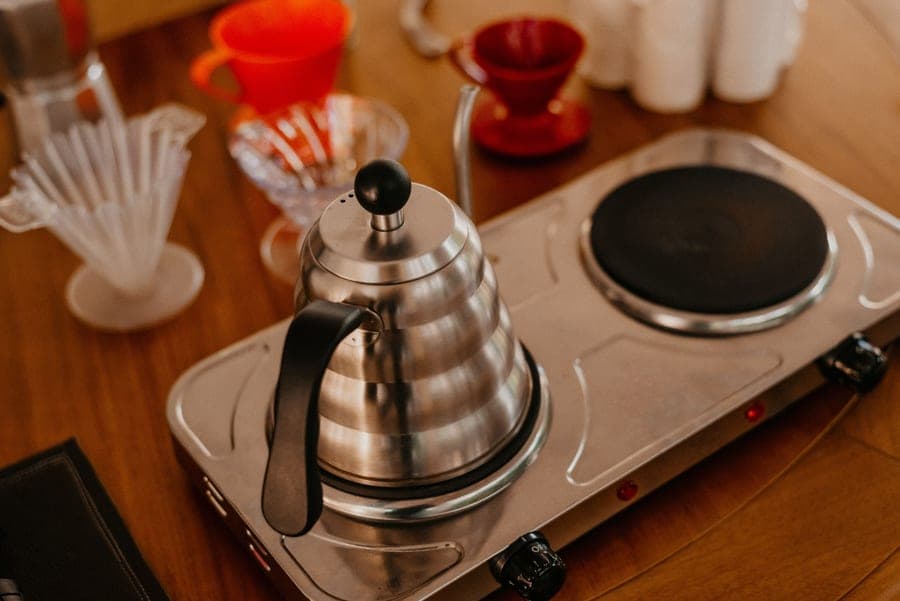
Anvil Foundry 10.5 Gallon
Anvil Brewing Equipment
Switchable 120V/240V means you can brew electrically on the circuit you have, and the controller holds a mash temperature propane simply cannot.
Spec sheet
- Capacity
- 10.5 gal / 40 L
- Power
- Switchable 120V 1600W or 240V 2800W
- Heating
- Triple low-watt-density element
- Pump
- Optional recirculation pump
- Grain basket
- High-flow, dual-height false bottom
- Material
- 304 stainless
What it is not good at
At 2800W the boil on a 10 gallon batch is adequate rather than fierce; a propane burner has far more raw power.
Who it is for
Brewers who want to brew indoors with controlled mash temperature
Best propane-ready kettle
Entry tier
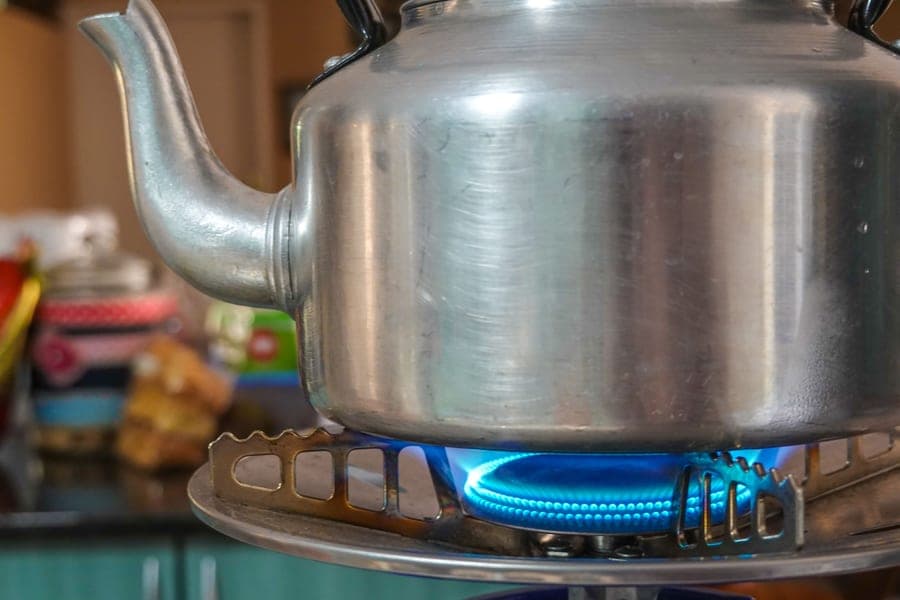
Bayou Classic Stainless Brew Kettle
Bayou Classic
A large stainless kettle costs a fraction of an electric system, and a propane burner will bring 13 gallons to a boil faster than any homebrew element.
Spec sheet
- Capacity
- 8, 10, 16 and larger
- Material
- Stainless; tri-clad base on some models
- Ports
- Some SKUs ship with a valve and thermometer
- Heat source
- Gas burner or induction with a clad base
- Weld quality
- Stamped fittings, not welded ferrules
- Best for
- A first 10 gal kettle without the Spike price
What it is not good at
No temperature control at all. Outdoor use only, and you are managing the mash by infusion and attention.
Who it is for
Brewers with an outdoor space and an existing burner
Best high-power electric
Prosumer tier
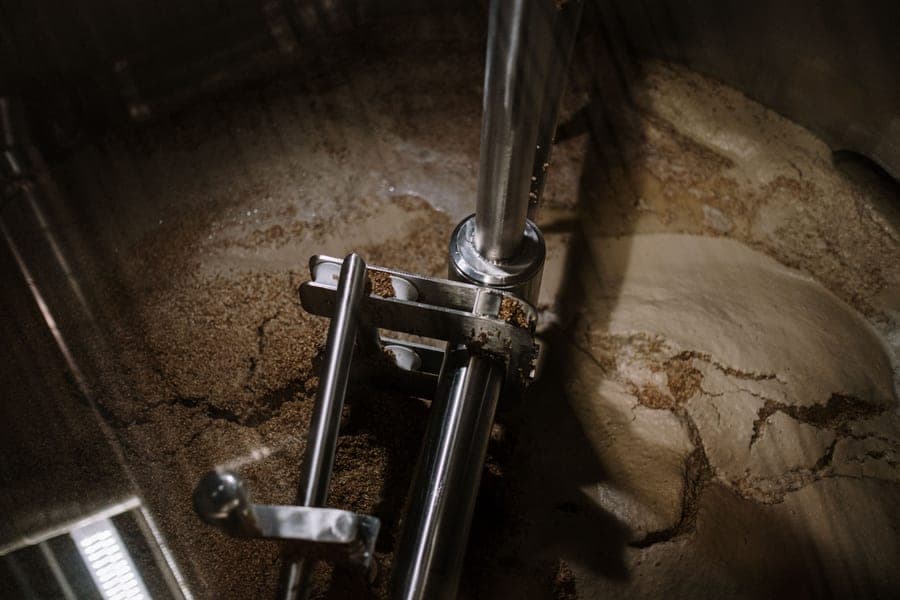
Clawhammer Supply 10 Gallon Electric Brewing System
Clawhammer Supply
5500W on a 240V 30A circuit closes most of the power gap with propane while keeping electric's controllability and indoor viability.
Spec sheet
- Capacity
- 10 gal / 38 L
- Power
- 240V 5500W
- Build
- Welded 304 stainless
What it is not good at
Needs a dedicated 30A 240V circuit, which is real electrical work rather than a purchase.
Who it is for
Brewers who want propane-like boil power without the combustion
FAQ
Questions brewers actually ask
Is electric brewing cheaper than propane?
Propane is usually slightly cheaper per batch in raw fuel cost, because it delivers more heat per dollar than mains electricity in most US markets. The difference is small enough at homebrew scale that it rarely decides the question. Setup cost favors propane if you already own a burner, and electric if you would otherwise need to buy one plus a large kettle.
Can I brew with propane in my garage?
No. A propane burner produces carbon monoxide, which is odorless and lethal, and a partly open garage door is not adequate ventilation for a burner running for ninety minutes. Propane brewing belongs outdoors or in a space with mechanical extraction designed for combustion appliances. Electric brewing is the indoor option.
How much power do I need for electric brewing?
A 1600W 120V element handles a 5 to 6 gallon batch with a gentle boil. A 2800W 240V element gives a solid boil on 5 gallons and an adequate one on 10. A 5500W 240V element on a dedicated 30A circuit is genuinely strong and comparable to a modest propane burner for heat-up speed. Match the element to the circuit you can actually provide.
Does electric brewing produce a lot of steam?
Yes, several liters of water leave the kettle over a 60 minute boil. Indoors without extraction that moisture marks paint and ceilings over time and can be a real problem in a basement. The solutions are an extractor hood, an open garage, or a condenser lid that captures the vapor. Plan for one before your first indoor brew day.
Can I use propane for the boil and electric for the mash?
Yes, and it is a sensible hybrid. Many brewers mash in an insulated cooler, which needs no heat input at all to hold temperature for an hour, then boil on propane where raw power matters. You get gas power and passive insulation with no electrical work, at the cost of a more manual brew day.
Read next
More on brewing systems
Roundup
The Best All-Grain Brewing Systems
Single-vessel, hybrid and welded all-grain approaches compared on time, space and cost.
Roundup
The Best 10 Gallon Brewing Systems
Ten gallon systems, and why element power matters more than vessel size.
Comparison
Anvil Foundry vs Clawhammer: Appliance vs Rig
Sealed appliance against welded rebuildable rig, at the same batch size.
Roundup
The Best Wort Chillers
Immersion, counterflow and plate chillers compared on the trades that matter.
Roundup
The Best Electric All-in-One Brewing Systems
Five all-in-one systems compared on finished volume, voltage and parts support.