Comparison
Anvil Foundry vs Grainfather: Which One Fits You?
One is a flexible appliance you adapt to your house. The other is an automated system you adapt to. That is the whole decision.
The short answer
Choose the Anvil Foundry 10.5 for electrical flexibility and a lower entry price: it is the only one of the two that brews on a 120V outlet and scales to 240V later. Choose the Grainfather G40 if you want programmed step mashing, variable-speed recirculation and official support, and you have the circuit already.
DisclosureWe earn a commission on qualifying purchases made through links on this page, at no extra cost to you. It does not change what we recommend or how we rank it -- here is how we pick and here is the full disclosure.
These two represent genuinely different philosophies, which makes the comparison more useful than most. The Foundry is a flexible appliance: it adapts to the electrical supply you have and leaves the pump and chiller decisions to you. The Grainfather is an integrated system: it decides those things for you, and in exchange the brew day needs less attention.
Published specifications compared
| Spec | Anvil Foundry 10.5 | Grainfather G40 |
|---|---|---|
| Vessel capacity | 10.5 gal / 40 L | 40 L / 10.5 gal |
| Finished volume | 7-8 gal | ~30 L / 8 gal |
| Voltage | Switchable 120V / 240V | Fixed by region |
| Element | Triple low-watt-density, 1600/2800W | Regional single configuration |
| Pump | Optional accessory | Built in, variable speed |
| Step mash | Manual | Programmable |
| App | None | Bluetooth, logging |
| Chiller | Not included | Counterflow included |
| Entry price | Lower | Premium |
An orange rule marks the better of the two on that row.
The constraint that decides it
Do you have 240V, and will you?
Everything else on that table is a preference. Voltage is a fact about your house. If you have a usable 240V circuit where you brew, the Foundry’s headline advantage evaporates and the Grainfather’s automation becomes the live question. If you do not, and getting one is a maybe rather than a plan, the Foundry is the only system of the two that works well now and better later.
This matters more at larger batch sizes. At 5 to 6 gallons, 1600W on 120V produces a perfectly adequate boil. At 10 gallons it does not, and the Foundry’s 240V setting is what makes the larger batch possible. See best 10 gallon brewing systems for the watts-per-gallon reasoning.
Automation
What programmed step mashing is actually worth
Step mashing means holding the mash at several temperatures in sequence -- a protein rest, a saccharification rest, a mash-out. Programmed stepping means the system walks through the schedule and tells you when to act, rather than you watching a clock and changing a set point.
How much that is worth depends entirely on what you brew. The large majority of published recipes call for a single infusion at one temperature, and for those the Foundry’s manual set point is functionally identical. If you brew styles that genuinely benefit from stepping -- hefeweizens, some lagers, anything with a high proportion of unmalted adjuncts -- the automation stops being a convenience and starts being the reason to buy.
Our verdict
Which one should you buy?
Buy the Foundry if
Anvil Foundry 10.5 Gallon
- You do not have a 240V circuit yet and might later
- Most of your recipes are single-infusion mashes
- You want to choose your own pump and chiller
- A lower entry price matters more than a finished package
Buy the Grainfather if
Grainfather G40
- You already have the circuit the system needs
- You brew styles that genuinely benefit from step mashing
- You want pump and chiller decisions made for you
- Official documentation and support are worth the premium
Next
Related reading
The third contender is the BrewZilla, which sits between these two on price and packaging -- Foundry vs BrewZilla, Grainfather vs BrewZilla, or all three in the three-way comparison. Individual reviews: Anvil Foundry and Grainfather G30/G40.
What we recommend
The products on this page
Pick for flexibility
Mid tier
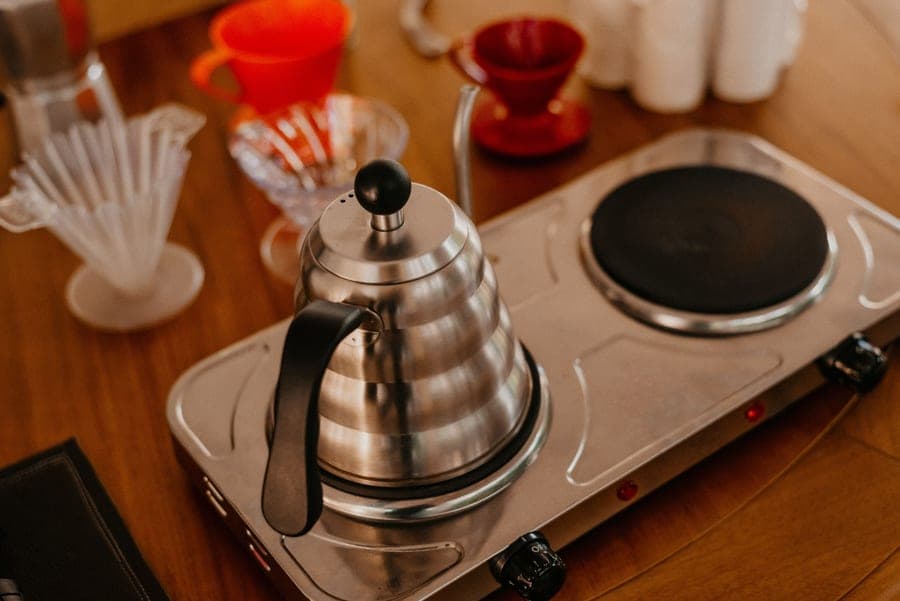
Anvil Foundry 10.5 Gallon
Anvil Brewing Equipment
Switchable 120V/240V, a larger nominal vessel, and a lower entry price because the pump is optional rather than mandatory.
Spec sheet
- Capacity
- 10.5 gal / 40 L
- Power
- Switchable 120V 1600W or 240V 2800W
- Heating
- Triple low-watt-density element
- Pump
- Optional recirculation pump
- Grain basket
- High-flow, dual-height false bottom
- Material
- 304 stainless
What it is not good at
Manual set points rather than programmed steps, no connectivity, and a pump and chiller to buy separately.
Who it is for
Brewers whose electrical situation is not settled
Pick for automation
Prosumer tier
Grainfather G40
Grainfather
Programmable step mashing, variable-speed pump, app logging and a counterflow chiller included. The most hands-off brew day of the two.
Spec sheet
- Capacity
- 40 L / 10.5 gal
- Max batch
- ~30 L / 8 gal into the fermenter
- Control
- Bluetooth app, programmable step mash
- Pump
- Variable-speed recirculation pump
- Chiller
- Counterflow wort chiller included
- Grain capacity
- ~9 kg / 20 lb
What it is not good at
Fixed regional voltage, premium price and a proprietary accessory ecosystem.
Who it is for
Brewers with a 240V circuit who want the brew day scheduled
FAQ
Questions brewers actually ask
Is the Anvil Foundry as good as a Grainfather?
For making beer, yes. Both hold mash temperature, recirculate and boil competently, and the wort you get from each is equivalent. The Grainfather adds programmed step mashing, a variable-speed pump and better documentation; the Foundry adds switchable voltage and a lower entry price. Neither is better in the abstract, and which one is better for you depends on whether you have a 240V circuit and whether you step mash.
Does the Grainfather G40 run on 120V?
Grainfather units ship in a configuration fixed to their region's voltage, so a US unit is built for the US supply rather than being switchable. This is the Anvil Foundry's clearest advantage: its patented heater switches between 120V 1600W and 240V 2800W on the same hardware, which means one machine spans both electrical situations.
Do I need step mashing to brew good beer?
For most styles, no. The large majority of published homebrew recipes call for a single infusion mash held at one temperature, and a manual set point does that as well as a programmed schedule. Step mashing earns its keep on hefeweizens, some lagers and recipes with substantial unmalted adjuncts, where distinct rests at different temperatures genuinely change the result.
Which is cheaper to get brewing, a Foundry or a Grainfather?
The Foundry, but by less than the sticker prices suggest. Its pump is an accessory and it includes no wort chiller, while the Grainfather includes both. Price the configuration you will actually brew with rather than the base units, and the gap narrows considerably.
Read next
More on brewing systems
Roundup
The Best Electric All-in-One Brewing Systems
Five all-in-one systems compared on finished volume, voltage and parts support.
Comparison
Anvil Foundry vs BrewZilla: Which Should You Buy?
Dual voltage against a more complete box: the two systems most brewers choose between.
Review
Anvil Foundry 10.5 Review
The dual-voltage all-in-one, reviewed on what it does and does not include.
Roundup
The Best 10 Gallon Brewing Systems
Ten gallon systems, and why element power matters more than vessel size.
Guide
Brewing System Generations, Explained
Every revision of every major system, keyed to what actually changed.
Roundup
The Best All-Grain Brewing Systems
Single-vessel, hybrid and welded all-grain approaches compared on time, space and cost.